
 E-Paper






Follow the latest breaking news, major developments and agenda-setting stories from India and around the world with the newsdesk at Hindustan Times. Operating round the clock, the desk brings together experienced editors, reporters and correspondents to deliver fast, accurate and contextual reporting across subjects that influence public policy, governance, business, society and international affairs. The HT News Desk covers politics, elections, government policies, the economy, business and markets, science and technology, the environment, law and order, infrastructure, education, climate issues and geopolitics, while closely tracking developments across states, institutions and global capitals. The team also leads coverage of major breaking news events, policy announcements, court proceedings, natural disasters, public emergencies and significant international developments. Reports published by the newsdesk are based on information gathered from reporters on the ground, official statements, government agencies, court records, regulatory filings, recognised institutions and other authoritative sources. Stories undergo editorial scrutiny and verification processes to ensure accuracy, fairness and relevance, and are updated as events evolve and additional information becomes available. Whether covering a key political decision in New Delhi, an economic policy shift affecting millions, a landmark court ruling or a major global event, the HT News Desk aims to provide readers with reliable, fact-based journalism that delivers not only the latest developments but also the context and analysis needed to understand their wider implications.
Tourism in Ladakh: Centre charts plans for homestays, bird-watching
Promoting homestays in the region was one way of enabling tourists to get a taste of the local culture, and the Centre was working on this, he said.


Prahlad Singh Patel, minister of state (independent charge) of tourism and culture, said on Saturday plans were being drawn up “on a war footing” to attract more tourists to Ladakh, granted Union territory status earlier this week after Jammu and Kashmir was stripped of its special status and carved into two.
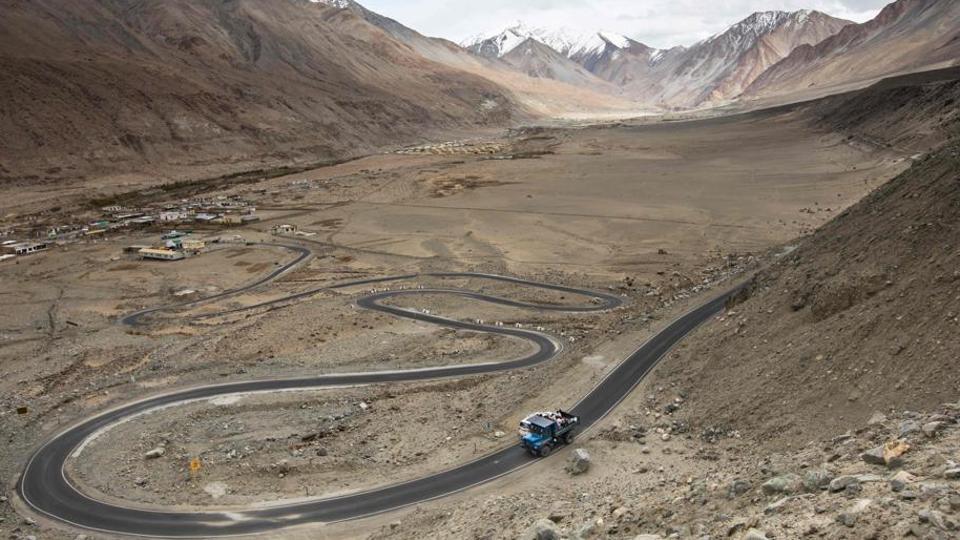
On the drawing board are facilities for homestays in monasteries dotting the region, development of eco-tourism, including bird-watching, and preservation of heritage structures, the minister said. The idea of promoting Ladakh as a retreat for writers and researchers will also be explored.
“I personally feel Leh [capital of Ladakh] has been treated unfairly. While all the infrastructure development took place in Jammu and Kashmir, the region was left behind. People from the region did not get employment or a road to development. The ministry has started working out a plan on a war footing to send more tourists to Leh; it is a clean and peaceful place,” Patel told HT.
Promoting homestays in the region was one way of enabling tourists to get a taste of the local culture, and the Centre was working on this, he said. New tourist attractions would be set up and heritage structures restored by the Archaeological Survey of India (ASI), which has already begun preservation of the 500-year-old Lhonpo House in Henaksu village built entirely of mud.
“We are trying to develop ways to inform tourists about the different species of animals peculiar to the region. Bird-watching facilities will be developed,” he said.
According to data available with the tourism ministry, a total of 3,27,366 tourists visited Ladakh in 2018, including 49,477 foreigners. This was 50,000 more than the number that visited the region in 2017.
Pronob Sarkar, president of the Indian Association of Tour Operators, said the tourist season in Ladakh was limited to four-five months but the opening up of investment avenues following the scrapping of Article 370 would help all three regions (Jammu, Kashmir and Ladakh).
“The Centre must help in developing ground facilities in a bigger way, and find a way to manage the upkeep of monuments in the region. A way to regularise air tickets and increase air connectivity can go a long way,” he said.











