
 E-Paper






Jasjeev Gandhiok is an Assistant Editor with Hindustan Times, where he covers environment, climate change, the clean energy transition and wildlife at the National Bureau. Gandhiok has over a decade of experience in journalism and is based in Delhi. He has reported extensively on Delhi and the National Capital Region (NCR). This includes the region's air pollution woes, a polluted Yamuna and on urban wildlife still thriving in the region. He joined HT in October 2021. Prior to that, he had five-year stint at The Times of India in Delhi, where he also covered Delhi, with a focus on environment and wildlife. Gandhiok has covered some recent events around the Capital too, ranging from the farmers' protests, the northeast Delhi riots and the CAA-NRC protests, reporting from the ground on all of these. He also travels across the country to report on how environment and climate change impact everyday life, while also writing on endangered species. His reports in 2019 on toxic leachate from Delhi's landfills led to the National Green Tribunal (NGT) taking suo motu cognisance and ultimately asking the state government to start bio-mining to flatten and remove all three landfills in the capital. He also closely tracks the implementation of government policies on climate, renewable energy and environmental protection. His focus remains on impactful, public-interest journalism which explains how environmental decisions affect people's everyday lives.
‘Dip in Leatherback turtles’ nesting in Nicobar', government assessment finds
According to data, the number of Leatherback turtles nesting on the islands declined from 634 in 2022-23 to 478 in 2024-25.


A nationwide assessment by the government-run Wildlife Institute of India (WII) found a decline in the number of Leatherback Turtles nesting in the Andaman and Nicobar Islands, largely at Galathea Bay. This bay is one of the most important nesting beaches for the turtle species and a proposed site of an international trans-shipment port under the Great Nicobar Island development project (GNIDP).
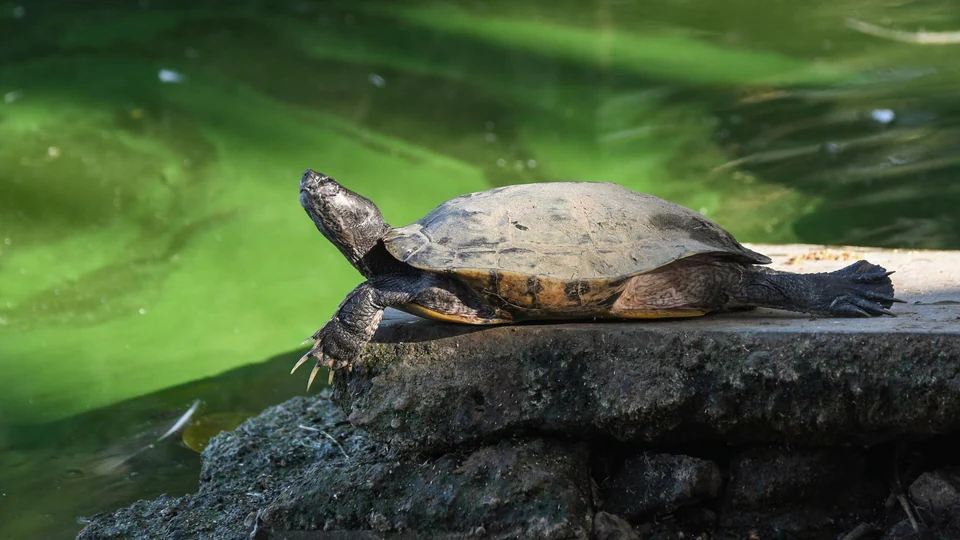
However, nesting of the other two turtles—Olive Ridley and Green—has substantially increased across the country’s coastlines, the WII said in its assessment, titled Pan India Assessment and Monitoring of Endangered Species: Marine Turtles, released by the Union environment ministry’s National Wildlife Board standing committee.
Also Read I Centre notifies new prison law for Andaman and Nicobar Islands, bans caste bias, allows open jails
Decline in Leatherback turtles' numbers
According to data, the number of Leatherback turtles nesting on the islands declined from 634 in 2022-23 to 478 in 2024-25. A large chunk of these nest at Galathea Bay.
The Olive Ridley count in 2024-25 is up from 13,484 turtles in 2022-23 and 14,242 in 2023-24 to 18,713. Green turtles also increased from 135 in 2022-23 to 305 in 2023-24 and 419 in 2024-25.
The findings become important, since Galathea Bay is the proposed location of the International Container Transshipment Terminal (ICTT). This is part of the larger ₹81,000-crore GNIDP.
However, experts have long called for the project to be called off, citing significant ecological impacts. “The report flags what we have known all along - that the Great Nicobar is an important nesting site, particularly for Leatherbacks. There is enough evidence in the public domain against the project,” an expert, who has studied the island closely said on condition of anonymity.











