
 E-Paper






Utkarsh Anand is the National Legal Editor at Hindustan Times, where he leads the newspaper's coverage of the Supreme Court, constitutional law, the judiciary and the Union law ministry. He joined Hindustan Times in 2020 after stints at Press Trust of India (PTI), The Indian Express and CNN-News18, and has over two decades of experience reporting on law, governance and public policy. His work has focussed on some of India's most consequential constitutional and legal developments, including the Supreme Court's judgments on Article 370, marriage equality, decriminalisation of homosexuality, the Babri Masjid dispute, electoral reforms and judicial appointments. He specialises in making complex legal proceedings and judgments accessible to readers while examining their wider social and political impact. Beyond daily reportage, Utkarsh has led investigative projects and enterprise reporting that have shaped public debate and prompted institutional responses. His work has received several journalism awards, including the Ramnath Goenka Excellence in Journalism Award. As National Legal Editor, he has also played a key role in expanding Hindustan Times' legal journalism footprint, mentoring reporters and strengthening coverage across platforms. A Chevening South Asia Journalism Programme Fellow, Utkarsh regularly writes analyses on the judiciary and constitutional issues, and his reporting is widely followed by lawyers, judges, policymakers, academics and readers seeking clarity on India's evolving legal landscape.
SC rejects EC petition over reporting of Madras HC observations
“We find no substance in the prayer of the EC for restraining the media from reporting on court proceedings," the top court said.


Underlining that “a courtroom is a public space”, the Supreme Court on Thursday ruled that real-time reporting of court proceedings was an extension of the freedom of speech and expression of the press and that “public constitutional institutions must find better responses than to complain”.
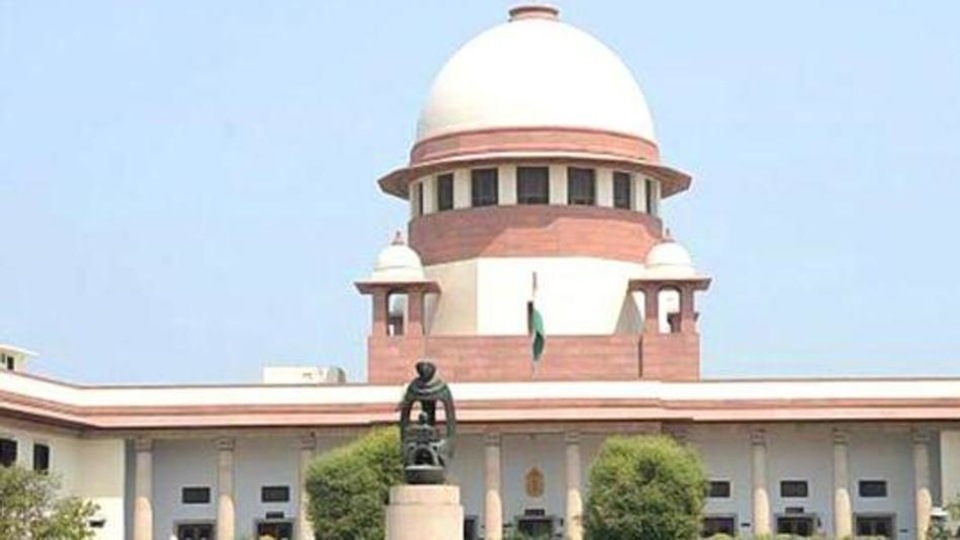
The bench of justices Dhananjaya Y Chandrachud and MR Shah dismissed a plea by the Election Commission of India (ECI) to restrain media from reporting oral observations of the judges that the poll body was singularly responsible for a second wave in the country and that its officials should probably be tried on murder charges for allowing political parties to hold massive rallies without following Covid-19 norms.
“We find no substance in the prayer of the EC for restraining the media from reporting on court proceedings. This court stands as a staunch proponent of the freedom of the media to report court proceedings. This, we believe is integral to the freedom of speech and expression of those who speak, of those who wish to hear and to be heard and above all, in holding the judiciary accountable to the values which justify its existence as a constitutional institution,” held the top court.
Also read | What is the plan on vaccinating children, top court asks Centre
It highlighted that with the advent of technology, reporting has been proliferated through social media forums which provided real-time updates to a much wider audience. “This is an extension of the freedom of speech and expression that the media possesses. This constitutes a virtual extension of the open court...Acceptance of a new reality is the surest way of adapting to it. Our public constitutional institutions must find better responses than to complain,” it emphasised.
On April 26, the high court made the scathing remarks against ECI while hearing a writ petition by Tamil Nadu transport minister MR Vijayabhaskar, who sought a direction for safety measures and fairness during counting in Karur constituency from where he was contesting. “You are the only institution that is singularly responsible for the situation today...No action against political parties taking rallies despite court orders. Your election commission officials should be put up on murder charges probably,” the high court observed.
In its appeal before the Supreme Court, the ECI maintained that the remarks made by the high court were widely reported in the media and have tarnished the image of the ECI as an independent constitutional authority, besides reducing the faith of the people in the poll body.
Deciding the ECI’s petition, the Supreme Court said that the high court could have been more cautious in its remarks, but declined to issue an order of expunging them after noting that oral remarks were not a part of the official judicial record at all. It said that a formal opinion of a judicial institution is reflected through its judgments and orders, and not through its oral observations during the hearing.
At the same time, the bench acknowledged that the ECI shouldered a significant burden in ensuring the sanctity of electoral democracy while noting noted in its judgment that the remarks were harsh and metaphor inappropriate, as it added that judges should exercise caution in off-the-cuff remarks in open court, which may be susceptible to misinterpretation.
“A degree of caution and circumspection by the high Court could have allayed a grievance of the nature that has been urged in the present case. All that needs to be clarified is that the oral observations during the course of the hearing have passed with the moment and do not constitute a part of the record,” said the court, clarifying the high court remarks did not seek to attribute culpability for the Covid-19 pandemic in the country to the ECI.
However, the bench remained firm that there could be any shackles on the right of the media to report on the proceedings, saying it would be retrograde for this Court to promote the rule of law and access to justice on one hand, and shield the daily operations of the high courts and this court from the media in all its forms, by gagging the reporting of proceedings, on the other.
The court also regretted that the poll body had sought to restrain media from reporting oral observations, noting: “This prayer of the ECI strikes at two fundamental principles guaranteed under the Constitution – open court proceedings; and the fundamental right to the freedom of speech and expression.”











