
 E-Paper




Nagaland gets 20-day PAP waiver for Hornbill Festival; stakeholders say not enough
A Protected Area Permit (PAP) is a mandatory travel document required by all foreign nationals wishing to visit or stay in certain areas, including parts of the northeast




The Centre has relaxed a rule barring foreign tourists from entering Nagaland without a special permit for 20 days starting November 26 every year to boost tourism around its famed Hornbill Festival, though local officials and tour operators insist the restrictions must be lifted year-round to revive the state’s tourism sector.
A Protected Area Permit (PAP) is a mandatory travel document required by all foreign nationals wishing to visit or stay in certain areas, including parts of the northeast. The PAP regime was lifted from Nagaland, Manipur and Mizoram in 2011 to encourage tourism. The Ministry of Home Affairs (MHA), however, reimposed the restrictions in December 2024, citing regional security concerns.
PAP regime
Under the rules, most foreign travelers must secure permits from the Foreigners Registration Officer (FRO) before entering Nagaland. Citizens or people of origin from Afghanistan, China and Pakistan require prior approval of the Ministry of Home Affairs (MHA) in New Delhi before their visit to the state.
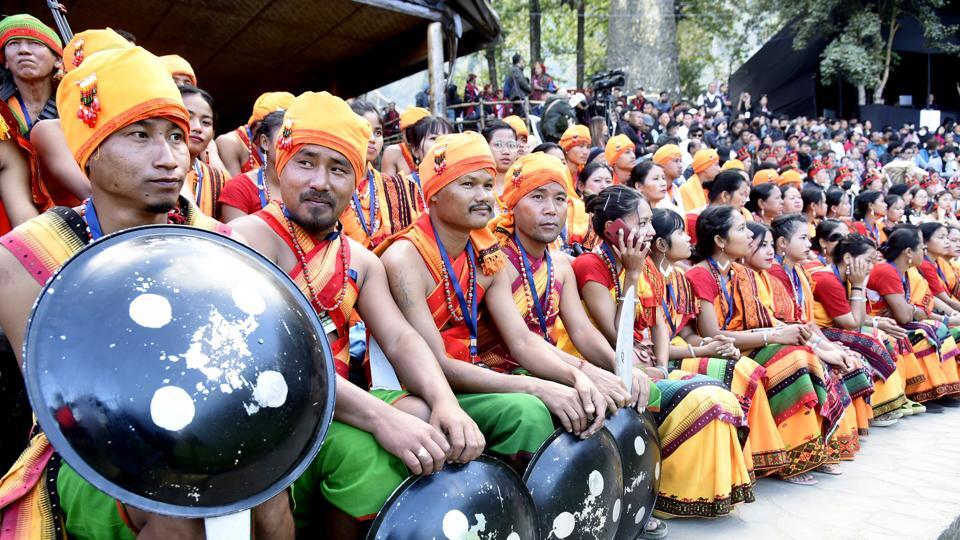
This restriction has been relaxed for 20 days, between November 26 and December 15, for foreign tourists coinciding with the state’s premier cultural tourism event- the Hornbill Festival. The annual festival celebrating the rich traditional and cultural heritage of the Naga tribes has drawn over 2,000 foreign tourists in 2023, 2024 and 2025.
The Union home ministry informed the Nagaland government about its decision on November 14. “The matter regarding relaxation in Protected Area Permit Regime in the State of Nagaland has been considered in this Ministry and exercising the powers conferred under para 14 (2) of the Immigration and Foreigners Order, 2025, and after the approval of Competent Authority, it has been decided to relax the Protected Area Regime in the State of Nagaland for a brief period of 20 days i.e., 26 November to 15 December of every year for tourism purpose only,” the MHA’s Foreigners-I Division said.
The home ministry also decided to provide PAP with the validity co-terminus with the project, to the foreign nationals associated with certain projects in the state.
The Neiphiu Rio government has been asking the central government to revisit its decision to reimpose the PAP regime since January 2025.
After MHA indicated on November 4 that it would give a 10-day relaxation, Rio wrote to Union home minister Amit Shah to complain that the 10-day exemption created practical difficulties for tourists, tour operators, travel agencies and hospitality establishments, restricting the potential benefits that tourism can generate for the state’s economy.
Rio said he wanted the Centre to grant a year-round exemption from the PAP regime for foreign visitors to the state. If this was not feasible, he said MHA should at least grant exemption from PAP for one month for the 2026 edition of the festival.
On September 3, the state assembly had also passed a resolution asking the central government to withdraw the PAP regime from the state since it was negatively impacting the growth of international tourism, investment, business engagement, cultural exchange and international partnerships in the state.
Tourism sector
Kovi Meyase, the state commissioner and tourism secretary, said PAP had impacted tourism in the state. “Yes, the re-imposition of the PAP regime has impacted tourism in Nagaland, particularly in terms of accessibility and the overall number of foreign tourist arrivals. Prior to its re-imposition, Nagaland attracted a diverse range of international visitors, including high-end tourists, organized tour groups, independent travelers and backpackers. The mandatory permit requirement, additional documentation, processing time and associated costs have discouraged some independent and budget-conscious travelers,” Meyase said.
The official said overall year-round foreign tourist arrivals have significantly declined following the re-imposition of PAP.
“The additional documentation, uncertainty surrounding the processing timelines and the need for advance coordination have made travel planning comparatively more complicated. This is particularly significant because Nagaland is often part of a larger Northeast India itinerary,” Meyase said.
He said international tour operators may reconsider including Nagaland if the permit process creates uncertainty for their clients.
Nagaland Tourism Association president Vimeto Vakha, agreed, calling PAP a procedural hassle that creates harassment to foreign tourists wanting to visit the state.
“People want to travel to Nagaland for tribal and cultural experiences. But when they are required to be put through the difficulty of extra documentation processes, they will definitely opt to visit other places where such hurdles are not required,” said Nino Zhasa, a Kohima-based tour operator.
Meyase suggested that the permit system could encourage more planned and organised travel, attracting visitors who are prepared to make advance arrangements and engage established accommodation and transport services. “The challenge is to strike a balance between national security considerations and the state’s tourism development objectives,” he added.











