
 E-Paper




Aerospace and the road to Viksit Bharat 2047
Indian aviation’s rapid growth is backed by increasingly capable engineers, manufacturers and suppliers.




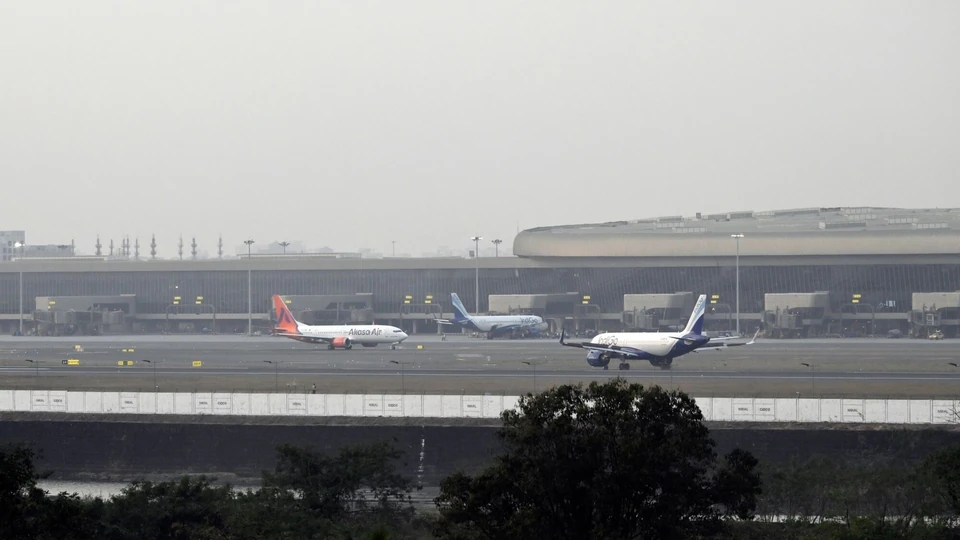
Indian carriers fly fuller aircraft, for more hours a day, than carriers in any other major market, with close to 88% of seats on Indian flights filled, and with each aircraft spending 12 to 14 hours a day in the air, well above the global average. Such strong performance in an industry that is seeing tremendous growth, while maintaining the highest safety records of any form of transport, is a real achievement — reflecting three decades of work by Indian airlines, engineers, regulators and maintenance crews.
That operating strength is now being matched by engineering depth and manufacturing scale, built in India. It is the quieter half of the story, though over the next two decades, it will be the equally consequential one.
Aerospace has been built on collaboration and co-development. Every engine draws on suppliers across several continents, each certified to the same exacting standards, and that interdependence is a feature of the industry rather than a limitation. Years of technical collaboration, supplier development and sustained investment have moved Indian engineers and manufacturers steadily towards the centre of these programmes.
Airports Authority of India (AAI) data puts domestic passenger traffic at Indian airports at 339 million in FY26, and government projections point to 1.1 billion annual trips by 2040. The airport network has grown from 74 in 2014 to 163 today, with more than 350 planned by 2047. India's domestic airlines earned roughly $19 billion last financial year, and the ecosystem around them sustains an estimated 370,000 direct jobs, according to Powering Progress: GE Aerospace's Economic Impact in India, a new assessment compiled with Ernst & Young India. To meet this demand, India and South Asia will need some 3,300 additional aircraft, and around 6,600 engines, by 2044.
While this growth seems explosive, the capability behind it is earned slowly: a supplier qualifying to make a more complex part, an engineering team taking on design responsibility, a maintenance facility winning approvals. Those timelines may run to years, which means the share of work India holds through the 2040s is being determined by what is being built now.
Engines are among the most demanding machines anyone builds: Tolerances measured in microns, components that run hotter than the melting point of the metals around them, and stringent testing regimes. Capability of that kind, once established, lasts. For example, GE Aerospace’s engineering centre in Bengaluru, established in 2000, has generated more than 1,000 aviation patents, and Indian engineers now hold design responsibility on programmes including the world's most powerful commercial jet engine. A joint programme with IIT Madras has produced a micro turbomachine designed and built in India. That is design authority that continues to compound.
Talent is the multiplier and not just the constraint. GE Aerospace’s Pune plant has trained nearly 5,000 production associates in its apprenticeship programme since 2015, enrolling 400 to 500 new apprentices a year. Multiplied across the sector, that is how a country climbs the value chain: technicians taught to work to aerospace tolerances, alongside engineers who have worked through certification cycles.
That shift extends well beyond engine makers, through the supply chain. A decade ago, Indian suppliers largely made brackets, fittings and simple machined parts. Many now make considerably more complex components, and the difference is not ambition but process — specialised welding, coatings and quality systems that take years and real capital to qualify. GE Aerospace’s Indian supplier base has grown to 17 companies, many of them small and medium enterprises, with plans for the company to nearly double its Indian supplier spend between 2025 and 2030, from a base of about $200 million in 2025.
With roughly 1,500 aircraft on order with Indian carriers, Powering Progress report estimates the in-country engine maintenance opportunity at more than $5.5 billion. IndiGo's planned engine MRO facility marks the direction.
Defence follows the same logic. Indigenous defence production reached a record ₹1.78 lakh crore in FY26, nearly four times the FY15 figure, and exports hit an all-time high of ₹38,424 crore. A partnership with HAL that began in 1986 now runs from naval engines to the F404 powering Tejas Mk1, and an understanding on building F414 engines in India for Tejas Mk2, subject to final approvals.
Policy has played a critical role in enabling the sector, from strengthening infrastructure to investments in the UDAN scheme towards 100 more airports and allowing full foreign investment in MRO. Carrying that trajectory further calls for an enabling framework, because in aerospace it is capital intensity that forms the real barrier to entry. Three instruments would do most of the work. A capital subsidy would cut the cost of building, expanding or modernising manufacturing plants. An aerospace-specific production-linked incentive would reward domestic output, exports and value addition. And a tax framework modelled on the Taxation and Other Laws (Amendment) Act, 2026, which targeted electronics manufacturing and digital infrastructure, would give aerospace investors comparable long-term certainty.
India has the ingredients: Demand, design authority, a supplier base climbing steadily, and industry committing capital for the decade and more. Connecting them turns aviation from a connectivity story into an industrial one, generating high-wage employment, advanced manufacturing skills and export earnings at once – all of which aligns with the vision of Viksit Bharat 2047.
India has shown it can fly with the best in the world. Building with the same depth is the work of this decade.
(The views expressed are personal)
This article is authored by Vikram Rai, CEO, South Asia, GE Aerospace.











