
 E-Paper







Pawan Dixit, Assistant Editor, brings over 20 years of frontline reporting experience to the newsroom. A specialist on Uttar Pradesh politics and governance, he has reported from the ground across the state’s most consequential stories. He cut his teeth in eastern UP, spending 15 years covering the region. Based in Varanasi, he reported the 2012 UP Assembly polls and the 2014 Lok Sabha elections that reshaped the state’s political map. Moving to Lucknow in 2016, he has since led coverage of the 2017 and 2022 UP Assembly elections and the 2024 Lok Sabha polls. His reporting tracks the BJP’s strategy, opposition moves, and voter sentiment across all 75 districts. Pawan has been a constant presence in Ayodhya since 2016. He reported the entire arc of the Ram Mandir movement — from the legal fight to the Supreme Court verdict, through temple construction, to the inauguration. He continues to track every development at the Shri Ram Janmabhoomi Teerth Kshetra Trust. On the state beat, he covers the BJP, the Industrial Development Department, and handles key outstation political assignments. He also reports major cases from the district court, Lucknow bench of the High Court, and the State Information Commission. Along with this, he also reports on NGT's important decisions related to UP. Known for sharp sourcing and clear analysis, Pawan connects politics, policy, infrastructure and faith — the forces driving UP today. He has reported developments in Ayodhya and Ram Mandir movement since 2016. The Supreme Court's Ram Mandir verdict, temple construction and the its opening have been reported by him. He reports all developments in Ayodhya and Ram Mandir Trust. He covers state BJP, Industrial development department, outstation political assignments, reports special cases from district court, high court and state information commission
2.58 crore left-out voters in Uttar Pradesh, BJP sets voter enrolment as top priority
BJP core committee meeting in Lucknow also decides to reach out to women voters, highlight law and order situation under Yogi regime


After Uttar Pradesh chief electoral officer Navdeep Rinwa’s recent disclosure that an estimated 2.58 crore eligible adults are still outside the electoral rolls in the state, the BJP’s core committee meeting here on Monday set the agenda for using the Special Summary Revision window till December 17 to ensure maximum inclusion of left-out voters, especially women, first-time voters turning 18 by January 1, 2027, women living in marital homes, and migrants who have returned.
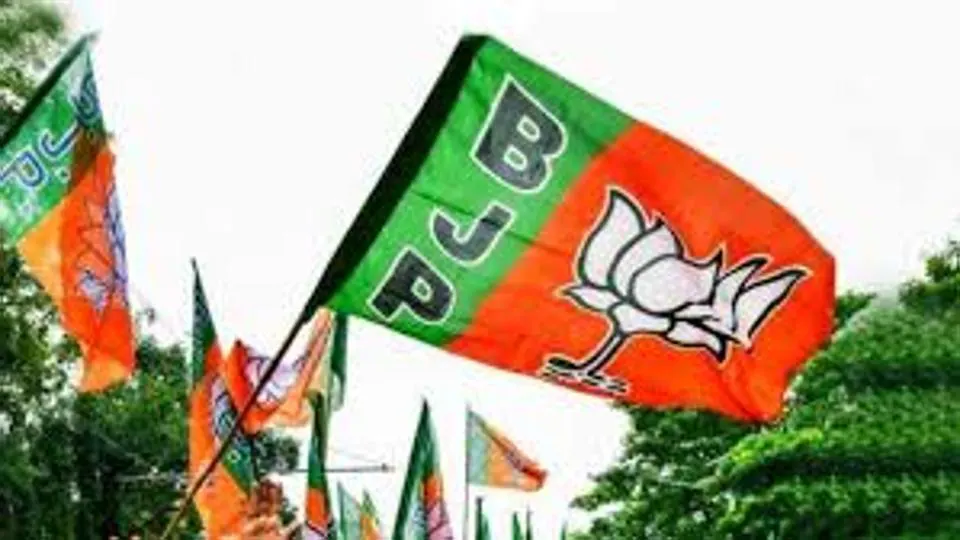
The party also laid stress on converting the voter-addition campaign into a political connect drive, underlining the need to ensure that every Form-6 filled should become a conversation with a family about the government’s schemes and the state’s law and order situation.
Chaired by chief minister Yogi Adityanath, the meeting was attended by state BJP president Pankaj Chaudhary, deputy chief ministers Keshav Prasad Maurya and Brajesh Pathak, party’s national general secretary (organisation) and state in-charge Vinod Tawde, and state general secretary (organisation) Dharampal Singh.
Adityanath stressed that not a single eligible voter should be left out, and that the party’s booth-level machinery must treat voter addition as its top priority for the next month, sources present at the meeting said.
It was also decided in the meeting to especially reach out to women voters, whom the BJP considers a game changer for its Mission-2027.
According to the BJP’s assessment, women voters have been crucial in the party’s victory in the 2017 and 2022 assembly polls.
The top BJP leadership also stressed on highlighting the law and order scenario in the state under the Yogi Adityanath government while interacting with women voters.
In the two previous assembly elections, women turned out in large numbers for the BJP, driven by issues of safety, free ration, Ujjwala gas connections, housing, toilets and direct benefit transfers.
The party leadership believes that if women voters remain with the BJP, it can neutralise caste arithmetic and opposition alliances, according to people aware of the matter.
“When a woman feels safe stepping out at night, when she gets a gas cylinder, a house, a toilet and rations on time, she becomes the BJP’s strongest ambassador in her family,” said a senior leader present at the meeting.
Ministers, MPs, MLAs and office bearers will be present at their assigned booths during the three-day ‘Matdata Jodo Abhiyan’ which will continue till November 24.
Ahead of the publication of the SSR draft list, Adityanath had claimed that 1.27 crore Hindu voters’ names were missing from the electoral rolls and there had been a 1.65% increase in the number of Muslim voters — a counter-offensive to the Opposition’s claims that the ruling BJP had used the Special Intensive Revision (SIR) to disenfranchise people whom it expected to support the opposition parties.
However, UP CEO Navdeep Rinwa clarified that ECI does not track voters by religion or caste. Basic demographics like name, age, gender, father name and address without religious or caste categorisation are registered in the voter list.
Both the ruling BJP and the opposition Samajwadi Party have traded accusations regarding deleted names, duplicate entries and targeted disenfranchisement.
During the Election Commission’s SSR from November 17 to December 17, Form-6 is being used to add left-out names and Form-8 for corrections.
Uttar Pradesh’s draft electoral roll released by the Election Commission of India (ECI) on November 17 added nearly 19 lakh voters since completion of the Special Intensive Revision (SIR) in April, taking the total number of enrolled voters to 13.59 crore.
The voter list published by ECI before the SIR had 15.44 crore names. The SIR exercise shrank the electoral rolls to 13.39 crore in April, setting off fierce political sparring over missing and disputed names.
According to the SSR schedule announced by the ECI, claims and objections will be received from November 17 to December 16. These will be resolved according to rules by December 28. The final publication of the voter list will be done on January 4.











