
 E-Paper






Follow the latest breaking news, major developments and agenda-setting stories from India and around the world with the newsdesk at Hindustan Times. Operating round the clock, the desk brings together experienced editors, reporters and correspondents to deliver fast, accurate and contextual reporting across subjects that influence public policy, governance, business, society and international affairs. The HT News Desk covers politics, elections, government policies, the economy, business and markets, science and technology, the environment, law and order, infrastructure, education, climate issues and geopolitics, while closely tracking developments across states, institutions and global capitals. The team also leads coverage of major breaking news events, policy announcements, court proceedings, natural disasters, public emergencies and significant international developments. Reports published by the newsdesk are based on information gathered from reporters on the ground, official statements, government agencies, court records, regulatory filings, recognised institutions and other authoritative sources. Stories undergo editorial scrutiny and verification processes to ensure accuracy, fairness and relevance, and are updated as events evolve and additional information becomes available. Whether covering a key political decision in New Delhi, an economic policy shift affecting millions, a landmark court ruling or a major global event, the HT News Desk aims to provide readers with reliable, fact-based journalism that delivers not only the latest developments but also the context and analysis needed to understand their wider implications.
 Trending News
World’s largest freshwater pearl goes for 320,000 euros
Known as the Sleeping Lion pearl due to its distinctive shape, the pearl was likely formed in the first half of the 18th century in Chinese waters, possibly even the Pearl River.


The world’s largest known freshwater pearl, which once belonged to Catherine the Great, was sold Thursday in the Netherlands for 320,000 euros ($374,000), auction house Venduehuis said.
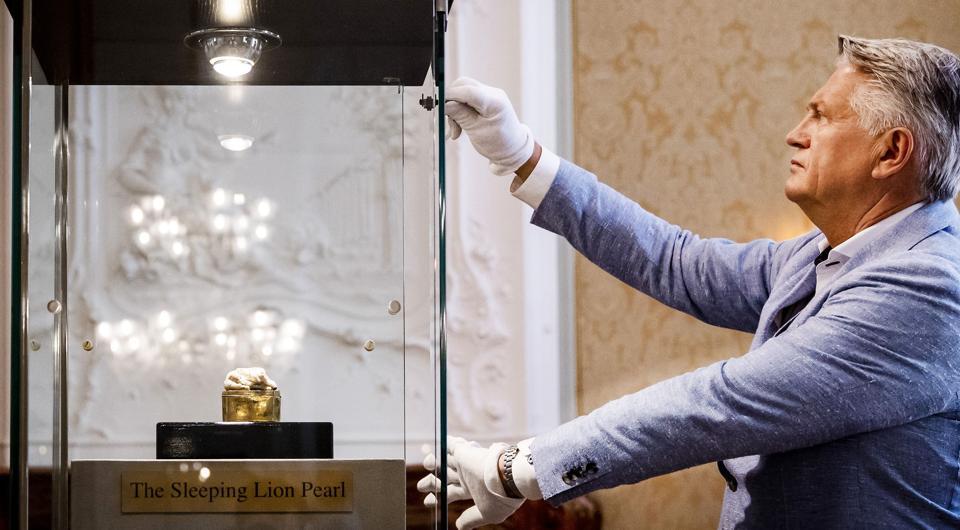
Known as the Sleeping Lion pearl due to its distinctive shape, the pearl was likely formed in the first half of the 18th century in Chinese waters, possibly even the Pearl River.
The auctioneers said the jewel weighs some 120 grams (around 4.2 ounces) and is almost seven centimetres (about 2.7 inches) long making it one of the three largest known pearls in the world.
The pearl, bought by a Japanese trader for 320,000 euros, had been valued 340,000 and 540,000 euros.
Around 1765, the pearl was shipped to Batavia, now known as Jakarta, by a Dutch merchant of the United East Indies Company. It was there that it came into ownership of the company’s accountant, Hendrik Coenraad Sander.
“After Sander passed away, the pearl was auctioned off in Amsterdam in 1778 and acquired by Catherine the Great, Empress of Russia,” the auction house had said.
Catherine had the pearl displayed in the Hermitage in St Petersburg until 1796. In the turbulent years that followed her death, the pearl vanished and ultimately surfaced again in Poland.
After more adventures, it was bought in 1865 by a Dutch goldsmith and remained in his family’s possession for four generations, before the “Amsterdam Pearl Society bought the pearl in 1979 intending to research it and trace its history,” the auctioneers said.











