
 E-Paper






Follow the latest breaking news, major developments and agenda-setting stories from India and around the world with the newsdesk at Hindustan Times. Operating round the clock, the desk brings together experienced editors, reporters and correspondents to deliver fast, accurate and contextual reporting across subjects that influence public policy, governance, business, society and international affairs. The HT News Desk covers politics, elections, government policies, the economy, business and markets, science and technology, the environment, law and order, infrastructure, education, climate issues and geopolitics, while closely tracking developments across states, institutions and global capitals. The team also leads coverage of major breaking news events, policy announcements, court proceedings, natural disasters, public emergencies and significant international developments. Reports published by the newsdesk are based on information gathered from reporters on the ground, official statements, government agencies, court records, regulatory filings, recognised institutions and other authoritative sources. Stories undergo editorial scrutiny and verification processes to ensure accuracy, fairness and relevance, and are updated as events evolve and additional information becomes available. Whether covering a key political decision in New Delhi, an economic policy shift affecting millions, a landmark court ruling or a major global event, the HT News Desk aims to provide readers with reliable, fact-based journalism that delivers not only the latest developments but also the context and analysis needed to understand their wider implications.
 Trending News
Why turnout has dropped in European elections
As the May 23-26 elections for the European Union’s assembly wind up, here is an overview.


Voter turnout at European Parliament elections has dropped steadily over the years, hitting a record low of 43 percent at the last poll in 2014.
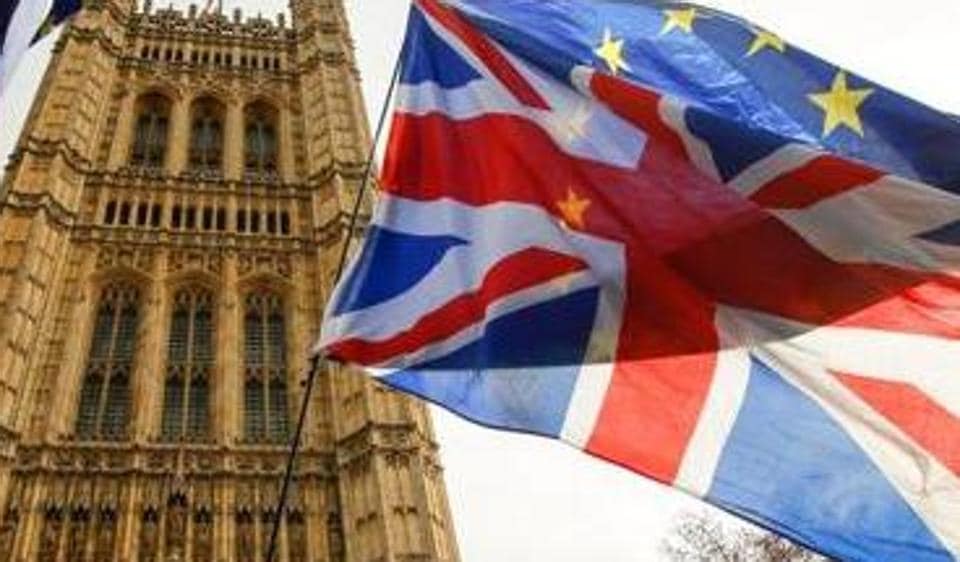
As the May 23-26 elections for the European Union’s assembly wind up, here is an overview.
- Staying away -
In 1979, at the first direct election for representatives to the European Parliament, just 38 percent of voters stayed away.
Since then voter turnout for the five-yearly election has progressively fallen, with a record 57 percent of voters abstaining in 2014.
At the same time, however, the powers of the parliament have increased.
Having had limited scope in 1979, Euro-MPs can now co-legislate in some areas alongside national ministers in the EU Council.
- EU distant -
In almost all EU countries more people vote at national general polls than for the European Parliament.
The gap is on average 25 percentage points across the bloc, Sciences Po university professor Olivier Rozenberg told AFP.
EU citizens feel “less close” to the European elections than polls at their national and local levels, the Jacques Delors Institute think-tank said in a 2014 report.
In a September 2018 survey, 48 percent of Europeans said they “believe that their voice counts in the EU”, according to the Eurobarometer polling body.
This rose to 62 percent for their own countries, its survey found.
- Compulsory vote scrapped -
In 1979 voting was compulsory in three countries -- Belgium, Italy and Luxembourg -- of the nine that made up the precursor to the European Union, the European Economic Community.
The three accounted for a quarter of the bloc’s voters.
That proportion dropped to about five percent as new members joined and Italy dropped the obligation to vote in the 1990s, which “probably played a major role in the decline in overall voting rates at the European elections,” the Jacques Delors Institute said.
In the forthcoming elections, voting is compulsory in five countries: Belgium, Bulgaria, Cyprus, Greece and Luxembourg.
This is not a guarantee of turnout however, as many voters choose to not cast ballots anyway.
While abstention is weak in Belgium and Luxembourg at between 10 and 15 percent, in Greece it was 40 percent at the 2014 poll, and 56 percent in Cyprus.
- Record abstention in the east -
Slovakia posted the highest abstention rate of 87 percent at the 2014 poll.
Ten of the 12 countries with the lowest turnouts were from the former communist bloc in the east, young countries that are the most recent to join the EU.
Voting in these nations is “a little less sacred” than in other European countries, Rozenberg said.
“For us (western countries) voting is synonymous with democracy, while this link is less clear in Eastern countries where there are still memories of non-pluralist elections,” he said.
Politics in eastern countries is also more fluid, with parties regularly changing names and alliances.
“That does not favour partisan identity and therefore the vote,” Rozenberg said.
- Founding countries not spared -
With the exception of Belgium and Luxembourg, the EU’s founding members have also seen higher numbers of voters snubbing the European Parliament polls.
In France and The Netherlands, abstention reached around 60 percent in 2014, from 40 percent in 1979.
In Italy it was at 43 percent from 14 percent over the same period, and in Germany it was at 50 percent from 34 percent.
The stay-away rates have nonetheless stabilised since 2004 in France and Germany.
This can be explained by an awareness among people “that the European Union is part of the problem and perhaps of the solution” of the various challenges facing Europe, Rozenberg said.











