
A routine visit to a Nashville thrift store turned into an extraordinary discovery for Michael Sparks, a music equipment technician who purchased a yellow, rolled-up document for just $2.48 in March 2006. According to Christie's auction catalogue, Sparks bought the document at Music City Thrift Shop and had no idea of its value when he bought the piece. The scroll, which first appeared to be a decorative relic, was a copy of the Declaration of Independence, engraved by William J. Stone in 1823. It was one of 200 copies ordered in 1823 by then-Secretary of State John Quincy Adams as a commemorative reproduction of the historical document. The scroll was sold at auction in North Carolina on March 22, 2007, for $477,650 after it was verified as a copy of the Declaration.
An ordinary thrift store purchase reveals an unusual find
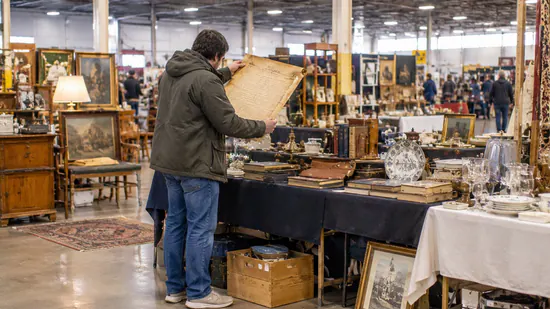
Sparks uncovered the sheet of paper while browsing the aisles at Music City Thrift Shop in Nashville, Tennessee. While searching through the discounted household goods, he found a yellowed sheet of paper that was rolled into a tube and glazed over with shellac. Sparks was immediately drawn to the object and bought it for $2.48 plus tax. From that point on, he had no idea what the object even was. When he brought it home, he started researching the markings, the date, and the history of the Declaration of Independence to get a better understanding of what he found.
Suggested For You
He discovered it was associated with an official reproduction effort ordered by John Quincy Adams. Rather than an ordinary printed copy, it was a high-quality facsimile designed to resemble the original Declaration as closely as possible. Sparks reached out to Raynor's Historical Collectible Auctions in Burlington, North Carolina, to have the document looked at. Experts verified that it was a genuine William J. Stone engraving from 1823. The item's odd state of preservation was another draw because the shellac coating had preserved the ink's darkness.
Why the 1823 Declaration copy was historically important
Deep Dive
How was the thrift-store Declaration of Independence copy authenticated?
What should you do if you find a potentially historic document or artefact?
How can conservation affect the value of a historical find?
The importance of the document goes back to the 19th century, when the original was rapidly deteriorating. The parchment had faded, and every time the document was handled, its chance of preservation was reduced. To let the public see the founding document without repeatedly handling the original, Secretary of State John Quincy Adams commissioned engraver William J. Stone between 1820 and 1823 to make a full-sized copy.
{{/usCountry}}The importance of the document goes back to the 19th century, when the original was rapidly deteriorating. The parchment had faded, and every time the document was handled, its chance of preservation was reduced. To let the public see the founding document without repeatedly handling the original, Secretary of State John Quincy Adams commissioned engraver William J. Stone between 1820 and 1823 to make a full-sized copy.
{{/usCountry}}He finished the plate in June of 1823, and the government later ordered 200 copies printed on parchment. A resolution of Congress in May of 1824 set out how the copies of the document would be divided between various government institutions, prominent officials, and remaining signers. The stone engraving became a familiar image of the Declaration of Independence, a document with its own preservation and authentication challenges, as explored by the National Archives.
Conservation work leads to a remarkable auction result
Prior to the sale, the document was also treated by conservators who separated the document from the canvas backing, rehumidified the paper, and removed varnish from the surface of the document. This treatment allowed the document's original appearance to be restored and the details of the document to be more carefully studied. The auction was held on March 22, 2007, through Raynor's Historical Collectible Auction. The bidding started at $125,000 and was competed for by six buyers, many of whom bid by phone. or over the internet and sold at a final price of $477,650, well above what was expected.
The winning bidder was Barry Con, a Utah investment company that bought the document for its historical and symbolic value. Sparks will get about $410,000 after the auction house's 12.5 percent cut. He said he'll use some of that money to buy a used car, build a sunroom onto his house, give his parents some money, and give some to charity. The discovery was a reminder that treasured historical objects can sit in clutter for decades without ever being noticed.
Explore More
ABOUT THE AUTHOR
The Hindustan Times US Desk brings you the latest news and developments from across the United States. The team covers everything from breaking news and politics to sports, business, entertainment and stories that are trending across the country. Our coverage includes the White House, Congress, US elections, immigration and visa updates, H-1B, green cards, Social Security, education, jobs, layoffs, the economy, technology and major policy changes. We also closely follow stories that matter to Indian and South Asian communities in the US. The desk covers major US sports, including the NFL, NBA, MLB and NHL, along with player news, injuries, schedules, results and major events. Entertainment coverage includes Hollywood, celebrities, television, streaming, music and pop culture. We also report on breaking developments, major incidents, weather, public safety, court cases and other stories making headlines across the country. When a major policy or news development affects people's everyday lives, the team works to explain what happened, what it means and what readers need to know. Alongside breaking news, the US Desk produces explainers and practical stories on topics such as immigration, Social Security, taxes, education, employment and government programmes. The team also works on science, tech, business and AI stories analyzing the impact they may have on people. The team follows developments throughout the day, keeping an eye on official announcements, public records, reliable news sources and what people are talking about across the US.
