
 E-Paper






Follow the latest breaking news, major developments and agenda-setting stories from India and around the world with the newsdesk at Hindustan Times. Operating round the clock, the desk brings together experienced editors, reporters and correspondents to deliver fast, accurate and contextual reporting across subjects that influence public policy, governance, business, society and international affairs. The HT News Desk covers politics, elections, government policies, the economy, business and markets, science and technology, the environment, law and order, infrastructure, education, climate issues and geopolitics, while closely tracking developments across states, institutions and global capitals. The team also leads coverage of major breaking news events, policy announcements, court proceedings, natural disasters, public emergencies and significant international developments. Reports published by the newsdesk are based on information gathered from reporters on the ground, official statements, government agencies, court records, regulatory filings, recognised institutions and other authoritative sources. Stories undergo editorial scrutiny and verification processes to ensure accuracy, fairness and relevance, and are updated as events evolve and additional information becomes available. Whether covering a key political decision in New Delhi, an economic policy shift affecting millions, a landmark court ruling or a major global event, the HT News Desk aims to provide readers with reliable, fact-based journalism that delivers not only the latest developments but also the context and analysis needed to understand their wider implications.
 Trending News
Turtle’s plastic-filled stomach in Thailand highlights ocean crisis
Plastic, rubber bands, pieces of balloon and other rubbish had filled the turtle’s intestinal tract, leaving it unable to eat and causing its death two days later.


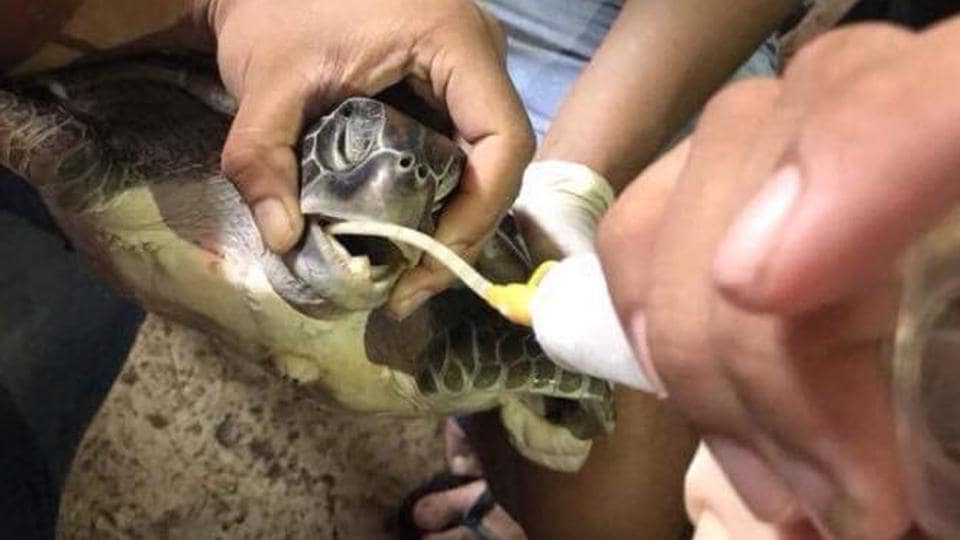
Startling images of plastic shreds, rubber bands and other debris found jammed in the stomach of a green turtle in Thailand have highlighted the crisis of waste-strewn seas following the widely publicised death of a whale this month.
Thailand is one of the world’s largest consumers of plastic, which kills hundreds of marine mammals and reptiles swimming off its coasts every year.
The problem grabbed public attention in the first week of June when an autopsy of a dead pilot whale found near the border with Malaysia revealed 80 plastic bags inside its stomach.
The green turtle, a protected species, suffered a similar fate after washing up on a beach in the eastern province of Chanthaburi on June 4, Weerapong Laovechprasit, a veterinarian at the Eastern Marine and Coastal Resource Research and Development Centre, told AFP.
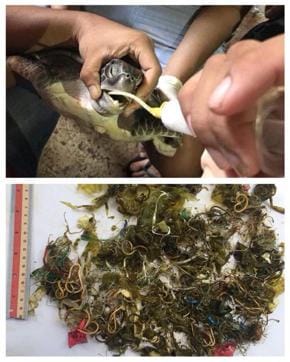
Plastic, rubber bands, pieces of balloon and other rubbish had filled the turtle’s intestinal tract, leaving it unable to eat and causing its death two days later.
“It was feeling weak and couldn’t swim,” Weerapong said. “The main cause of death is the sea trash.”
Veterinarians discovered the blockage using X-rays and tried to save the turtle by feeding it intravenously, but were only able to extract the garbage after its death.
Weerapong said that in the past about 10 percent of the green turtles stranded on beaches in the area had ingested plastic or suffered infections after coming into contact with the waste, but this year about 50 percent of the incidents were trash-related.
More than half of the eight million tonnes of plastic waste dumped into the world’s oceans every year comes from five Asian countries: China, Indonesia, the Philippines, Vietnam and Thailand, according to a 2015 Ocean Conservancy report.











