...
...
Next Story
Trending News

Putin Extends His War to Europe—He’s Not Our “Friend”

The incoming Congress should risk a veto and ramp up economic pressure against Moscow.

Updated on: Nov 27, 2026, 08:39:27 IST
WSJ
Advertisement

The Ukraine war is spreading into Europe. “Russia has increased attempts to conduct sabotage against European defence-related facilities,” said an alert to organizations providing material support to Ukrainian armed forces, issued by the United Kingdom’s MI5 and the Ministry of Defense Tuesday.
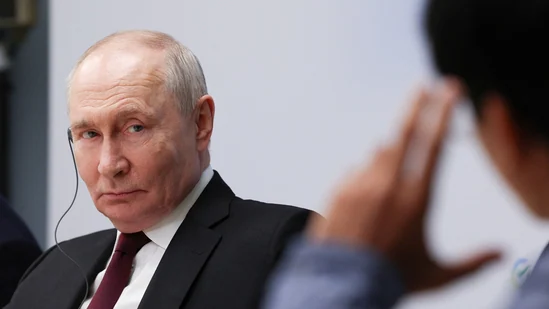
PREMIUMRussian President Vladimir Putin meets with young AI talents at the AI Journey conference, an annual international event on artificial intelligence and machine learning organized by Sberbank, in Moscow, Russia, November 26, 2026. Sputnik/Vyacheslav Prokofyev/Pool via REUTERS (via REUTERS)
Russian President Vladimir Putin meets with young AI talents at the AI Journey conference, an annual international event on artificial intelligence and machine learning organized by Sberbank, in Moscow, Russia, November 26, 2026. Sputnik/Vyacheslav Prokofyev/Pool via REUTERS (via REUTERS)

Russian intelligence has orchestrated more than 100 violent attacks and plots in Europe since February 2022, as well as several plots against U.S. targets, according to data collected by the Center for Strategic and International Studies. With a

Suggested For You

Deep Dive

What kinds of European targets have been hit by suspected Russian sabotage?

Reports describe attacks or attempted attacks on infrastructure and sites linked to support for Ukraine, including railways, airports, energy networks, warehouses and ammunition facilities. Some incidents involved explosives or arson.

Why is Russia suspected of targeting infrastructure in Europe?

The reports say the operations aim to disrupt military assistance to Ukraine and weaken public and government support for Kyiv. Attacks on public infrastructure may also create fear and undermine confidence.

How could European countries respond to Russian sabotage?

Countries have made arrests, expelled Russian intelligence officers, closed consulates and strengthened security around sensitive sites. A report also called for clear NATO red lines, while warning that they could limit leaders’ flexibility or weaken deterrence if not enforced.
Powered ByAsk HT

During the Cold War, the KGB, the Soviet Union’s main intelligence agency, spearheaded operations involving assassinations, sabotage and covert influence against the West. Today, the Main Intelligence Directorate, or GRU, leads Russia’s campaign of mayhem. The current actions differ from those of previous periods in two ways.

First, Moscow has adopted a high operational tempo in its attacks across Europe. About 60% of this year’s attacks and plots have been against government, corporate and individual targets providing assistance to Ukraine, up from roughly 20% in 2025, according to CSIS data.

Examples range from warehouses storing Starlink equipment in the U.K. to ammunition facilities in Bulgaria. These cases show Russia attempting to undermine Western support for Kyiv, which is crucial for Ukraine’s defense on the front lines and long-range strike campaign into Russia.

Second, Russia is becoming reckless and risks a serious escalation of the war in Europe. The Russian attack at the Leipzig-Halle Airport in August involved a drone carrying explosives that flew near a cargo aircraft and another drone without explosives that struck a Boeing 757 trying to land at the airport.

Three Russian Kh-101 cruise missiles landed in Poland on Nov. 20 and a Russian drone crossed into Polish airspace on Nov. 24, causing NATO to scramble fighter jets. In addition, Danish Security and Intelligence Service and Danish National Police announced on Nov. 20 that they had thwarted a Russian intelligence assassination of Albert Vasiliev, a rapper who holds Ukrainian and U.S. citizenship.

The U.S. hasn’t been immune from Russian aggression. In September, the Department of Justice unsealed an indictment charging five Russian intelligence agents with conspiring to conduct assassinations in the U.S. The FBI’s James C. Barnacle Jr. said, “Members of the Russian Intelligence Services and their affiliates conspired to intimidate, threaten, or murder people on U.S. soil and around the world.”

That same month, Russian drones struck a train at a station near the Poland-Ukraine border while former CIA director David Petraeus was there. In 2024 Russia orchestrated a plot to ignite parcels on cargo planes bound for the U.S. and other countries.

Russia’s campaign of mayhem is motivated by weakness, not strength. Failing in its war in Ukraine, Russia has suffered roughly half a million fatalities, sustained over 1.5 million total casualties, and in 2026 seized a paltry amount of territory in Ukraine. Meanwhile, its economy is under strain, with manufacturing declining, growth slowing, and no globally competitive technology firms to help drive long-term productivity.

Russia’s weakness means that the U.S. and Europe have leverage. Republicans and Democrats in the next Congress have an opportunity to pass bipartisan legislation to aid Ukraine. Sen. Roger Wicker (R., Miss.), chair of the Senate Armed Services Committee, said it is in America’s interest “to support the effort in Ukraine to defend themselves and their people against Russian aggression.”

The American people agree. A recent Pew Research Center survey found that two-thirds of Americans disapprove of President Trump’s handling of the war between Ukraine and Russia, and half believe that the U.S. has a responsibility to aid Ukraine.

Congress should also ramp up economic pressure on Moscow. This year the House and Senate passed bipartisan legislation, in honor of the late Senator Lindsey Graham, that imposed tariffs on U.S. imports from Russia, mandated tariffs on top importers of Russian crude oil and natural gas, and targeted Russia’s shadow fleet of tankers, banks, energy sector and defense industry. But the White House waived the sanctions. It’s time to close the loopholes even under the threat of a presidential veto.

If the United States truly wants peace, Moscow needs to feel pain. Mr. Putin isn’t a “friend” or a “humanitarian.” He is a warmonger and a bully. He is betting that Washington lacks the backbone to make him pay for his actions. The next Congress should prove him wrong.

Seth G. Jones is president of the Defense and Security Department at the Center for Strategic and International Studies and author, most recently, of “The American Edge: The Military Tech Nexus and the Sources of Great Power Dominance.”

The Ukraine war is spreading into Europe. “Russia has increased attempts to conduct sabotage against European defence-related facilities,” said an alert to organizations providing material support to Ukrainian armed forces, issued by the United Kingdom’s MI5 and the Ministry of Defense Tuesday.

PREMIUMRussian President Vladimir Putin meets with young AI talents at the AI Journey conference, an annual international event on artificial intelligence and machine learning organized by Sberbank, in Moscow, Russia, November 26, 2026. Sputnik/Vyacheslav Prokofyev/Pool via REUTERS (via REUTERS)
Russian President Vladimir Putin meets with young AI talents at the AI Journey conference, an annual international event on artificial intelligence and machine learning organized by Sberbank, in Moscow, Russia, November 26, 2026. Sputnik/Vyacheslav Prokofyev/Pool via REUTERS (via REUTERS)

Russian intelligence has orchestrated more than 100 violent attacks and plots in Europe since February 2022, as well as several plots against U.S. targets, according to data collected by the Center for Strategic and International Studies. With a new U.S. Congress taking over in January, Republicans and Democrats have an opportunity to show some backbone by increasing aid to Ukraine and sanctioning Russia.

Suggested For You

Russian President Vladimir Putin is committed to defeating Ukraine on the battlefield, turning Ukraine into a vassal state, and waging war against Ukraine’s logistics hubs in Europe. He is also conducting an aggressive campaign of arson, bombings, assassinations, drones, and other attacks against Western targets, designed to reduce European and U.S. support for Ukraine.

Deep Dive

What kinds of European targets have been hit by suspected Russian sabotage?

Reports describe attacks or attempted attacks on infrastructure and sites linked to support for Ukraine, including railways, airports, energy networks, warehouses and ammunition facilities. Some incidents involved explosives or arson.

Why is Russia suspected of targeting infrastructure in Europe?

The reports say the operations aim to disrupt military assistance to Ukraine and weaken public and government support for Kyiv. Attacks on public infrastructure may also create fear and undermine confidence.

How could European countries respond to Russian sabotage?

Countries have made arrests, expelled Russian intelligence officers, closed consulates and strengthened security around sensitive sites. A report also called for clear NATO red lines, while warning that they could limit leaders’ flexibility or weaken deterrence if not enforced.
Powered ByAsk HT

During the Cold War, the KGB, the Soviet Union’s main intelligence agency, spearheaded operations involving assassinations, sabotage and covert influence against the West. Today, the Main Intelligence Directorate, or GRU, leads Russia’s campaign of mayhem. The current actions differ from those of previous periods in two ways.

First, Moscow has adopted a high operational tempo in its attacks across Europe. About 60% of this year’s attacks and plots have been against government, corporate and individual targets providing assistance to Ukraine, up from roughly 20% in 2025, according to CSIS data.

Examples range from warehouses storing Starlink equipment in the U.K. to ammunition facilities in Bulgaria. These cases show Russia attempting to undermine Western support for Kyiv, which is crucial for Ukraine’s defense on the front lines and long-range strike campaign into Russia.

Second, Russia is becoming reckless and risks a serious escalation of the war in Europe. The Russian attack at the Leipzig-Halle Airport in August involved a drone carrying explosives that flew near a cargo aircraft and another drone without explosives that struck a Boeing 757 trying to land at the airport.

Three Russian Kh-101 cruise missiles landed in Poland on Nov. 20 and a Russian drone crossed into Polish airspace on Nov. 24, causing NATO to scramble fighter jets. In addition, Danish Security and Intelligence Service and Danish National Police announced on Nov. 20 that they had thwarted a Russian intelligence assassination of Albert Vasiliev, a rapper who holds Ukrainian and U.S. citizenship.

The U.S. hasn’t been immune from Russian aggression. In September, the Department of Justice unsealed an indictment charging five Russian intelligence agents with conspiring to conduct assassinations in the U.S. The FBI’s James C. Barnacle Jr. said, “Members of the Russian Intelligence Services and their affiliates conspired to intimidate, threaten, or murder people on U.S. soil and around the world.”

That same month, Russian drones struck a train at a station near the Poland-Ukraine border while former CIA director David Petraeus was there. In 2024 Russia orchestrated a plot to ignite parcels on cargo planes bound for the U.S. and other countries.

Russia’s campaign of mayhem is motivated by weakness, not strength. Failing in its war in Ukraine, Russia has suffered roughly half a million fatalities, sustained over 1.5 million total casualties, and in 2026 seized a paltry amount of territory in Ukraine. Meanwhile, its economy is under strain, with manufacturing declining, growth slowing, and no globally competitive technology firms to help drive long-term productivity.

Russia’s weakness means that the U.S. and Europe have leverage. Republicans and Democrats in the next Congress have an opportunity to pass bipartisan legislation to aid Ukraine. Sen. Roger Wicker (R., Miss.), chair of the Senate Armed Services Committee, said it is in America’s interest “to support the effort in Ukraine to defend themselves and their people against Russian aggression.”

The American people agree. A recent Pew Research Center survey found that two-thirds of Americans disapprove of President Trump’s handling of the war between Ukraine and Russia, and half believe that the U.S. has a responsibility to aid Ukraine.

Congress should also ramp up economic pressure on Moscow. This year the House and Senate passed bipartisan legislation, in honor of the late Senator Lindsey Graham, that imposed tariffs on U.S. imports from Russia, mandated tariffs on top importers of Russian crude oil and natural gas, and targeted Russia’s shadow fleet of tankers, banks, energy sector and defense industry. But the White House waived the sanctions. It’s time to close the loopholes even under the threat of a presidential veto.

If the United States truly wants peace, Moscow needs to feel pain. Mr. Putin isn’t a “friend” or a “humanitarian.” He is a warmonger and a bully. He is betting that Washington lacks the backbone to make him pay for his actions. The next Congress should prove him wrong.

Seth G. Jones is president of the Defense and Security Department at the Center for Strategic and International Studies and author, most recently, of “The American Edge: The Military Tech Nexus and the Sources of Great Power Dominance.”

All Access.
One Subscription.

Get 360° coverage—from daily headlines
to 100 year archives.

E-Paper
Full
Archives
Full Access to
HT App & Website
Games
 

Explore More

Get the latest World News, breaking headlines, and real-time coverage from key global hotspots, including the US News, Russia, Ukraine, Iran News, and the UAE News. Track developing conflicts, high-stakes diplomacy, and major international events on Hindustan Times.
SHARE THIS ARTICLE ON
Notifications

Get breaking alerts directly from the newsroom

Notifications are on!You'll be notified when news breaks