E-Paper




Pakistan: Punjab assembly passes bill to regulate Sikh marriages
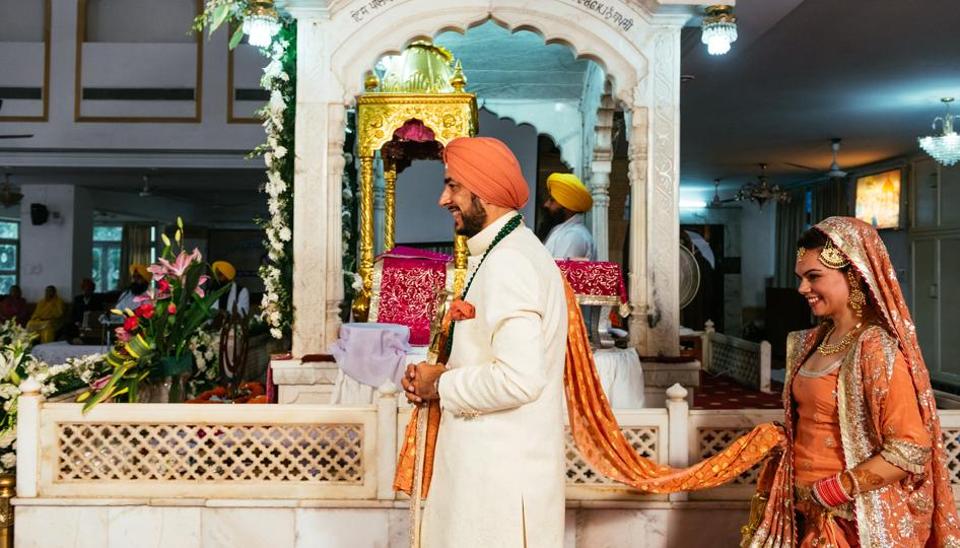
According to the bill, a marriage ceremony or ‘Anand Karaj’, defined as “the lawful union of a Sikh male and Sikh female”, will be performed in accordance with religious practices enshrined in the Guru Granth Sahib.

 Prefer HTon Google


Pakistan’s most populous province of Punjab created history on Wednesday by passing a law exclusively for regulating marriages of the Sikh minority.
The proposers of the legislation said this was the first time family matters of the Sikh community, such as marriages, will be regulated separately by authorities, according to the local media.
The Punjab Sikhs Anand Karaj Marriages Act 2018 was first moved in the Punjab assembly by legislator Sardar Ramesh Singh Arora in October 2017. After garnering support from chief minister Shehbaz Sharif and other members of the treasury and opposition benches, the bill was unanimously passed by the assembly.
The passing of the bill effectively repealed the Anand Marriage Act of 1909 that was passed during British rule. The bill will come into force after it is approved by the provincial governor. Every Sikh marriage that took place before the bill came into force will also gain legal status.
According to the bill, a marriage ceremony or ‘Anand Karaj’, defined as “the lawful union of a Sikh male and Sikh female”, will be performed in accordance with religious practices enshrined in the Guru Granth Sahib. The ceremony will be performed by a man or a woman called a ‘granthi’ who will read out from the holy book.
The media reported that the Sikh community welcomed the passage of the bill and lauded the role of the Punjab government. Sikh leaders said it was a good omen that showed love and respect for members of the community, adding it allowed them to protect family matters.
Sardar Ramesh Singh Arora told reporters that he had highlighted how it was unfortunate that Sikhs had not been given a separate identity in terms of family laws in India.
He said it is necessary to define the law to regulate the solemnisation and dissolution of Sikh marriages, provision of maintenance and ancillary matters.
A similar bill for Hindu marriages was passed in 2017. The Hindu Marriage Bill 2017 was aimed to help Hindu women get documentary proof of their marriage. It was the first personal law for Pakistan’s Hindus minority, applicable in Punjab, Balochistan and Khyber Pakhtunkhwa provinces. Sindh province already had its own Hindu marriage law.
Around 3% of Pakistan’s population of 180 million belong to the non-Muslim minority, which includes Hindus, Sikhs, Christians and Ahmadis (who are not permitted to call themselves Muslims). The estimated 20,000 Sikhs in Pakistan mostly live in the Punjab and Khyber Pakhtunkhwa provinces.