
 E-Paper




Nawaz Sharif rejects condemnation of his remarks on Mumbai terror attack
“I am not an ordinary citizen but a three-time prime minister elected by the people of Pakistan. Hence, I am privy to realities,” he said.

 Prefer HTon Google


Former premier Nawaz Sharif on Tuesday rejected the condemnation of his controversial remarks on the 2008 Mumbai attacks by Pakistan’s top civil-military body, saying the leadership should instead look at the impact of terrorism on the country.
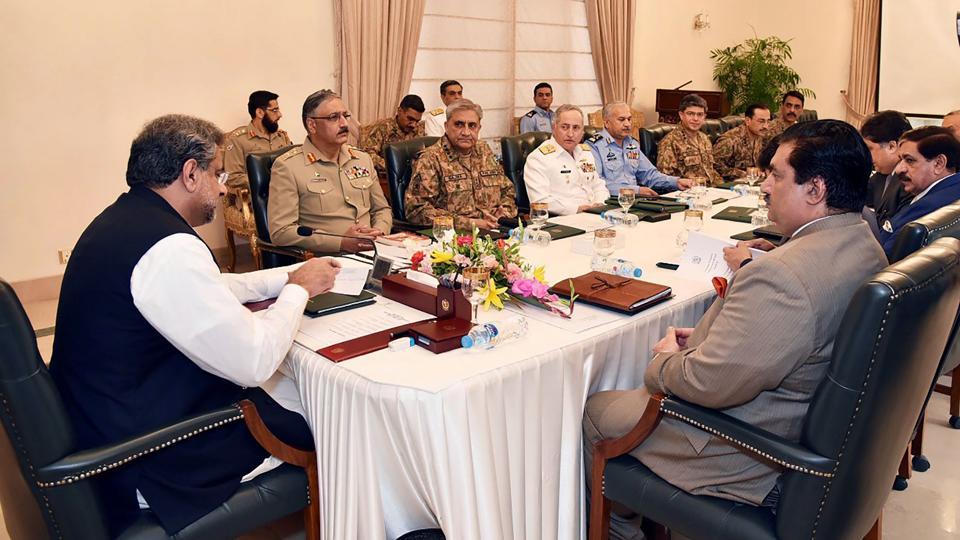
Sharif’s remarks questioning the policy of using Pakistan-based terrorists for cross-border attacks such as the assault on India’s financial hub, made during an interview with Dawn newspaper, stirred a hornet’s nest. On Monday, the National Security Committee (NSC) condemned the comments and described them as “incorrect and misleading”.
Speaking to reporters outside an anti-corruption court in Islamabad, Sharif described the stance adopted by the NSC as “painful and regrettable” because it was “not based on facts”.
He said, “I reject the NSC’s May 14 statement as it is based on misperception…I am not an ordinary citizen but a three-time prime minister elected by the people of Pakistan. Hence, I am privy to realities.”
Sharif said it was time the country knew who was responsible for the current state of affairs. “What have we turned this country into? Who introduced terrorism to this beautiful country?” he said.
Against the backdrop of allegations by the opposition that he had gone against the country’s interests, Sharif demanded the formation of a national commission to decide who had committed treason. “A decision should be made about who is a patriot and who is a traitor…We should find out who laid the foundation of terrorism in the country,” he said.
“Who led Pakistan towards isolation and has brought the country to a stage where the international community is not ready to accept Pakistan’s narrative? The national commission should be tasked to find the cause of these issues.”
Sharif also said he had raised the issue of terrorism resulting in Pakistan’s isolation during an NSC meeting that led to “Dawn Leaks” after the matter was reported by the newspaper.
“Even at that time, the same things, getting our house in order, were being discussed in an NSC meeting,” he said, referring to a meeting of the body in 2016.
Shortly after Sharif spoke to the media, Prime Minister Shahid Khaqan Abbasi defended the ousted premier’s comments in the National Assembly or lower house of Parliament. Abbasi said the PML-N chief’s comments were “misreported” and “misinterpreted”.
He added: “Whatever was said during that interview and whatever was written by the reporter was misinterpreted by the Indian media in order to serve India’s own purposes.”











