
Australian police raided the headquarters of public broadcaster ABC on Wednesday, the second high-profile raid on journalists in 24 hours in a sharp crackdown on sensitive leaks.
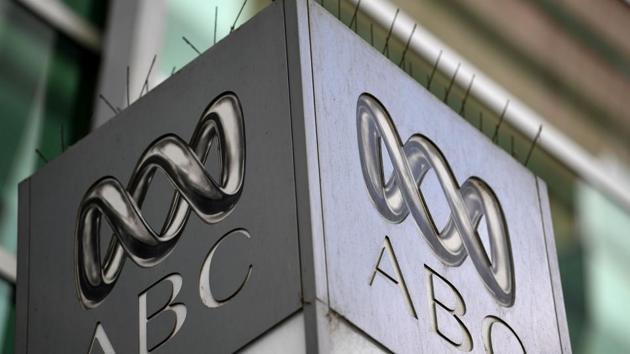
Six police descended on the corporation’s offices in Sydney armed with a warrant targeting three senior journalists and executives involved in a two-year-old investigative report.
Suggested For You
In 2017, ABC obtained documents that showed Australian special forces had killed innocent men and children in Afghanistan.
The Australian Federal Police said the search was “in relation to allegations of publishing classified material, contrary to provisions of the Crimes Act 1914.”
ABC executive editor John Lyons said the search warrant demanded access to reporters’ handwritten notes, emails, story drafts, footage and passwords, among other things -- going through a total of 9,214 documents.
“This is a really serious escalation of the attack on the free media, and that hits the public,” he said as the raid continued. “I’ve never seen an assault on the media as savage as this.”
“It’s not just about the media. It’s about any person out there who wants to tell the media about a bad hospital or a school that’s not working. Or a corrupt local council.”
A day earlier police raided a journalist’s home in Canberra over a report that detailed the authorities’ bid to gain powers to spy on Australian citizens communications at home.
{{/usCountry}}A day earlier police raided a journalist’s home in Canberra over a report that detailed the authorities’ bid to gain powers to spy on Australian citizens communications at home.
{{/usCountry}}Police said there was “no link” between the two raids which relate to “separate allegations of publishing classified material”.
Both stories involved sensitive and potentially classified materials and were embarrassing to the Australian government and the security services in particular.
Prime Minister Scott Morrison has tried to distance himself from the raids, which come just days after the re-election of his conservative government, insisting they were police, not government, matters.
“Australia believes strongly in the freedom of the press and we have clear rules and protections for the freedom of the press,” he said during a visit to London.
“There are also clear rules protecting Australia’s national security and everybody should operate in accordance with all of those laws passed by our parliament.”
‘Attempt to intimidate’
Police said that controversial Home Affairs Minister Peter Dutton was not notified about the raids beforehand, and that the issues had been referred by two unnamed agency heads.
Shadow home affairs minister, the Labor party’s Kristina Keneally, demanded an explanation for why the raids occurred.
Although the press in Australia can report largely free of political interference, strict defamation laws, court gag orders and state security statutes affect what can be said in print and broadcast.
Australia’s Media, Entertainment and Arts Alliance union branded the raids a “disturbing attempt to intimidate legitimate news journalism that is in the public interest.”
“Police raiding journalists is becoming normalised and it has to stop... it seems that when the truth embarrasses the government, the result is the Federal Police will come knocking at your door.”
Explore More
ABOUT THE AUTHOR
Follow the latest breaking news, major developments and agenda-setting stories from India and around the world with the newsdesk at Hindustan Times. Operating round the clock, the desk brings together experienced editors, reporters and correspondents to deliver fast, accurate and contextual reporting across subjects that influence public policy, governance, business, society and international affairs. The HT News Desk covers politics, elections, government policies, the economy, business and markets, science and technology, the environment, law and order, infrastructure, education, climate issues and geopolitics, while closely tracking developments across states, institutions and global capitals. The team also leads coverage of major breaking news events, policy announcements, court proceedings, natural disasters, public emergencies and significant international developments. Reports published by the newsdesk are based on information gathered from reporters on the ground, official statements, government agencies, court records, regulatory filings, recognised institutions and other authoritative sources. Stories undergo editorial scrutiny and verification processes to ensure accuracy, fairness and relevance, and are updated as events evolve and additional information becomes available. Whether covering a key political decision in New Delhi, an economic policy shift affecting millions, a landmark court ruling or a major global event, the HT News Desk aims to provide readers with reliable, fact-based journalism that delivers not only the latest developments but also the context and analysis needed to understand their wider implications.
