E-Paper




Not all soundbars deliver the same experience. Here is what matters before you buy one
Choosing a soundbar involves more than checking wattage or Dolby Atmos support. Here are key features, formats and connections to consider before buying one.



Our Picks
FAQs
Our Picks
| Product | Rating | Price |
|---|---|---|
Sony BRAVIA Theater Bar 5, 3.1 Channel Home Theater Soundbar for TV with Powerful Wireless Subwoofer, Surround Sound by Dolby Atmos, BluetoothView Details  | ₹27,989 | |
 | ||
Samsung 370 W 3.1 ch Soundbar with Dolby Audio | DTS Virtual:X | Q-Symphony | Center Speaker | 3D Surround Sound | HDMI ARC | Optical in | Bluetooth | USB | Wireless Subwoofer (HW-B650F/XL, Black)View Details | ||
| ||
JBL New Launch Bar 500 MK2, Dolby Atmos Soundbar with Wireless Subwoofer, 5.1 Channel, 3D Surround, Multibeam, HDMI eARC with 4K Dolby Vision Pass-Through,Wi-Fi+BT, One App, 750W, 2 yrs WarrantyView Details | ₹49,999 | |
| ||
Sony HT-S400 2.1ch soundbar with Powerful Wireless subwoofer, S-Force PRO Front Surround Sound and Dolby Digital (330W, Wireless Connectivity, Bluetooth)View Details | ₹18,990 | |
| ||
JBL Bar 2.1 Essential Soundbar (440W) | Dolby Digital & Powerful Bass, Wireless Subwoofer, HDMI ARC, Bluetooth Streaming, Optical InputView Details | ₹19,999 | |
| ||

Research-Backed Choices
Every product we recommend is chosen through a combination of Primary Research and Secondary Research.
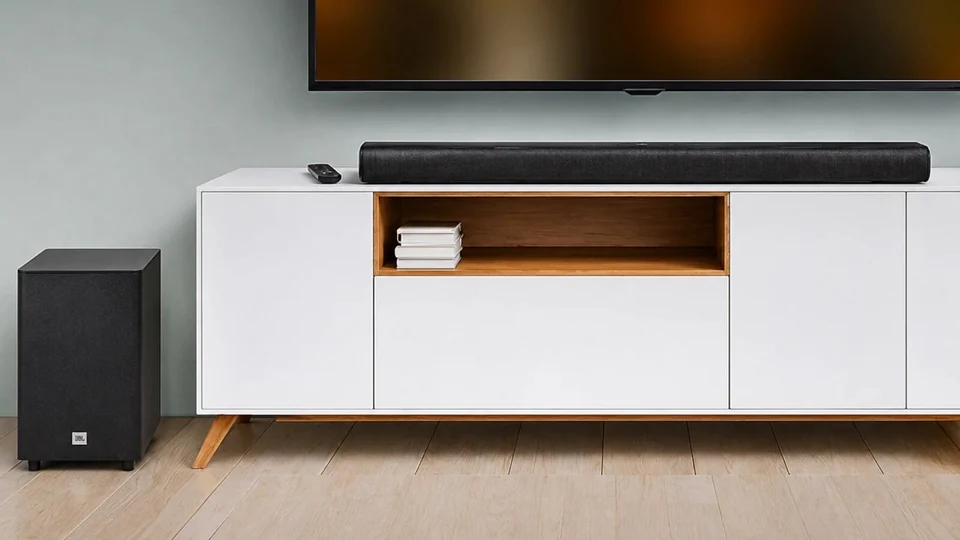

Does your television deliver a good picture but leave you struggling to hear dialogue or enjoy action scenes? A soundbar can make a pretty big difference without requiring a complicated home theatre setup. However, choosing one is not as simple as picking the model with the highest wattage or the longest list of features. Soundbars come in different channel configurations, sizes and price ranges. Some focus on clearer dialogue and everyday TV viewing, while others offer dedicated subwoofers, surround sound and Dolby Atmos support. The right choice depends on your room, television, viewing habits and budget. Here is what to check before bringing one home.
How to choose a soundbar: 7 things to consider
- Start with the size of your room and television
Before looking at specifications, consider where the soundbar will sit. A compact model may work well in a bedroom or a small living room, but it might struggle to fill a larger space with sound. Similarly, a wide soundbar placed beneath a relatively small television can look disproportionate, particularly if it blocks the screen's infrared receiver or sits awkwardly on the TV stand.
Check the soundbar's dimensions against the available space. If you plan to wall-mount it, look at its mounting requirements and whether the necessary brackets are included. Also consider the position of the television's stand, since some designs leave very little room underneath the screen.
Room size matters because sound needs space to travel and reflect. A powerful system in a small room can feel overwhelming, while a compact unit in a large open-plan space may not deliver the impact you expect.
2. Understand soundbar channels before paying extra
Channel configuration is one of the most useful specifications to understand. It tells you how many audio channels a soundbar is designed to reproduce.
- 2.0 channel: Two channels, left and right, without a dedicated subwoofer. Suitable for basic TV viewing and clearer stereo sound.
- 2.1 channel: Adds a subwoofer for stronger bass, making films, music and action sequences more engaging.
- 3.1 channel: Includes a dedicated centre channel, which can help make dialogue more distinct.
- 5.1 channel: Adds surround channels for a more enveloping experience, although the actual effect depends on speaker placement and system design.
- 5.1.2 or higher: The final number represents height channels, which can help create overhead audio effects in compatible systems.
3. Is Dolby Atmos worth paying more for?
Dolby Atmos is among the most advertised soundbar features, but it is important to understand what it offers. Unlike conventional surround sound, Atmos can place audio at different heights, creating the impression that certain sounds are coming from above or around the listener.
Some soundbars use upward-firing speakers to bounce sound off the ceiling, while others rely on virtual processing to simulate a more spacious effect. These approaches are not identical. A system with dedicated height speakers can create a more convincing effect, provided the room's ceiling and layout are suitable.
You will also need compatible content and a television or streaming device that can pass through the required audio formats. If you mostly watch regular television programmes, YouTube videos or news, paying a substantial premium for Atmos may not make much sense. For film enthusiasts with compatible streaming subscriptions, it can be a worthwhile upgrade.
4. Check the subwoofer and bass performance
A soundbar can improve television audio, but its ability to reproduce low-frequency sounds depends on its design. This is where a subwoofer becomes useful. It handles deeper bass, giving explosions, background scores and music more weight.
Some soundbars include a separate wireless subwoofer, while others have built-in bass drivers. A wireless unit is easier to position without running an audio cable across the room, although it still needs a power outlet.
Do not assume that a larger subwoofer or a higher wattage automatically means better bass. Excessively strong bass can overpower dialogue, especially in smaller rooms. Look for adjustable bass settings and different sound modes so you can tune the output to your preference. If you live in an apartment, a system with a night mode or adjustable subwoofer level can also be useful.
5. Look beyond wattage when comparing performance
Manufacturers often highlight total output power in watts, making it tempting to choose the soundbar with the biggest number. However, wattage alone does not tell you how good a system will sound.
The speaker design, audio processing, cabinet construction and room acoustics all influence the final result. A well-designed soundbar with lower rated output can sound more balanced than a poorly tuned system with a higher figure.
If possible, listen to the soundbar before purchasing it. Try dialogue-heavy content, music and a film scene with background effects. Pay attention to whether voices remain clear when the soundtrack becomes loud. This is a more useful test than judging performance from the specification sheet alone.
6. Check connectivity and television compatibility
A soundbar should connect easily to your existing television and other devices. HDMI ARC (Audio Return Channel) allows compatible TVs to send audio to the soundbar through an HDMI cable. HDMI eARC offers greater bandwidth and supports higher-quality audio formats, including lossless audio where the connected devices and content support them.
Optical audio is another option, particularly for older televisions, but it has limitations with some advanced audio formats. Bluetooth is useful for playing music from a smartphone, while Wi-Fi support can offer additional streaming options.
Before buying, check which ports your television actually has. Also look for HDMI CEC support, which can allow you to control the soundbar's volume using the TV remote. This small convenience can make everyday use considerably easier.
7. Consider ease of use, controls and long-term value
A soundbar is something you will probably use every day, so the software and controls matter. Check whether it includes a physical remote, supports your preferred streaming services and offers useful modes such as Movie, Music, Voice or Night.
An accompanying app can make adjusting equaliser settings easier, but it should not be essential for basic operation. If you want to expand your setup later, check whether the soundbar supports optional rear speakers or a compatible subwoofer.
Finally, consider the warranty, service availability and the cost of replacement accessories. A slightly more expensive soundbar from a brand with accessible after-sales support may offer better long-term value than a cheaper system with limited service options.
Major differences between soundbar configurations
Which soundbar should you buy?
The best soundbar is not necessarily the most expensive model or the one with the highest wattage. If you mainly want louder, clearer television audio, a good 2.0 or 2.1 system may be enough. A 3.1 configuration is worth considering if dialogue clarity is a priority, particularly for films and television shows.
For a more cinematic experience, look at 5.1 systems or soundbars with Dolby Atmos and dedicated height channels. Just make sure your television supports the required connections and your room can accommodate the setup. Ultimately, prioritise balanced sound, compatibility and ease of use over a long list of specifications.
Similar stories for you:
Dolby Atmos, thunderous bass and serious power. What makes a home audio system worth buying?
Portable or party speaker? Here's what I'd buy for better sound at home and outdoors
2.1, 3.1 or 5.1 channel soundbar: Which setup offers the best experience for movies and music?
Disclaimer: At Hindustan Times, we help you stay up-to-date with the latest trends and products. Hindustan Times has an affiliate partnership, so we may get a part of the revenue when you make a purchase. We shall not be liable for any claim under applicable laws, including but not limited to the Consumer Protection Act, 2019, with respect to the products. The products listed in this article are in no particular order of priority.