
Real estate developers' apex body CREDAI said on November 27 that it had submitted recommendations for the Union Budget 2027-28, seeking targeted tax reforms, including raising the affordable housing price threshold to ₹90 lakh and introducing a uniform, area-based definition.
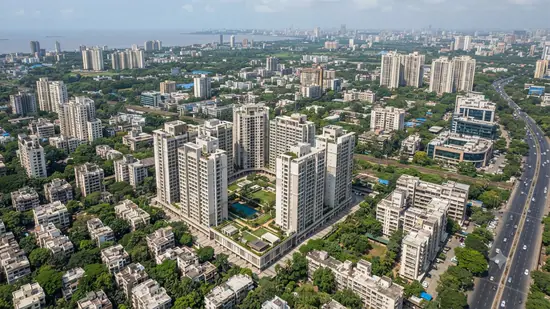
In a statement, CREDAI suggested that homes priced up to ₹90 lakh each should fall into the 'affordable housing' category.
Currently, the definition of affordable housing is homes under ₹45 lakh.
The recommendations include a revised and uniform definition of affordable housing, enhanced tax benefits on home loan interest, a reduction in long-term capital gains tax on land and buildings, fiscal incentives for affordable housing development, and a strengthened credit guarantee mechanism, CREDAI said.
"CREDAI has proposed a uniform, area-based definition of affordable housing across GST, income tax and priority sector lending. The recommended RERA carpet area limits are 70 sq. m. in notified metros, 90 sq. m. in urban centres with a population of 10 lakh and above, and 120 sq. m. elsewhere. For income tax purposes, if a price ceiling is retained, CREDAI has recommended raising it to ₹90 lakh, with an annual escalation of 5% to offset inflation & rising prices of raw material and labour," CREDAI said in its statement.
According to CREDAI, to improve project viability, the association sought the reintroduction of the incentive under the former Section 80-IBA through a new Section 142A. The proposal provides for a 100% deduction on profits from eligible projects approved between April 2027 and March 2032, extending the benefit to companies, firms and LLPs, with exemption from MAT (Minimum Alternate Tax) and AMT (Alternate Minimum Tax).
"For homebuyers, CREDAI has recommended enhancing the tax deduction on housing loan interest for first-time homebuyers under the proposed affordable housing definition. The association has also proposed extending this benefit under both the old and new income tax regimes to improve homebuyer affordability and encourage homeownership," CREDAI said in the statement.
“India's housing requirements are expanding with urbanisation, and demand for affordable housing continues to remain strong. There is a need to revisit the existing affordable housing definition to align it with evolving market realities. Tax thresholds need to reflect current property and construction costs, while the tax treatment of land, home loans and development needs to support greater investment," said Shekhar Patel, President, CREDAI.
"Our recommendations seek to address these constraints through targeted fiscal measures that can improve affordability for buyers, make projects viable and encourage the release of land for development. A more consistent tax framework for housing will also support employment, investment and planned urban growth," Patel said.
Also Read: CREDAI to persist with demand for new affordable housing definition, says president Shekhar Patel
Lowering capital gains tax
According to CREDAI, it also recommended reducing the long-term capital gains tax on land and buildings held for two years or more to 5%, applicable to all taxpayers, including non-residents. The proposal intends to lower the tax burden on land transactions and encourage landowners to bring land into the development market, particularly through joint development arrangements.
"The association has also proposed a uniform 5% rate on other long-term capital gains and dividend income, subject to the specified holding periods and tax provisions. For businesses, it has sought a 22% optional tax regime for partnership firms and LLPs that forgo exemptions, bringing their tax treatment closer to that available to companies," CREDAI said in the statement.
Housing finance and rental housing
CREDAI said that to expand access to formal housing finance, it proposed strengthening the credit guarantee mechanism for affordable home loans. This includes revising and increasing the existing loan ceiling of ₹20 lakh in line with prevailing market realities and property rates, with a uniform 75% guarantee cover and eligibility linked to the value of the house rather than the borrower's income category.
CREDAI has also proposed a ten-year income tax exemption on rental income from eligible affordable homes, subject to specified conditions relating to tenancy and vacancy. The measure is aimed at encouraging investment in formal rental housing and increasing the availability of affordable homes in urban centres, the apex body said in the statement.
ABOUT THE AUTHOR
Mehul R Thakkar is a Mumbai-based journalist who closely tracks the city’s ever-evolving real estate landscape. He believes that Mumbai presents a unique reality that, while Mumbaikars deeply aspire to own a home in the city of dreams, many spend little actual time living in it due to long commutes and demanding work lives. With over 11 years of experience in journalism, I have reported across a wide spectrum of beats, including real estate, housing, infrastructure, aviation, and education. I have also extensively covered the workings of India’s wealthiest civic body, the Brihanmumbai Municipal Corporation (BMC), providing insight into the policy, governance, and urban planning decisions that directly influence Mumbai’s growth. Before joining Hindustan Times, I worked in fast-paced digital and print newsrooms, including Moneycontrol.com and Deccan Chronicle, as well as national dailies such as The Asian Age and DNA. Outside the newsroom, I am an avid weather tracker, a fan of spy thrillers in both books and films, and a keen follower of international affairs.
