
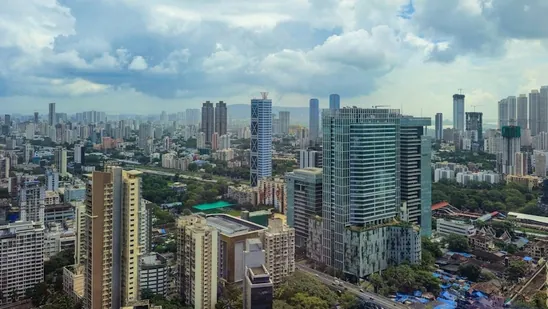
Mumbai is among the Asia-Pacific region's top 10 preferred destinations for cross-border real estate investment, reflecting growing global investor confidence in India's long-term growth potential, according to Colliers' 2027 Global Investor Outlook.
Tokyo ranks first, followed by Osaka and Sydney. Other preferred destinations include Melbourne, Singapore, Brisbane and Sapporo, followed by Seoul. Hong Kong, Auckland and Ho Chi Minh City are tied for ninth place.
Mumbai's inclusion reflects its position as India's financial and commercial capital, supported by a deep and diversified occupier base, a growing pool of investment-grade assets and improving infrastructure. While the office sector remains a key investment destination, major Indian cities are also attracting capital across residential, industrial and logistics, data centres, hospitality and other real estate segments, the report showed.
Infrastructure developments such as the Mumbai Trans Harbour Link and Navi Mumbai International Airport are improving regional connectivity and opening up new growth corridors across the metropolitan region, further strengthening the city's appeal to domestic and international investors, the report noted.
“Mumbai, amongst APAC's preferred cross-border investment destinations, underscores the growing confidence of global investors in India's established markets and their long-term growth potential. Looking ahead, we expect investment activity across the top Indian markets to remain robust, driven by strong occupier demand, increasing appetite for high-quality assets, and a greater focus on value creation,” said Badal Yagnik, CEO and Managing Director, Colliers India.
{{/usCountry}}“Mumbai, amongst APAC's preferred cross-border investment destinations, underscores the growing confidence of global investors in India's established markets and their long-term growth potential. Looking ahead, we expect investment activity across the top Indian markets to remain robust, driven by strong occupier demand, increasing appetite for high-quality assets, and a greater focus on value creation,” said Badal Yagnik, CEO and Managing Director, Colliers India.
{{/usCountry}}"Asset repositioning, sustainability initiatives, operational enhancements, and AI-led transformation are expected to emerge as key investment themes in 2027, further strengthening India's appeal to institutional capital," he said.
Colliers' 2027 Global Investor Outlook is based on insights from its in-house experts and a survey of more than 1,170 international investors across 35 countries. The findings point to a more targeted investment environment across Asia-Pacific in 2027.
Value creation to drive investment strategies
Asia-Pacific real estate investors are navigating higher financing costs, with 60% of capital deployment in the region focused on value-add and opportunistic strategies, according to the report. Resilient occupier demand, rental growth prospects and improving market conditions are prompting investors to deploy capital more selectively in markets and sectors offering income growth, value creation and long-term stability, the report showed.
Quality assets to define the next office cycle
Investors across Asia-Pacific continue to favour office assets, particularly higher-quality properties with strong income fundamentals, alongside industrial and logistics and multifamily assets. Meanwhile, AI and digitalisation are driving growing interest in data centres, with 40% of APAC investors favouring powered land as their preferred acquisition strategy.
Colliers expects the next office investment cycle to be characterised by a widening divide between prime and secondary assets rather than a broad-based recovery. Prime Grade A offices across major markets are positioned to benefit from occupiers' continued flight to quality and rental growth, while investments in lower-quality buildings will increasingly depend on their potential for refurbishment, repositioning or change of use.
In India, Grade A office assets across Mumbai, Bengaluru, Delhi-NCR, Hyderabad and Pune are expected to remain preferred investment choices, supported by robust space uptake across demand segments, including Global Capability Centres (GCCs).
Investment opportunities in India are also expanding beyond offices to industrial and logistics, residential, hospitality and alternative assets. While office properties accounted for 37% of India's real estate investments in the first nine months of 2026, investments in alternative and hospitality assets increased six to seven times each compared with the corresponding period in 2025, it noted.
Within alternative assets, data centres are witnessing renewed investor interest in cities such as Mumbai, driven by growing hyperscale requirements, rising enterprise data usage and supportive digital infrastructure policies, the report noted.
ABOUT THE AUTHOR
Vandana Ramnani leads the real estate vertical at Hindustan Times Digital, bringing over two decades of journalism experience across real estate, education, human resources, and foreign affairs. She specialises in India’s real estate sector, covering residential and commercial markets in Delhi-NCR, Mumbai, and Bengaluru, with in-depth reporting on regulatory developments, urban policy, housing trends, and interviews with industry leaders. Her work has also appeared in the Hindustan Times newspaper and HT Estates. Earlier, Vandana played a key role in establishing the real estate vertical at Moneycontrol (NW18 Group), shaping its editorial direction and market coverage. She has also written extensively on international education for HT Education, tracking global study destinations, policy changes, and student mobility trends, earning the Singapore Education Award 2009 for Best Media Coverage (Print). Her reporting portfolio includes human resources and employment trends for HT ShineJobs and PowerJobs, as well as lifestyle and interior design features for HT Premium Homes. Vandana began her career with the Press Trust of India, gaining strong editorial and reporting expertise. She was also selected for a prestigious fellowship at Fondation Journalistes en Europe in Paris, where she wrote for EuroMag. One of her notable reporting assignments included covering Germany’s capital relocation from Bonn to Berlin. Outside of journalism, Vandana is a passionate traveller, constantly seeking out charming hideaways across India and the lesser-known, offbeat corners of Southeast Asia.
