
 E-Paper





‘Dil mein aata hun…”: Why some can’t fathom Yogi Adityanath’s win
For a part of the commentariat, bred on a steady diet of outlets whose appeal for donations are longer than the actual length of articles, every election result is a shock to system.




The human condition is defined by our struggles.
There are small struggles, like the daily wage labourer trying to earn a fair day's pay so he can feed his family.
There is the South Bombay – Defence Colony denizen trying to justify why Gehraiyaan is a deep art film and ‘relatable’.
There’s Sotheby’s trying to put an accurate price on Didi’s paintings.
There are foreign policy correspondents going out of their way to blame India for Russia’s incursions in Ukraine.
But, at the top of the heap, are studio anchors with Ramnath Goenka Award certified punditry, trawling the heartlands of UP, trying to understand why despite five years of negative coverage – people are willing to vote for Yogi Adityanath.
The struggle, as the kids say these days, is quite real, especially on election result days.
Every election result day reminds us of an unsaid truth about Indian politics and media. A large part of the English-speaking media, who have their jobs because they have the ability to speak English rather than any tangible skill, don’t have a clue about India at all.
For a part of the commentariat, bred on a steady diet of outlets whose appeal for donations are longer than the actual length of articles, Instagram stories, or the New York taxi drivers’ epiphanies, every election result is a shock to the system, like Plato’s Man who has just left his cave. Of course, it’s a different matter that for the aforementioned outlets, everything is a loss for Modi or BJP, and given a chance, they’d craft an op-ed on how the earth spinning on its own axis is bad news for BJP.
Calling elections in a country of India’s magnitude with its myriad variables is a dangerous proposition to begin with, but the conviction, with which reporters parachuted into distant constituencies call elections would put Paul the Octopus to shame.
Indian elections are covered in a scripted format that makes WWE look tame.
First, we’ve commentators saying BJP is on the wane. This view will be bolstered by finding the odd individual who is upset about the party in one particular area. His or her disapproval will be extrapolated to show that the entire area is upset with BJP. Then there will be op-eds that will claim that Modi has lost his magic.
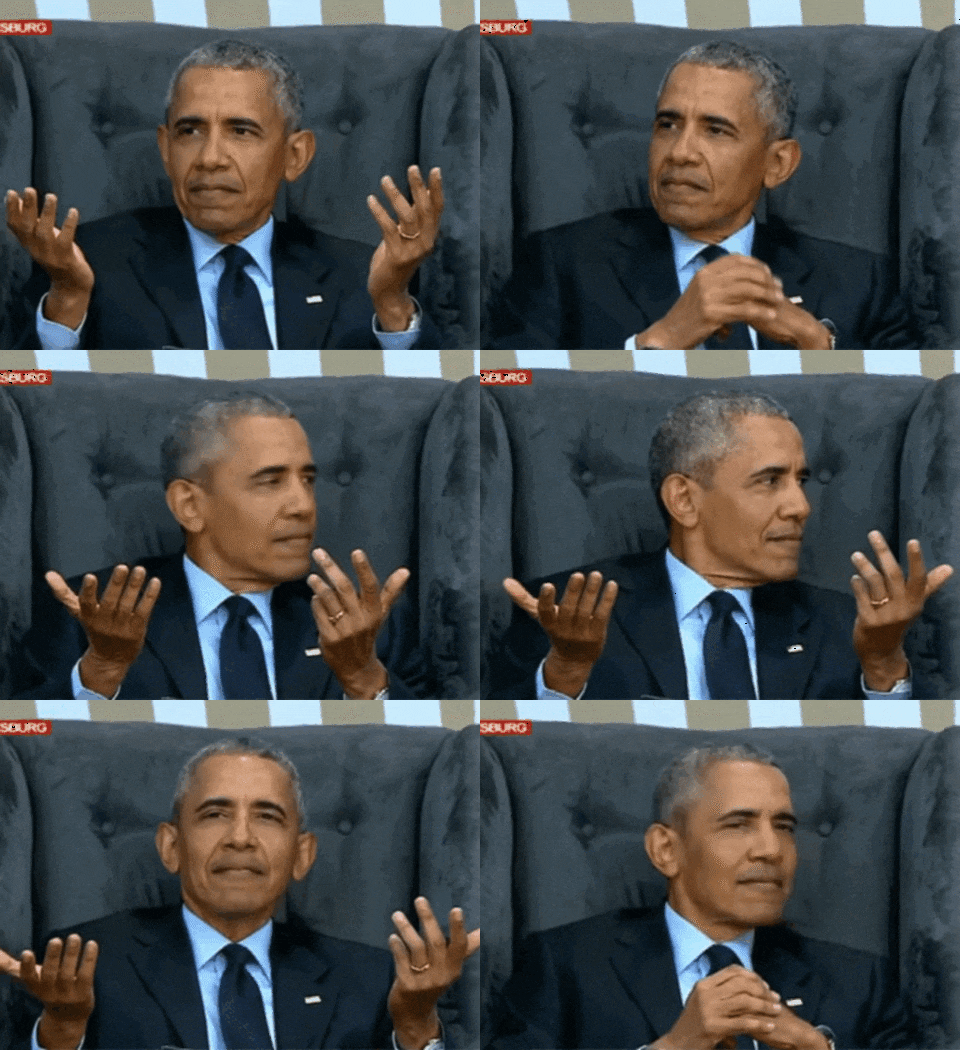
Next, the Opposition figure, irrespective of his party will be elevated to what I like to call a Barack Obama level. We’ve seen it with Akhilesh Yadav, Uddhav Thackeray, Mamata Banerjee and when there are no politicians in town, even Shah Rukh Khan. The burden of upholding secularism falls upon said individual who is considered the Lodestar around which India’s opposition parties will learn to beat BJP, but it won’t just be an electoral defeat. Even Raj Thackeray was catapulted to the exalted status of a liberal icon once in this matter.
Sadly, when things don’t pan out this way, we will move to the usual conspiracy theories about EVMs.
And finally, when convinced that EVMs – which are practically oversized calculators cannot be mass-hacked – we will claim that the minds and hearts of individuals across the country have been hacked.
They will blame it on majoritarianism, a truly odd lament given that all democracies run based on the idea of an individual getting a majority.
Now here’s the thing, there are a billion reasons why people vote the way they do. In some ways, Yogi Adityanath is like Salman Khan. As the Bollywood heartthrob, whose fans love him unconditionally said once: “Dil mein aata hun, samajh mein nahin.”
But still, let’s try to understand why Yogi Adityanath managed things that no UP CM has done before – survive the Noida jinx and come back to power for a consecutive second term.
For starters, Yogi Adityanath wasn’t just fighting this alone. He was doing so amid the backdrop of a pandemic which brought the world to a halt but in which India can pat itself on the back, despite the brutal Delta wave.
India’s polio eradication campaign was one of the most remarkable healthcare drives of all-time. It dwarfs in comparison to India’s vaccination drive which simply hasn’t received the praise that an achievement of that magnitude ought to do.
Secondly, Yogi Adityanath is often castigated for his comments on women saying they can’t be ‘independent’, but deeds speak louder than words.
According to NCRB data for 2020, the state reported 2,709 rape cases, 43% compared to 2016. Attempt to rape cases fell by 87%, acid attacks halved, and cases of kidnapping declined by 22.7%.
To not count the beneficiaries of the various government welfare schemes, termed labharti varg (welfare beneficiaries) is to do a grand disservice to the efforts of the state and central regimes. These include beneficiaries of the Pradhan Mantri Awas Yojana, Swacch Bharat Abhiyan, PM-KISAN scheme and Ujjwala Yojana.
To put it simply, if you are a woman who got a toilet, bank account or gas connection for the first time in your life, there's very little chance you will vote for another party, much like a previous generation voted for the Congress for aeons because it was the party that is associated with India’s independent struggle. As a “popular anchor” was shocked to learn upon his trip to UP, chara aa raha hai.
As PM Modi noted to HT in a wide-ranging interview, the Indian voter was more inclined to vote for development, for state and country as opposed to caste.
Now caste might not be completely eradicated, the results so far indicate they are mattering less and less. For example, those that trawl international forums and run campaigns to Dismantle Global Hindutva often forget that Hindutva means caste unity, including Dalits.
This has shown itself time and again in the voting. Despite constant complaints that it's anti-Dalit, the BJP has done remarkably well in reserved seats in both Lok Sabha and Assembly elections. In 2017, BJP and its allies won 74 of the total 84 reserved seats in Uttar Pradesh. In 2019 General Elections in Uttar Pradesh, BJP managed to win 15 of the 17 reserved seats.
And lastly, commentators tend to forget just how emotive an issue the Ram Janmabhoomi movement was for the party whose raison d’etre has always been the RJB movement, Uniform Civil Code and revoking Article 370.
Out of the 3, BJP has already manged two.
As Rajdeep Sardesai noted in his widely-read HT column predicting the BJP had an edge: “In the narrow lane leading from the Hanuman Garhi temple to the Ram Janmabhoomi site in Uttar Pradesh (UP)’s Ayodhya, the shopkeepers are upset. Their shops will be demolished to widen the road as part of a renovation design. Who will you vote for, I ask them. “Vote toh BJP [Bharatiya Janata Party] ko padega, without Modi-ji and Yogi-ji, there would be no Ram Temple. Aastha [faith] bhi important hai!” is the telling response.”
Of course, none of this is rational, especially among bone-crunching economic losses. But then again, one can’t view religion through the prism of rationality as Justice Indu Malhotra noted in her dissenting statement on the Sabarimala verdict.
Of course, our commentariat probably won’t get it because as the misanthropic Dr House often used to note: “If you could rationalise with religious people, there’d be no religious people.”
The same goes for armchair activists trying to comprehend why BJP keeps winning.
The views expressed are the author's own.











