E-Paper




Drought-like situation in half of UP hits paddy sowing
Half of Uttar Pradesh, including the semi-arid Bundelkhand region, faces a drought-like situation due to a monsoon deficit, which is hitting paddy plantation and posing a threat to the timely sowing of other kharif crops too.

 Prefer HTon Google


Half of Uttar Pradesh, including the semi-arid Bundelkhand region, faces a drought-like situation due to a monsoon deficit, which is hitting paddy plantation and posing a threat to the timely sowing of other kharif crops too.
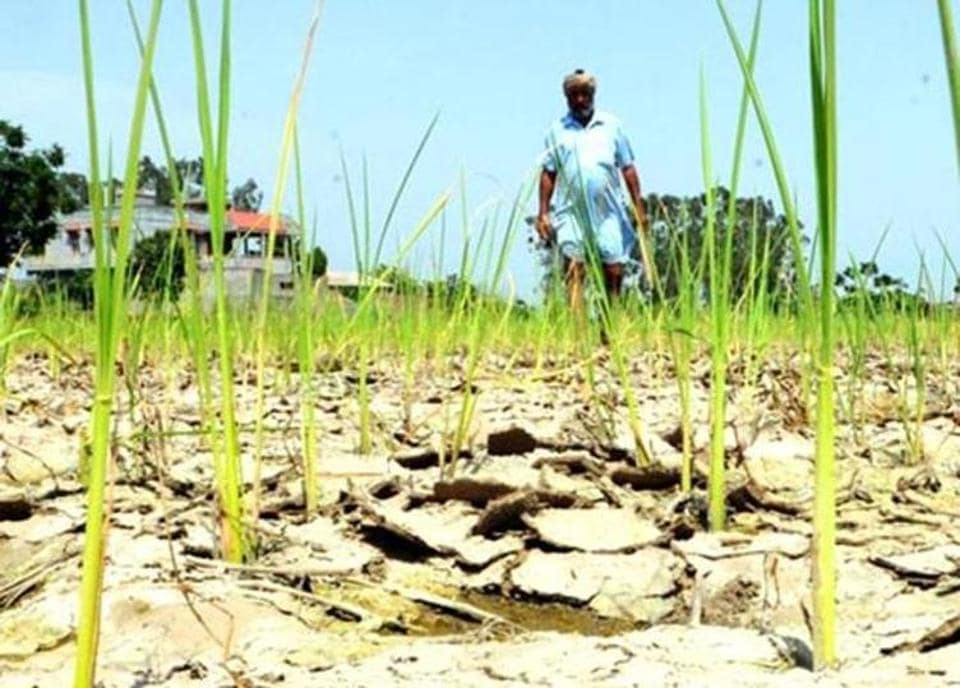
Although the authorities avoid admitting to a drought in the state, the state government is keeping a close watch and working on an action plan to deal with the situation if it worsens. “Certainly, there is a monsoon deficit causing concern to us, but it will be too early to say there is drought in the state because the monsoon is not over and rains can still come anytime,” principal secretary, agriculture, Amit Mohan said.
He said an advisory might be issued to farmers in case sufficient rainfall remained elusive for a week or two.
The Met department’s data available with the agriculture directorate here shows the state has received only 120.7 mm rainfall against the 249 mm normal between June and July (till July 17), which is only 48.5% of the normal.
The situation is the worst in Bundelkhand , one of the state’s four economic zones. This region has received only 37.1% of the normal rainfall during the period followed by eastern UP with 47% of the normal rainfall.
The western and the Central zones are slightly better off, having receiving 52.1% and 55.1% of the normal rainfall.
The rainfall has been below 40% of the normal in 31 of the 75 districts. The Met department defines this as scanty rainfall.

The districts of Chitrakoot, Chandauli and Mau, with merely 4.2%, 4.7% and 5.3% of the normal rainfall, are the most parched districts in the state.
Varanasi, Ghaziabad, Gautam Buddh Nagar, Rae Bareli, Etawah, Kanpur Dehat, Azamgarh, Rampur and Kasganj are among the 31 other districts with scanty rainfall.
Another 27 districts with 40%-60% of the normal rainfall have been put under the category of ‘highly deficit’ districts. These districts include Lucknow, Allahabad, Meerut, Bareilly and Aligarh.
Only five districts (Mathura, Hathras, Farrukhabad, Balrampur and Etah) have received normal rainfall. The districts of Lakhimpur Kheri, Shahajahanpur, Shravasti and Bahraich have received excess rain, that is over 120% of the normal precipitation.
The deficit rainfall has delayed the plantation of paddy, one of the state’s main crops. The time for sowing paddy will be over after July 31. “Paddy is grown on 59 lakh hectares. But the crop has been sown only on 30% land so far. The remaining plantation has to be done by the month-end, beyond which plantation of all varieties, except the Basmati, would be too late,” director, agriculture, Soraaj Singh said.
He said as per the Met department’s forecast, good rains were expected in western UP by July 20 though reports for eastern UP were not encouraging.
He also said the sowing of other kharif crops like millets, oilseeds and pulses was not delayed yet and they could be sown by August 15.
“We are keeping our fingers crossed,” he said.