
 E-Paper







Follow the latest breaking news, major developments and agenda-setting stories from India and around the world with the newsdesk at Hindustan Times. Operating round the clock, the desk brings together experienced editors, reporters and correspondents to deliver fast, accurate and contextual reporting across subjects that influence public policy, governance, business, society and international affairs. The HT News Desk covers politics, elections, government policies, the economy, business and markets, science and technology, the environment, law and order, infrastructure, education, climate issues and geopolitics, while closely tracking developments across states, institutions and global capitals. The team also leads coverage of major breaking news events, policy announcements, court proceedings, natural disasters, public emergencies and significant international developments. Reports published by the newsdesk are based on information gathered from reporters on the ground, official statements, government agencies, court records, regulatory filings, recognised institutions and other authoritative sources. Stories undergo editorial scrutiny and verification processes to ensure accuracy, fairness and relevance, and are updated as events evolve and additional information becomes available. Whether covering a key political decision in New Delhi, an economic policy shift affecting millions, a landmark court ruling or a major global event, the HT News Desk aims to provide readers with reliable, fact-based journalism that delivers not only the latest developments but also the context and analysis needed to understand their wider implications.
Wife’s consent, ceremony proof must for adoptions: Supreme Court
Section 7 of the Act says that a male Hindu person can adopt a son or daughter only if his wife gives the consent.


The Supreme Court (SC) has ruled that the adoption of a child by a Hindu couple is valid only if there is a proof of such a ceremony and consent of the wife under the Hindu Adoptions and Maintenance Act.
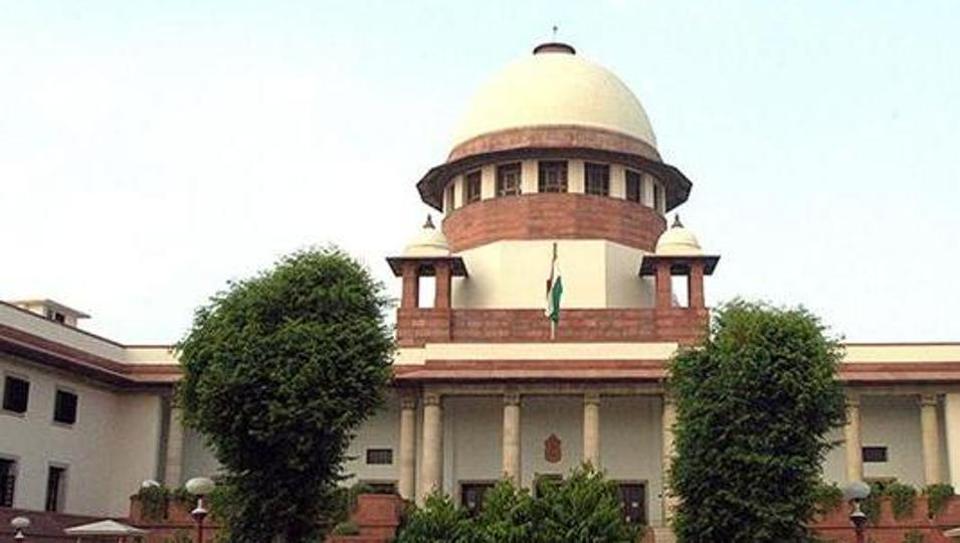
An adoption will not be valid unless the two conditions are proved, a bench of justices L Nageswara Rao and Deepak Gupta held, turning down the petition filed by one M Vanaja for division of properties of a person whom she claimed was her adoptive father.
“The two important conditions as mentioned in Sections 7 and 11 of the Act of 1956 are the consent of the wife before a male Hindu adopts a child and proof of the ceremony of actual giving and taking in adoption. The mandate of the 1956 Act is that no adoption shall be valid unless it has been made in compliance with the conditions mentioned in Chapter I of the 1956 Act,” the judgment, which was delivered on Friday, said.
Section 7 of the Act says that a male Hindu person can adopt a son or daughter only if his wife gives the consent.
Section 11 of the Act mandates that there must be proof of actual giving and taking in adoption which shows the intent to transfer the child to the adoptive family.
Vanaja’s biological parents had passed away when she was young and she was brought up by her mother’s sister Sarla Devi and her husband Narasimhulu Naidu. Her school and college records and other documents, which were filed in the court by Vanaja, show the names of Sarla Devi and Naidu were entered as her parents. Even in the government records such as ration card Vanaja was mentioned as the daughter of Sarla Devi and Naidu.
Vanaja claimed that after Naidu passed away in 2003, Sarla Devi turned against her on the ill advice of her relatives and tried to deprive her share of his properties.
Vanaja filed a suit in the Hyderabad city civil court to declare her as the owner of half of the properties of Naidu. She argued that there was overwhelming record to prove that she was brought up as the adoptive daughter of Naidu and Sarla Devi. She also submitted that it was not possible for her to prove the manner in which the adoption took place as she was young at that time.
The city civil court and later the Andhra Pradesh high court had dismissed her plea.
The Supreme Court made it clear that after 1956 Act came into force, the two essential conditions, i.e. the consent of the wife and the ceremony of adoption will have to be proved in order to establish a valid adoption.
The apex court referred to its 2011 judgment in Ghisalal v. Dhapubai in which it was held that the wife’s consent is mandatory for proving adoption.
“Though the appellant has produced evidence to show that she was treated as a daughter by (late) Narasimhulu Naidu and the defendant, she has not been able to establish her adoption … the two essential conditions i.e. the consent of the wife and the actual ceremony of adoption have not been established,” the SC said rejecting Vanaja’s appeal.











