
The US on Wednesday proposed a tariff of up to 25 per cent on Indian goods, following a months-long investigation into what Washington calls "structural excess capacity" in 16 major economies. The rate would fall to 17 per cent if New Delhi signs a trade deal with Washington, according to a list released by the office of the US Trade Representative (USTR).
The USTR has set two rates for each economy: a lower "deal rate" that largely follows the agreements and frameworks countries have reached with Washington, and a higher one that US officials believe a country's policies justify. "The rates we're proposing will be consistent with what we call agreements on reciprocal trade or certain frameworks and joint statements on reciprocal trade," a senior US trade official told reporters on Tuesday. If those agreements fall away, or negotiations stop, "there could potentially be higher tariffs in the offing," he said.
The new duty will not be added to the 10 per cent tariff Indian exporters have paid since July under a separate investigation into forced labour. Importers will instead pay whichever rate is higher. "The forced labor tariffs and the structural excess capacity tariffs don't stack," the official said. At 17 per cent, that would mean a rise of seven percentage points for most Indian goods. Public hearings and comments are expected to begin soon, and the tariffs are unlikely to take effect before January, he said.
ALSO READ: Companies use Trump tariff refunds for bonuses instead of paying back consumers: Report
{{/usCountry}}ALSO READ: Companies use Trump tariff refunds for bonuses instead of paying back consumers: Report
{{/usCountry}}Featured Video
The 17 per cent is lower than the 18 per cent the two countries agreed in a framework for an interim trade deal in February. It is also lower than the rates proposed for most of India's Asian export rivals. Vietnam faces up to 35 per cent, or 20 per cent if it reaches a deal. Bangladesh, Cambodia, Indonesia, Malaysia and Thailand face 18 per cent.
An official in New Delhi, who asked not to be named, said the government was studying the details.
The commerce ministry did not respond to requests for a comment.
Deep Dive
What tariff rate could the US impose on Indian goods under its excess-capacity investigation?
Why is the US proposing an excess-capacity tariff on India?
When could the proposed US tariff on Indian goods take effect, and how would it interact with the existing duty?
India-US yet to sign the interim deal
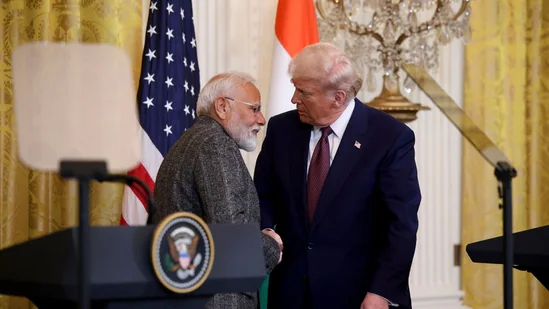
India and the US have yet to sign the interim deal. Prime Minister Narendra Modi is expected to meet President Donald Trump on the sidelines of next month's G20 leaders' summit in Florida, as the two sides try to close it. The official said he did not expect the tariffs to cause tension at the summit. "We actually expect that we may be signing more agreements at the G20 in the wake of these announcements," he said.
The European Union, Japan, South Korea, Taiwan and Switzerland face 15 per cent net of most-favoured-nation duties, and Singapore 10 per cent. China faces 20 per cent, added on top of the Section 301 tariffs Washington imposed in 2018, and up to 40 per cent, the highest of any economy. Mexico and Norway, which were also investigated, are not on the list.
The new tariffs will not be added to existing Section 232 national-security duties on automobiles, steel and aluminium either. Energy products such as oil and gas, food the US does not or cannot grow, critical minerals, fertilisers, and certain semiconductors and pharmaceuticals will be exempt, the official said.
ALSO READ: US readies new tariffs as months-long trade probe nears end; China, EU, 14 economies on radar
The USTR opened the investigation on March 11, 2026, under Section 301 of the Trade Act of 1974. The provision allows Washington to impose tariffs on countries whose trade practices it deems "unreasonable or discriminatory" and a burden on US commerce. It requires a formal investigation and public hearings, but places no fixed cap on rates.
"Evidence of structural excess capacity and production exists for India. In 2025, India had a bilateral trade surplus with the United States of $58 billion. India's global goods trade surplus sectors include textiles, health, construction goods, and automotive goods. For example, evidence suggests the solar module sector is plagued by excess capacity, including that India's current module manufacturing is nearly triple the annual domestic demand. India also has created significant excess capacity in petrochemicals, steel, and other industries," the USTR said in its notice in March.
India has disputed this. In its submission to the USTR on April 15, it said it "firmly denies all allegations made in the initiation notice" and asked for the investigation to be terminated. At the G20 Trade Ministers' Meeting in Milwaukee in October, commerce and industry minister Piyush Goyal said India has no structural excess capacity.
India's manufacturing capacity "serves its domestic and global needs", and "in the sectors identified by the G20 Presidency, India does not have structural excess capacity," the commerce ministry said in a statement, summarising Goyal's remarks.
The proposed tariffs are the latest turn in a trade dispute that began soon after the Trump administration took office. In April 2025, Washington announced a 26 per cent "reciprocal" tariff on India. By August, a 25 per cent reciprocal rate had taken effect, and a further 25 per cent penalty had been imposed over India's purchases of Russian oil, taking US tariffs on Indian goods to 50 per cent.
Tensions eased only in February, when the two countries announced the framework for an interim trade agreement. Washington agreed to revoke the Russian-oil penalty and bring India's rate down to 18 per cent.
In exchange, New Delhi undertook to eliminate or reduce tariffs on all US industrial goods and a wide range of US food and agricultural products. India also said it intends to buy $500 billion worth of US energy products, aircraft, technology products and other goods over five years.
On February 20, the US Supreme Court ruled that the emergency-powers law Trump had used did not authorise his reciprocal tariffs. The administration replaced them with a temporary 10 per cent global tariff under Section 122 of the Trade Act, which was valid for 150 days.
When that expired in July, a 10 per cent tariff under Section 301 took its place, imposed after a separate investigation into whether countries block imports made with forced labour. The USTR had proposed a 12.5 per cent rate for India, but lowered it after India banned such imports. Those duties face a legal challenge at the US Court of International Trade, Bloomberg has reported.
(With inputs from Rajeev Jayaswal in New Delhi)
ABOUT THE AUTHOR
Shashank Mattoo is the Washington DC-based US Correspondent for Hindustan Times. Shashank covers the Trump administration, the India-US relationship and America's policies towards South Asia and the broader Indo-Pacific.
