
 E-Paper







Follow the latest breaking news, major developments and agenda-setting stories from India and around the world with the newsdesk at Hindustan Times. Operating round the clock, the desk brings together experienced editors, reporters and correspondents to deliver fast, accurate and contextual reporting across subjects that influence public policy, governance, business, society and international affairs. The HT News Desk covers politics, elections, government policies, the economy, business and markets, science and technology, the environment, law and order, infrastructure, education, climate issues and geopolitics, while closely tracking developments across states, institutions and global capitals. The team also leads coverage of major breaking news events, policy announcements, court proceedings, natural disasters, public emergencies and significant international developments. Reports published by the newsdesk are based on information gathered from reporters on the ground, official statements, government agencies, court records, regulatory filings, recognised institutions and other authoritative sources. Stories undergo editorial scrutiny and verification processes to ensure accuracy, fairness and relevance, and are updated as events evolve and additional information becomes available. Whether covering a key political decision in New Delhi, an economic policy shift affecting millions, a landmark court ruling or a major global event, the HT News Desk aims to provide readers with reliable, fact-based journalism that delivers not only the latest developments but also the context and analysis needed to understand their wider implications.
‘Traffic jam’ atop Mt Everest didn’t kill climbers: Nepal
According to Ghimire, the post-mortem reports of the deceased climbers have shown that they died due to high altitude sickness, weakness or adverse weather conditions.


Nepal’s Department of Tourism (DoT) on Thursday claimed that high altitude sickness and other health reasons caused deaths on Mount Everest this spring season, not congestion.
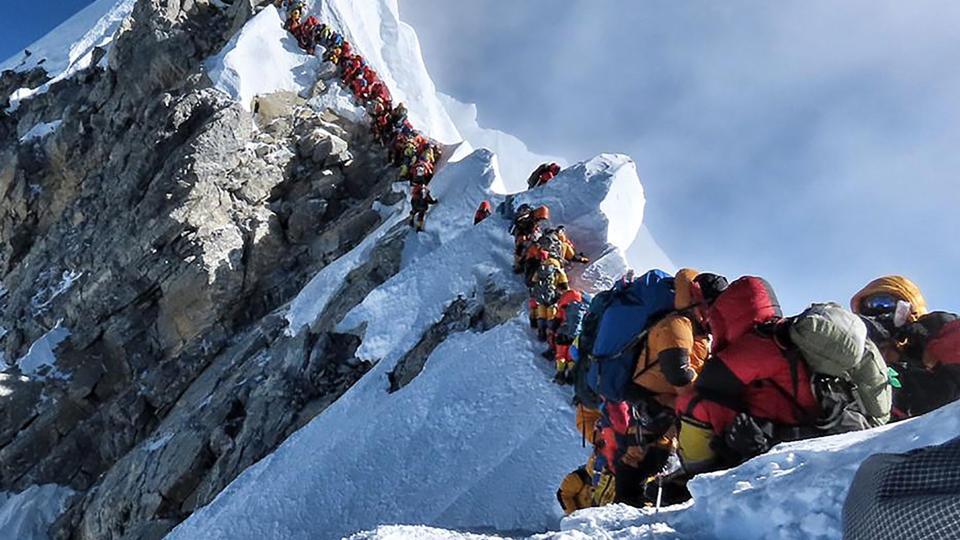
The DoT’s statement has come at a time when it is facing immense criticism for issuing too many permits to scale the world’s tallest peak while disregarding the safety of the climbers, reports The Himalayan Times.
“Our attention has been drawn to the wrong information about deaths on Everest conveyed by national and international media,” said Dandu Raj Ghimire, Director General of DoT, adding that “traffic jam” did not cause the deaths.
According to Ghimire, the post-mortem reports of the deceased climbers have shown that they died due to high altitude sickness, weakness or adverse weather conditions.
In the statement, the DoT has stated that it had issued 366 expedition permits in 2017 and 346 expedition permits in 2018 - not a huge difference compared to 381 permits issued this year for the highest peak.
Also read: 2 Indians climbers among 7 dead on overcrowded Mount Everest
“Hence, it untrue that congestion killed climbers on Mt Everest and we urge everyone not to be swayed by false information,” the statement added.
Ghimire also expressed his dissatisfaction at the dissemination of such ‘wrong’ information in the international media.
“Such false news tarnishes our image and affects our mountaineering sector. Therefore, everyone should think twice before passing such misleading messages in international platform,” he added.
According to reports, 11 climbers were reported dead or missing so far this season.
More than 200 mountaineers have died on the peak since 1922, when the first climbers’ deaths on Everest were recorded.
The majority of bodies are believed to have remained buried under glaciers or snow.
(This story has been published from a wire agency feed without modifications to the text. Only the headline has been changed.)











