
 E-Paper







Follow the latest breaking news, major developments and agenda-setting stories from India and around the world with the newsdesk at Hindustan Times. Operating round the clock, the desk brings together experienced editors, reporters and correspondents to deliver fast, accurate and contextual reporting across subjects that influence public policy, governance, business, society and international affairs. The HT News Desk covers politics, elections, government policies, the economy, business and markets, science and technology, the environment, law and order, infrastructure, education, climate issues and geopolitics, while closely tracking developments across states, institutions and global capitals. The team also leads coverage of major breaking news events, policy announcements, court proceedings, natural disasters, public emergencies and significant international developments. Reports published by the newsdesk are based on information gathered from reporters on the ground, official statements, government agencies, court records, regulatory filings, recognised institutions and other authoritative sources. Stories undergo editorial scrutiny and verification processes to ensure accuracy, fairness and relevance, and are updated as events evolve and additional information becomes available. Whether covering a key political decision in New Delhi, an economic policy shift affecting millions, a landmark court ruling or a major global event, the HT News Desk aims to provide readers with reliable, fact-based journalism that delivers not only the latest developments but also the context and analysis needed to understand their wider implications.
Specialised forensic labs, digital hotline and social audits: WCD ministry gets suggestions for women-child laws
During the discussion, stakeholders said POCSO investigations were delayed since India did not have specialised forensic labs, and that children recording statements were often seen suffering from trauma.


Specialised forensic labs to handle crimes registered under the Protection of Children from Sexual Offences (POCSO) Act, social audits of key cases of crimes against women and children, a digital hotline for better coordination between states and the Centre, and, offering professional help to child survivors of sexual crimes while recording statements under Section 164 of the Code of Criminal Procedure, are some of the key suggestions the Ministry of Women and Child Development (WCD) is considering, following a day-long discussion of review of women and child-related laws and legislation.
The meeting was prompted by rising cases of sexual violence, especially the Muzaffarpur shelter home case.
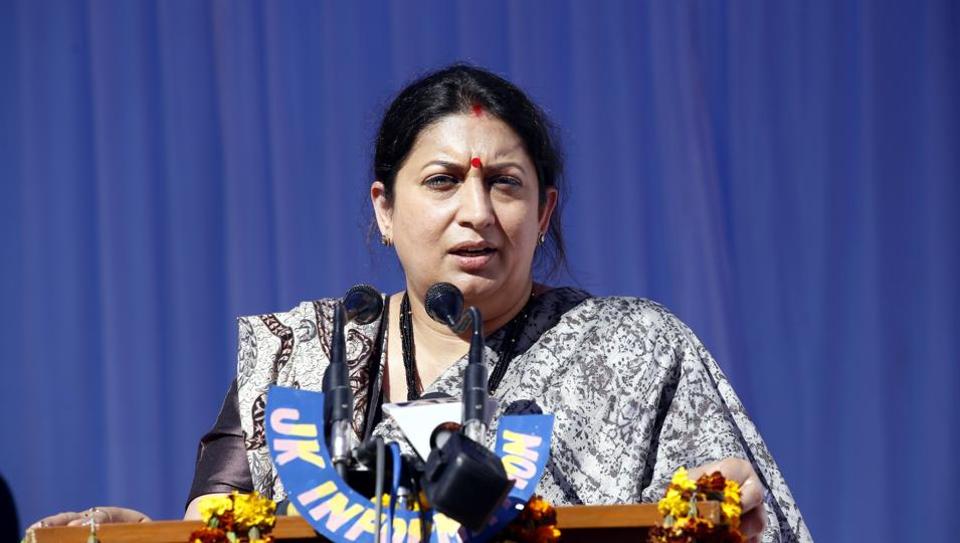
WCD minister Smriti Irani on Monday headed a discussion with stakeholders from the micro, small and medium enterprises (MSMEs) and health ministries as well as the NITI Aayog, with agency bodies NCW and NCPCR, as well as police officials, NALSA office bearers, and NGOs to have a relook at the laws, schemes and agencies that concern women and children.
A ministry official told HT that the meeting was to “understand and explore the role of institutions looking at issues of women and children and understand the factors that have led to rising crimes despite legislations”.
According to data released by the National Crime Records Bureau (NCRB) recently, the number of cases of crimes against women in 2018 stood at 3.78 lakh, an increase from 3.59 lakh in the previous year.
During the discussion, stakeholders said POCSO investigations were delayed since India did not have specialised forensic labs, and that children recording statements were often seen suffering from trauma. The minister, attendees said, promised to implement necessary changes.
Citing the example of the Odisha government’s effective management of child and women-related institutions, the WCD ministry also suggested that the Centre replicate the TrackChild, a digital hotline tracing missing children. According to a ministry official, Irani also said that the Centre will issue protocols for analysis of women and child legislations of each state.
After a discussion on the Muzaffarpur shelter home case, the ministry also said that a panel of education institutions with specialised sociology departments should be enlisted for social audits of crimes. The ministry also suggested that the Uttar Pradesh government’s 1,090 women-powerline should be implemented by the Centre to aid women in distress.











