
 E-Paper




SC asks Centre to review OBC certificate rules for children raised by single mothers
The Supreme Court said the Centre must examine how such a change would affect cases involving divorce, abandonment, shared parenting, where a child’s custody may be given to one parent




The Supreme Court on Friday asked the Centre to consider revisiting the norm of determining a child’s OBC status on the basis of paternal lineage, and examine whether children raised by single OBC mothers could also be issued community certificates to claim reservation benefits.
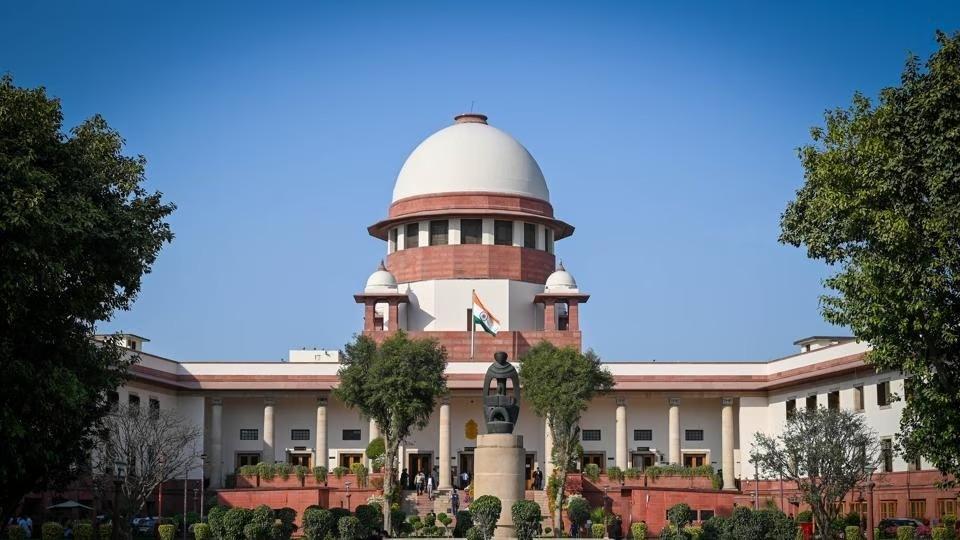
The court said the Centre must examine how such a change would affect cases involving divorce, abandonment and shared parenting, where a child’s custody may be given to one parent.
The suggestion came while the court was hearing a public interest litigation filed by an OBC single mother seeking a community certificate for her child to avail of reservation benefits.
A bench of justices Joymalya Bagchi and V Mohana said, “There are judgments of this court which says that it is the father’s identity which is the guiding factor for determining the caste identity of a child….how far is that going to impact in cases of divorce, abandonment or in cases where the custody of the child is handed over to one parent.”
Additional solicitor general (ASG) Aishwarya Bhati, appearing for the Centre, told the court that the government had filed its response in June 2025, stating that the issuance of community certificates was a state subject. She said states were free to frame policies on issuing community certificates to children of single OBC mothers.
However, the bench said, “These are matters where a nudge from the Centre will help. If that is done, we can ask the states to consider the proposal of the Centre.” The court said such matters had wider implications and required guidelines to address any issues arising from such a decision.
“Let the Centre look into the issue. Whether the Central government wants to have a relook with regard to specific situations of custody of the mother having a different caste identity coming into play,” the bench said. After Bhati agreed to examine the matter, the court adjourned the case to December 9.
The court also sought the Attorney General’s inputs on the issue. Venkataramani said, “These issues need to be carefully considered. Whenever an exception is sought to be carved out in a general principle, some outstanding issues always keep coming back to the court.”
The court said, “This is something that we handle very carefully and with a lot of concern.”
The PIL petitioner, Santosh Kumari, a retired schoolteacher, was represented by advocate Dawneesh Shaktivats. She told the court that since the mother in the present case was OBC, the question was whether the mother’s caste identity should determine the child’s identity. The bench said this might not apply in all cases involving single women who were widowed or divorced.
The Centre’s response, filed in June 2025, had said, “The Central government is of the view that any child born to an OBC parent, whether the parents are separated or divorced, should be entitled to an OBC caste certificate based on the credentials of either the OBC father or the OBC mother, depending on who has custody or is actively raising the child.”
The extension of such benefits, it added, would require a “comprehensive reevaluation of the criteria governing OBC classification, which are rooted in indicators of social and educational backwardness rather than merely lineage or parentage.”
The Centre had further said that in cases where an OBC certificate was to be issued based on the mother’s credentials alone, “It must be clearly established that the child has been living with and has been brought up solely by the mother. Additionally, a preventive mechanism should be in place to prevent any potential misuse of this benefit.”
However, the court had asked the Centre to examine other possibilities, including cases where a single mother in an inter-caste marriage is OBC but the child’s caste identity is linked to the father.
The issuance of caste certificates and the identification of OBCs fall within the exclusive legislative and administrative domain of state governments under Entry 41 of List II (State List) in the Seventh Schedule of the Constitution. Caste certificates are issued by sub-divisional magistrates (SDMs) or equivalent officers in the districts and tehsils of each state.











