
 E-Paper






Follow the latest breaking news, major developments and agenda-setting stories from India and around the world with the newsdesk at Hindustan Times. Operating round the clock, the desk brings together experienced editors, reporters and correspondents to deliver fast, accurate and contextual reporting across subjects that influence public policy, governance, business, society and international affairs. The HT News Desk covers politics, elections, government policies, the economy, business and markets, science and technology, the environment, law and order, infrastructure, education, climate issues and geopolitics, while closely tracking developments across states, institutions and global capitals. The team also leads coverage of major breaking news events, policy announcements, court proceedings, natural disasters, public emergencies and significant international developments. Reports published by the newsdesk are based on information gathered from reporters on the ground, official statements, government agencies, court records, regulatory filings, recognised institutions and other authoritative sources. Stories undergo editorial scrutiny and verification processes to ensure accuracy, fairness and relevance, and are updated as events evolve and additional information becomes available. Whether covering a key political decision in New Delhi, an economic policy shift affecting millions, a landmark court ruling or a major global event, the HT News Desk aims to provide readers with reliable, fact-based journalism that delivers not only the latest developments but also the context and analysis needed to understand their wider implications.
‘Repetitive Section 144 orders abuse of power’: What Supreme Court said on Kashmir curbs
While delivering the verdict on communication shutdown in Kashmir, a bench of Justices NV Ramana, R Subhash Reddy and BR Gavai said freedom of speech and expression includes right to internet within Article 19 of the Constitution.


The Supreme Court on Friday gave the Centre a week to review all the communication curbs imposed in Jammu and Kashmir in the wake of abrogation of Article 370 of the Constitution, which gave it special status.
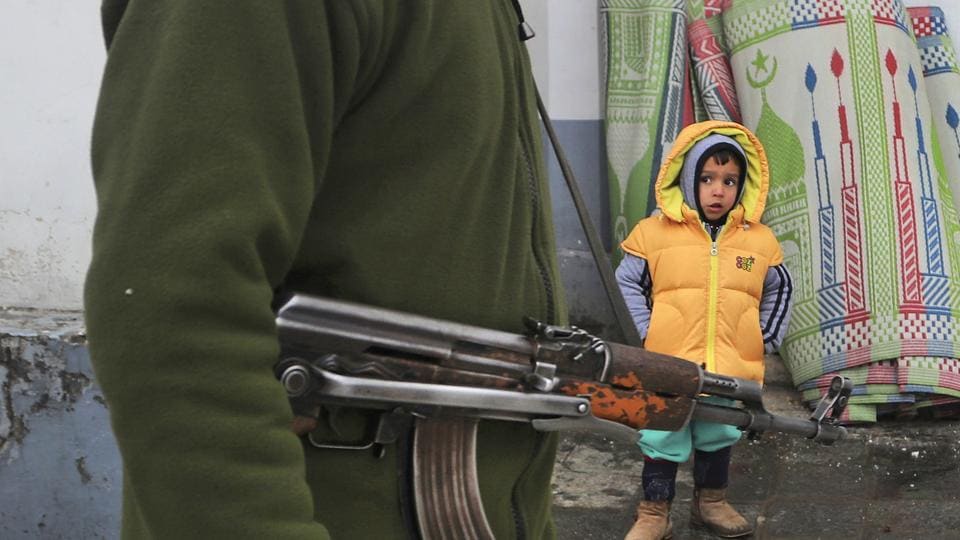
A bench of Justices NV Ramana, R Subhash Reddy and BR Gavai said freedom of speech and expression includes right to internet within Article 19 of the Constitution. The judgement was read out by Justice Ramanna.
In court, the judge also quoted from Charles Dickens’ ‘Tale of Two Cities’. Here are the portions from the Supreme Court judgement on a bunch of petitions seeking lifting of curbs in union territory of Jammu and Kashmir:
• Orders suspending internet should be reviewed forthwith. Such suspension can only be for a limited time period and is subject to judicial review.
Watch l SC orders review of internet suspension in Kashmir in 7 days: The key points
• Free speech and freedom to carry on trade and profession through internet under Article 19 of the Constitution. Restriction on fundamental rights cannot be done by an arbitrary exercise of powers.
• The government has been asked to consider forthwith to allow government websites, e banking facilities, hospital services and other essential services in areas where internet services are not likely to be restored soon.
• Repetitive orders under Section 144 of CrPC will amount to an abuse of power. Reasons have to be given for imposing Section 144 and Magistrate should balance rights of individual with state interest when issuing such orders.
• State authorities need to publish all orders under Section 144 and other restrictions. Internet suspension without any particular duration and indefinitely is a violation of telecom rules.
• There needs to be an emergency for the invocation (of Section 144). Mere expression of disagreement cannot be a ground.
• Test of proportionality needs to be satisfied. This freedom can only be restricted after relevant factors are considered and only if there are no other options.
• It is the court’s duty to ensure all citizens are provided rights and security, but it seems that questions of liberty and security are always at loggerheads.
• Kashmir has seen a lot of violence, it is a land of inherent contradictions - a paradise on earth where blood has been shed everyday (quoting from Tale of two Cities). We will try our best to balance the human rights and freedoms with the issue of security.
• Our limited concern is to find a balance regarding security and liberty of people. We only here to ensure citizens are provided their rights. We will not delve into the political intent behind the orders given.











