
 E-Paper






Utkarsh Anand is the National Legal Editor at Hindustan Times, where he leads the newspaper's coverage of the Supreme Court, constitutional law, the judiciary and the Union law ministry. He joined Hindustan Times in 2020 after stints at Press Trust of India (PTI), The Indian Express and CNN-News18, and has over two decades of experience reporting on law, governance and public policy. His work has focussed on some of India's most consequential constitutional and legal developments, including the Supreme Court's judgments on Article 370, marriage equality, decriminalisation of homosexuality, the Babri Masjid dispute, electoral reforms and judicial appointments. He specialises in making complex legal proceedings and judgments accessible to readers while examining their wider social and political impact. Beyond daily reportage, Utkarsh has led investigative projects and enterprise reporting that have shaped public debate and prompted institutional responses. His work has received several journalism awards, including the Ramnath Goenka Excellence in Journalism Award. As National Legal Editor, he has also played a key role in expanding Hindustan Times' legal journalism footprint, mentoring reporters and strengthening coverage across platforms. A Chevening South Asia Journalism Programme Fellow, Utkarsh regularly writes analyses on the judiciary and constitutional issues, and his reporting is widely followed by lawyers, judges, policymakers, academics and readers seeking clarity on India's evolving legal landscape.
‘One community favoured’: Ex-CJI Gavai writes to Prez, alleges bias in collegium picks
In his letter, ex-CJI Gavai alleged recent recommendations reflected a disturbing disregard for merit, diversity and inclusivity,


Former Chief Justice of India Bhushan R Gavai has written to President Droupadi Murmu alleging that the Supreme Court collegium is increasingly favouring candidates from “one particular section of the society” for elevation to constitutional courts, to the exclusion of scheduled castes, scheduled tribes, other backward classes, minorities and women.
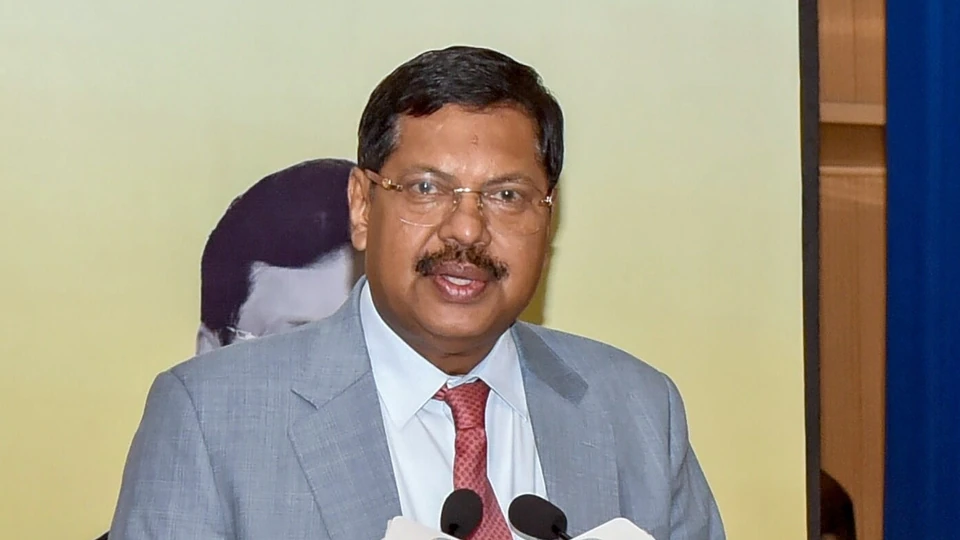
In a strongly worded letter dated November 27, Gavai, who headed the Supreme Court collegium for nearly six months before demitting office in November 2025, alleged that recent recommendations reflected a disturbing disregard for merit, diversity and inclusivity, and appeared increasingly driven by an effort to “appease and reward a single community”. He urged the President to intervene to ensure that all stakeholders discharge their constitutional responsibility of securing adequate representation in the higher judiciary.
Although the former CJI did not name the community, his reference to a group accounting for less than 5% of India’s population having secured more than 40% representation in the Supreme Court, with its share rising “manifold in the recent past”, appeared to point to Brahmins. People aware of the matter confirmed that the former CJI’s letter alludes to Brahmins.
“While I admit that this is not something new and that is precisely why it is increasingly becoming unforgivable,” he wrote, arguing that the historical pattern of disproportionate representation had persisted for decades without meaningful correction.
The collegium in the top court currently comprises CJI Surya Kant, and justices Vikram Nath, BV Nagarathna, MM Sundresh and PS Narasimha.
Writing to the President as a former head of the collegium, justice Gavai said he had consistently followed the principles of diversity and inclusion while recommending candidates for elevation to the high courts and the Supreme Court. He maintained that his approach sought to balance representation from forward communities with that of marginalised sections, including SCs, STs, OBCs, minorities and women.
“Candidates belonging to one particular section of the society are being favoured for recommendation/elevation to the exclusion of everyone else including marginalized communities,” he wrote, adding that even persons from forward communities who did not belong to the particular group were being overlooked.
To underline the extent of the imbalance, justice Gavai cited parliamentary data on judicial appointments. He referred to the Union law minister’s response in the Rajya Sabha in March 2025, which showed that of the 715 high court judges appointed since 2018, only 22 belonged to the SCs, 16 to the STs, 89 to the OBCs and 37 to minority communities, with roughly three-fourths coming from the general category.
He also cited figures for appointments between January 2021 and January 2026, arguing that the share of forward communities was close to 80%, while OBCs, who account for a substantially larger share of the population, received less than 14% representation. The letter pointed out that caste-wise data was not maintained for appointments to the Supreme Court, describing the absence of such information as part of the problem.
Justice Gavai’s own tenure as CJI, however, saw the collegium place details of its high court recommendations in the public domain, including the social background of candidates. Between May 14 and November 23, 2025, the collegium headed by him recommended 129 names for high court appointments, of which 93 were cleared by the government, according to the Supreme Court’s published data. These included 10 judges from the Scheduled Caste community, 11 from OBC and backward classes, 13 from minority communities and 15 women.
The collegium also recommended five judges for elevation to the Supreme Court during his tenure --justices NV Anjaria, Vijay Bishnoi, AS Chandurkar, Alok Aradhe and Vipul M Pancholi.
The former CJI also flagged what he described as questionable decisions in the transfer and subsequent elevation of high court chief justices. Without naming the judges concerned, he referred to a chief justice who, after being transferred successively to smaller high courts, was now being recommended to head a prominent high court, allegedly on account of belonging to the particular community. At the same time, a “meritorious and hard-working” chief justice was transferred to a smaller high court to make way for him, he alleged.
Justice Gavai said he had been part of the collegium that recommended the earlier transfers of the first judge and had headed it when the second judge was unanimously recommended as chief justice of a prestigious high court on the basis of merit. He also cited another instance of a judge allegedly being transferred on punitive considerations before subsequently being rewarded with the chief justiceship of a large and prominent high court.
While saying that he was aware of the factors that had weighed with the collegium in making these recommendations and transfers, justice Gavai declined to disclose them, citing propriety and judicial discipline. He said the instances nevertheless raised unanswered questions about the criteria being applied and the apparent departure from considerations of merit.
Invoking Article 124(2) of the Constitution, which provides for the appointment of Supreme Court judges by the President, Gavai said the judicial interpretation that has made collegium recommendations decisive had neither rendered the collegium unaccountable nor absolved the President of her constitutional responsibility.
“The Constitution vests the appointment of judges of Supreme Court in you under Article 124(2),” he said in the letter, adding that the President’s high office continued to have a duty to “preserve, protect and defend the Constitution”.
He also underlined that the executive and Parliament were equal stakeholders in judicial appointments and said successive governments had urged the collegium to consider suitable candidates from marginalised communities to improve diversity. The responsibility, he said, was shared by all constitutional stakeholders and could not be left to the judiciary alone.
Justice Gavai concluded by urging Murmu to acknowledge the concerns and intervene, as she deemed appropriate, to remind all stakeholders of their constitutional obligation to ensure equal representation in one of the most significant pillars of Indian democracy.
The letter was also marked to Prime Minister Narendra Modi and Union law minister Arjun Ram Meghwal.











