
A new assessment of the Hindu-Kush Himalaya (HKH) region shows a 1.5°C rise in global temperature over pre-industrial levels will spell doom for fragile ecology of the region.
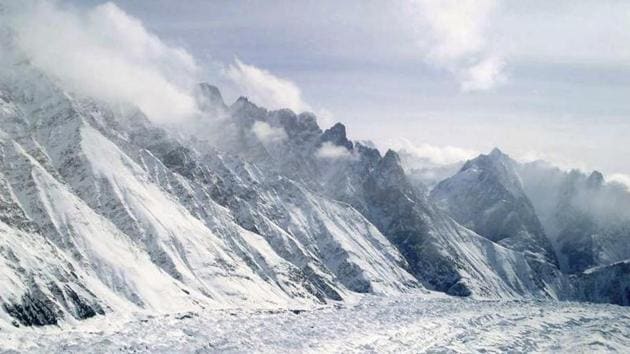
Such degree of warming is likely to lead to melting or severe retreat of one-third of the region’s glaciers, the study commissioned by Kathmandu-based International Centre for Integrated Mountain Development (ICIMOD) said on Monday.
HKH region covers Afghanistan, Bangladesh, Bhutan, China, India, Myanmar, Nepal and Pakistan and is home to Mount Everest, K2 and other significant peaks. The glaciers here feed rivers including the Ganges, Indus, Yellow, Mekong and Irrawaddy.
The assessment states glaciers in the HKH show mass loss since at least 1970s. But results from in situ measurements show the predominant mass loss happened during the last five decades, particularly since 1995.
“The greatest rates of mass loss in the extended HKH post 2000 are found in the eastern and western Himalaya. Moderate losses are observed in the central Himalaya, and the Hindu Kush. In contrast, glaciers in the Karakoram showed neutral mass balances or even slight mass gains after 2000,” the assessment said.
If global climate efforts fail, the study warns that current emissions would lead to five degrees in warming and a loss of two-thirds of the region’s glaciers by 2100.
{{/usCountry}}If global climate efforts fail, the study warns that current emissions would lead to five degrees in warming and a loss of two-thirds of the region’s glaciers by 2100.
{{/usCountry}}“This is the climate crisis you haven’t heard of,” said Philippus Wester of ICIMOD, who led the assessment. “Global warming is on track to transform the frigid mountain peaks to bare rocks in a little less than a century. It’s the projected reductions in pre-monsoon river flows and changes in monsoon that will hit hardest,” he added.
The assessment was done over five years; it includes research efforts by 350 researchers and policy experts from 22 countries and 210 authors. Authors have warned changes to the timing and magnitude of this melting of glaciers can lead to increase in number and size of glacier lakes. “The findings don’t seem outlandish. I don’t know what methodologies they have adopted. But we know that mass loss of glaciers is happening. Eastern Himalayas are much more susceptible,” said Krishna AchutaRao, climate scientist at Centre for Atmospheric Sciences at IIT Delhi.
ABOUT THE AUTHOR
Follow the latest breaking news, major developments and agenda-setting stories from India and around the world with the newsdesk at Hindustan Times. Operating round the clock, the desk brings together experienced editors, reporters and correspondents to deliver fast, accurate and contextual reporting across subjects that influence public policy, governance, business, society and international affairs. The HT News Desk covers politics, elections, government policies, the economy, business and markets, science and technology, the environment, law and order, infrastructure, education, climate issues and geopolitics, while closely tracking developments across states, institutions and global capitals. The team also leads coverage of major breaking news events, policy announcements, court proceedings, natural disasters, public emergencies and significant international developments. Reports published by the newsdesk are based on information gathered from reporters on the ground, official statements, government agencies, court records, regulatory filings, recognised institutions and other authoritative sources. Stories undergo editorial scrutiny and verification processes to ensure accuracy, fairness and relevance, and are updated as events evolve and additional information becomes available. Whether covering a key political decision in New Delhi, an economic policy shift affecting millions, a landmark court ruling or a major global event, the HT News Desk aims to provide readers with reliable, fact-based journalism that delivers not only the latest developments but also the context and analysis needed to understand their wider implications.
