
 E-Paper






Follow the latest breaking news, major developments and agenda-setting stories from India and around the world with the newsdesk at Hindustan Times. Operating round the clock, the desk brings together experienced editors, reporters and correspondents to deliver fast, accurate and contextual reporting across subjects that influence public policy, governance, business, society and international affairs. The HT News Desk covers politics, elections, government policies, the economy, business and markets, science and technology, the environment, law and order, infrastructure, education, climate issues and geopolitics, while closely tracking developments across states, institutions and global capitals. The team also leads coverage of major breaking news events, policy announcements, court proceedings, natural disasters, public emergencies and significant international developments. Reports published by the newsdesk are based on information gathered from reporters on the ground, official statements, government agencies, court records, regulatory filings, recognised institutions and other authoritative sources. Stories undergo editorial scrutiny and verification processes to ensure accuracy, fairness and relevance, and are updated as events evolve and additional information becomes available. Whether covering a key political decision in New Delhi, an economic policy shift affecting millions, a landmark court ruling or a major global event, the HT News Desk aims to provide readers with reliable, fact-based journalism that delivers not only the latest developments but also the context and analysis needed to understand their wider implications.
Decks cleared for purchase of military equipment worth Rs 6,900 crore
The equipment cleared for purchase on Monday is significant as it will enable the army to “detect and recognise” enemy tanks and soldiers.


The defence acquisition council (DAC) on Monday set the ball rolling for buying military hardware worth Rs 6,900 crore, including thermal imaging night sights for rocket launchers and equipment that will enhance the capabilities of the air force’s Sukhoi-30 warplanes, a ministry spokesperson said.
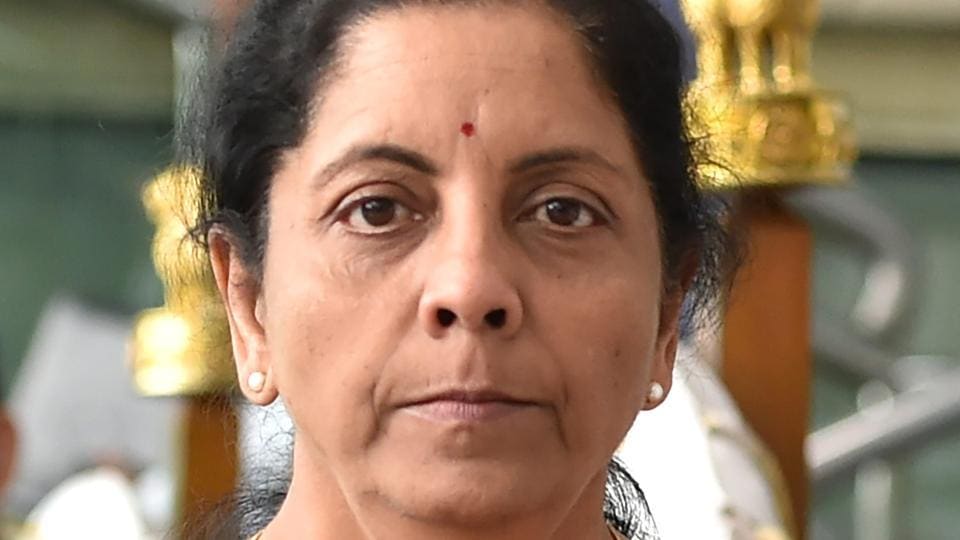
The council, headed by defence minister Nirmala Sitharaman, approved the purchase of the hardware through the indigenous route to boost India’s capabilities to locally produce weapons and systems.
“The thermal imaging sight for 84mm rocket launchers will be used by troops in operations to facilitate accurate and continuous engagement of moving and static enemy targets and destruction of bunkers during hours of complete darkness,” the spokesperson said.
The slow pace of acquisition has hurt India’s military capabilities. The government inked a $100-million contract for 1.86 lakh bullet proof jackets for the army, a decade after the force moved the case. Financial constraints, cumbersome procedures and unrealistic qualitative requirements set by the armed forces are among the key factors that hinder modernisation, said a senior official who did not wish to be named. “Forget the bigger purchases, the system is such that we take a decade to equip soldiers with new assault rifles and bullet proof vests,” he said.
Ammunition is also a problem area. The army told a parliamentary panel in March that it was short of Rs 6,380 crore to build ammunition stocks necessary for war for 10 days. The panel was also told that even as China and Pakistan were modernising their militaries at a lightning-fast pace, a looming financial crisis was crippling India’s combat capabilities.
The equipment cleared for purchase on Monday is significant as it will enable the army to “detect and recognise” enemy tanks and soldiers.
The DAC also approved a project for the design and development of Long Range Dual Band Infrared Imaging Search and Track System (IRST) for SU-30 MKI fighters.
Experts said Sitharaman’s predecessors in the ministry had also cleared the decks for weapon purchases worth lakhs of crores but not many of those clearances translated into deals.
“The projects that have been given a go-ahead are at the acceptance of necessity stage (the first step toward making procurement under the Defence Procurement Procedure). The real test would be to see how many of these cases end up as contracts ...” said military affairs expert Air Vice Marshal Kapil Kak (retd).











