
 E-Paper






Follow the latest breaking news, major developments and agenda-setting stories from India and around the world with the newsdesk at Hindustan Times. Operating round the clock, the desk brings together experienced editors, reporters and correspondents to deliver fast, accurate and contextual reporting across subjects that influence public policy, governance, business, society and international affairs. The HT News Desk covers politics, elections, government policies, the economy, business and markets, science and technology, the environment, law and order, infrastructure, education, climate issues and geopolitics, while closely tracking developments across states, institutions and global capitals. The team also leads coverage of major breaking news events, policy announcements, court proceedings, natural disasters, public emergencies and significant international developments. Reports published by the newsdesk are based on information gathered from reporters on the ground, official statements, government agencies, court records, regulatory filings, recognised institutions and other authoritative sources. Stories undergo editorial scrutiny and verification processes to ensure accuracy, fairness and relevance, and are updated as events evolve and additional information becomes available. Whether covering a key political decision in New Delhi, an economic policy shift affecting millions, a landmark court ruling or a major global event, the HT News Desk aims to provide readers with reliable, fact-based journalism that delivers not only the latest developments but also the context and analysis needed to understand their wider implications.
Deck cleared for purchase of 111 naval utility helicopters
The defence ministry on Monday cleared “platform-specific” guidelines for the purchase of 111 naval utility helicopters


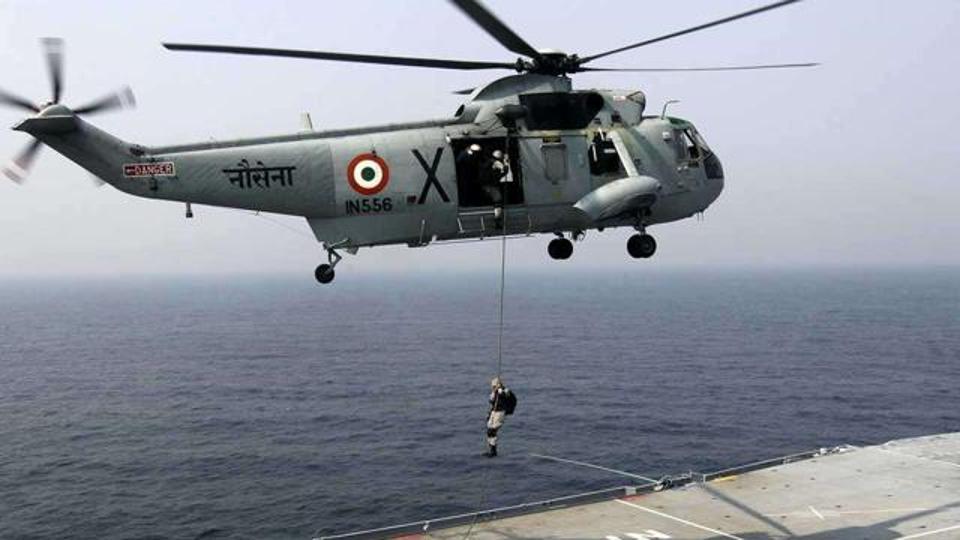
The defence ministry on Monday cleared “platform-specific” guidelines for the purchase of 111 naval utility helicopters under the ‘strategic partnership’ model to replace the Navy’s outdated fleet of French-designed Chetak choppers.
The government’s defence acquisition council (DAC), which defence minister Nirmala Sitharaman heads, discussed and approved implementation guidelines for key projects under the model to boost the indigenous defence sector and ensure timely delivery of military equipment, a ministry press release said.
The US, European and Russian rivals are expected to compete for the Rs 21,738-crore NUH programme by stitching up alliances with Indian firms under the government’s ‘strategic partnership’ model.
It would work as a template for cooperation between Indian and foreign firms to build high-tech weapons in the country.
The model is expected to give a push to several big-ticket projects, including those for building next-generation submarines, fighter planes and helicopters in the country. “All procurements under the strategic partnership would be executed by specially constituted Empowered Project Committees to provide focused attention and ensure timely execution,” the press release said.
It added that the model sought to revitalise the defence industrial ecosystem and build indigenous capabilities in the private sector to design, develop and manufacture complex systems to meet the military’s future needs.
As part of the NUH project, 16 choppers would be bought in a flyaway condition from a foreign military contractor, and the remaining 95 will be built in the country in partnership with an Indian firm. Even under the Make in India plan, the country’s arms procurement rules allow for the direct purchase of weapons and systems from the foreign vendor in keeping with the ‘strategic partnership’ policy.
It stipulates that “a minimum number of platforms, not exceeding 10-15% of the units being procured, may be manufactured on the premises of the original equipment manufacturer”.
The navy uses such choppers for several purposes, including search and rescue operations, medical evacuation, communication duties, anti-piracy and anti-terrorism operations, humanitarian assistance, surveillance and targeting.
The twin-engine helicopter will have wheeled landing gear and blade-fold capability. India wants the choppers built in the country to have 40% indigenous content.











