
 E-Paper







Follow the latest breaking news, major developments and agenda-setting stories from India and around the world with the newsdesk at Hindustan Times. Operating round the clock, the desk brings together experienced editors, reporters and correspondents to deliver fast, accurate and contextual reporting across subjects that influence public policy, governance, business, society and international affairs. The HT News Desk covers politics, elections, government policies, the economy, business and markets, science and technology, the environment, law and order, infrastructure, education, climate issues and geopolitics, while closely tracking developments across states, institutions and global capitals. The team also leads coverage of major breaking news events, policy announcements, court proceedings, natural disasters, public emergencies and significant international developments. Reports published by the newsdesk are based on information gathered from reporters on the ground, official statements, government agencies, court records, regulatory filings, recognised institutions and other authoritative sources. Stories undergo editorial scrutiny and verification processes to ensure accuracy, fairness and relevance, and are updated as events evolve and additional information becomes available. Whether covering a key political decision in New Delhi, an economic policy shift affecting millions, a landmark court ruling or a major global event, the HT News Desk aims to provide readers with reliable, fact-based journalism that delivers not only the latest developments but also the context and analysis needed to understand their wider implications.
Crisis deepens as encephalitis death toll in Bihar touches 128
A central team of paediatricians and paramedics arrived in Muzaffarpur late on Wednesday evening to further strengthen the management of AES cases at SKMCH.


An outbreak of Acute Encephalitis Syndrome (AES) in Bihar claimed 15 more lives on Wednesday as the state government scrambled to stamp down on a disease that has killed 128 children as fresh cases were reported from some districts that had not been affected so far.
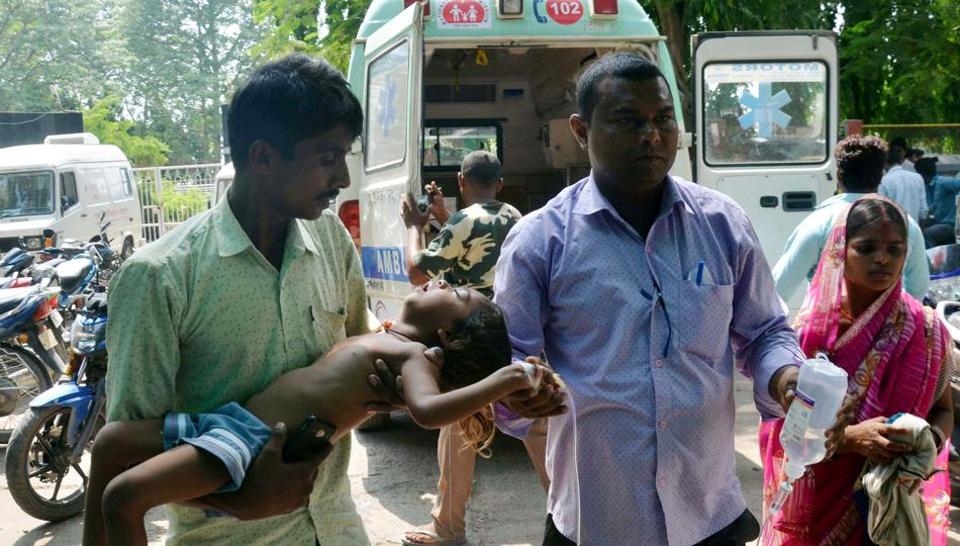
In Muzaffarpur, which is the epicentre of the disease that causes brain swelling and high fever followed by disorientation, seizures, coma and death — with malnourished young children the worst affected — three more children died at the Sri Krishna Medical College Hospital (SKMCH). Deaths were also reported from Bhagalpur, Banka, Sitamarhi, West Champaran and Samastipur districts. In Sitamarhi, officials said at least 15 AES-related cases were undergoing treatment at the Sitamarhi Sadar hospital.
A central team of paediatricians and paramedics arrived in Muzaffarpur late on Wednesday evening to further strengthen the management of AES cases at SKMCH.
At least five such teams have been asked to be deployed by the Centre. “The teams will strengthen the clinical care to the existing patients in the hospitals and also support surveillance of cases from the peripheral areas,” Union health minister Harsh Vardhan said in a press note.
The state government also pressed into action 10 additional ambulances in the worst-affected blocks for round-the-clock services and deployed 16 nodal officers at primary health centres in the affected blocks. The district administration also bolstered police reinforcement outside and inside SKMCH after families of ailing children on Wednesday stormed the office of superintendent Sunil Kumar Shahi to vent their anger. In Muzaffarpur, 153 AES patients are undergoing treatment at SKMCH and 24 at Kejriwal Maternity Clinic.
AES can be caused by a raft of factors, including toxins in unripe litchis — Muzaffarpur is the litchi hub of the state — viruses, bacteria, fungi, parasites, and chemical poisons. Since the first fatality was reported on June 5, the state government’s response has been roundly criticised with many experts saying Muzaffarpur’s poor health care system was overwhelmed by the scale of the outbreak, with children being treated on the floor of the hospital.
But the government said all doctors were aware of the proper course of treatment and were following it to ensure no further loss of life. “The line of treatment is clear and it is being provided as per the same. In the last two days, there is a decrease in the number of admissions,” said principal health secretary of Bihar, Sanjay Kumar. He also rebuffed reports of a scarcity of medicine. “There is no dearth of medicines and it will be ensured that if any such reports come, immediate supply will be provided.”
Seasonal outbreaks of AES are common every year in Bihar and have been recorded in Muzaffarpur since 1995. Shahi said he had strongly recommended medical research and investigation of evidence linking the illness to the consumption of litchi by malnourished children. “Litchi secretes toxin that might be causing AES. A field survey is paramount at this moment,” said the superintendent, adding that malnourished children are vulnerable to face the toxins’ effect and hence fall ill.
(With agency inputs)











