
The Central Sanskrit University (CSU) Delhi has launched a nationwide campaign to encourage people to record Sanskrit as their mother tongue or an additional known language in the ongoing Census 2027 exercise, seeking to raise awareness about the language’s place in the country’s linguistic heritage. Under its ‘Mama Bhasha Sanskritam’ campaign, the university has set a target of reaching 100 million citizens across the country.
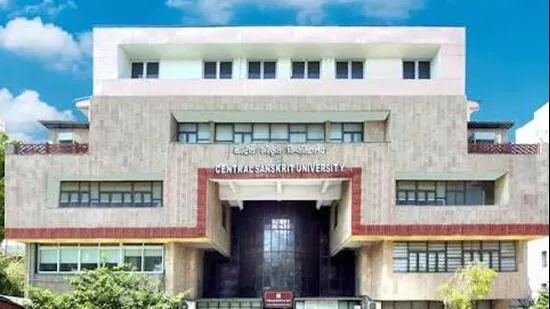
To achieve this, it plans to mobilise faculty members, students and voluntary organisations across its headquarters, campuses, model colleges, research institutes and affiliated Sanskrit institutions.
The outreach will include visits to schools, colleges, temples, mathas, ashrams and social organisations, as well as awareness drives at public places, tourist destinations and through door-to-door interactions. The university also plans to use digital media and social networking platforms to expand the campaign’s reach.
CSU vice-chancellor Prof Srinivasa Varakhedi has appealed to people who consider Sanskrit their mother tongue to declare it as such in the Census, while those who know the language should list it among their other known languages.
Calling Sanskrit the “soul of India, its intellect, and the mother of knowledge and science”, Varakhedi said it was not merely an ancient language but the “foundation of Indian civilisation, culture and intellectual tradition”.
Also Read: Rajnath: If Yogi returns as CM, Vedic Maths should be compulsory in schools
{{/usCountry}}Also Read: Rajnath: If Yogi returns as CM, Vedic Maths should be compulsory in schools
{{/usCountry}}He added that the Census offered an important opportunity to acknowledge one’s “cultural roots” and “linguistic identity”, and stressed the need to record accurate language information to reflect India’s linguistic diversity.
To be sure, only 24,821 people across India reported Sanskrit as their mother tongue in the previous 2011 Census.
Census 2027 enters population enumeration phase
The first phase of Census 2027, covering houselisting and housing data collection, has been completed across 35 states and Union territories, with Manipur being the only exception, according to the Union home ministry.
The second phase, covering population enumeration, has also begun in four states and areas ahead of the nationwide schedule. Self-enumeration opened on November 16 in Goa, Punjab, Uttar Pradesh and the non-snow-bound areas of Uttarakhand and will continue until November 30. Door-to-door enumeration in these areas will take place from December 1 to January 4, 2027. In the remaining states and Union territories, self-enumeration is scheduled for January 10-24, followed by door-to-door enumeration from January 25 to February 28, 2027.
Also Read:Uttarakhand to establish Sanskrit commission, seeks suggestions
Referring to question 14 of the Census questionnaire, Varakhedi said it seeks information on respondents’ mother tongue and other known languages. He said people who genuinely consider Sanskrit their mother tongue should report it accordingly, while those who have learnt or know the language can mention it as an additional language.
University mobilises campuses, students for outreach
As part of the campaign, the university will involve faculty members, students, its campuses, model colleges, research institutes, Sanskrit schools and colleges, and voluntary organisations.
The outreach will include visits to schools, colleges, temples, mathas, ashrams and social organisations, besides awareness drives at public places, tourist destinations and through door-to-door interactions. Digital media and social networking platforms will also be used to spread the message.
Also Read:Telling the India story through its manuscripts
Varakhedi cited the Vedas, Upanishads, Ayurveda, yoga, mathematics and astronomy as areas in which extensive knowledge traditions are available in Sanskrit. He also said the language had influenced India’s other languages and continued to be present in everyday life through religious practices, mantras, shlokas and commonly used words.
The university has appealed to Sanskrit teachers, students, enthusiasts and social organisations to participate in the campaign.
ABOUT THE AUTHOR
Sanjay Maurya is a Principal Correspondent with Hindustan Times, where he covers education, with a focus on school and higher education, competitive examinations, education policy and governance. Working as part of the National Bureau, he is based in New Delhi and reports on the Ministry of Education and covers various statutory bodies like UGC, AICTE and NCTE and autonomous bodies like CBSE and NCERT. His reporting also tracks the implementation of key government reforms and policies from school education to higher education including in IITs, NITs, IIMs, central and state universities, and their impact on students and educational institutions. His reporting on the irregularities and rushed implementation of CBSE's On-Screen Marking (OSM) system for evaluation of Class 12 board exams 2026, triggered administrative action, leading to the transfer of the board's two senior-most officials and the constitution of a committee to probe alleged irregularities in procurement process of the system. He joined Hindustan Times in December 2024. Prior to that, he had a three-year stint at Careers360, where he reported on school and higher education, entrance examinations, admissions, rankings and various education policies involving universities and professional education bodies. Over the years, Maurya has reported extensively on major developments in India's education sector, including the implementation of the National Education Policy (NEP) 2020, reforms in the National Testing Agency (NTA) following the NEET-UG 2024 controversy, changes in school education, higher education regulation, and the evolution of entrance examinations such as NEET, JEE and CUET. He regularly produces data-driven and explanatory stories based on government documents, parliamentary proceedings, court records and official data. His focus remains on helping readers understand how education policies and institutional decisions affect millions of students, teachers and educational institutions across the country.
