
 E-Paper






Rezaul Hasan Laskar is Foreign Editor with the Hindustan Times, which he joined in 2015. He began as a journalist in his hometown of Shillong in northeast India and has worked in newspapers and wire services over the years. He moved to New Delhi in 1997 and initially focused on defence, national security, Jammu and Kashmir and the northeast, while also working of foreign policy and international relations. He has been part of the media delegation accompanying PMs on foreign visits and has reported from destinations ranging from Tibet to Ukraine. Between 2007 and 2013, he was the Press Trust of India correspondent in Pakistan, one of only two Indian journalists allowed to report from the country. He extensively covered Pakistan’s domestic politics and the life of the common people, as well as the fallout of the 2008 Mumbai attacks on India-Pakistan relations and the subsequent trial in Pakistan of the suspects involved in the attack. As part of his reportage in Pakistan, he travelled the breadth of the country, from the Swat Valley to Balochistan. Reza’s first gig in journalism was writing a weekly music column, and music – especially classic rock – remains a keen interest. He is also a movie buff and a keen photographer.
Attacks on merchant vessels and seafarers unacceptable, need global response, says Jaishankar
Jaishankar called for respect for international maritime laws, especially the UN Convention on the Law of the Sea (UNCLOS)


Littoral states of the Indian Ocean must jointly work for the security of a region that is central to global trade, energy security and connectivity, external affairs Minister S Jaishankar said on Friday, even as he denounced attacks on maritime shipping and seafarers as unacceptable.
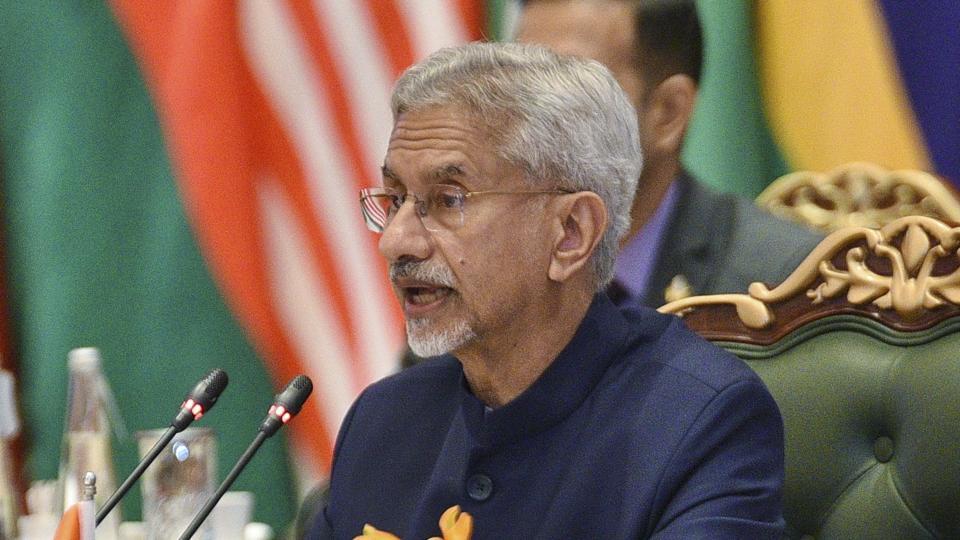
Addressing a ministerial conclave of the Indian Ocean Rim Association (IORA), Jaishankar called for respect for international maritime laws, especially the UN Convention on the Law of the Sea (UNCLOS). India, the current chair of IORA, hosted the meeting against the backdrop of attacks on merchant vessels in West Asia and China’s continuing assertiveness in the South China Sea.
Jaishankar pointed to the “volatile aspects of a transforming global order” and highlighted the impacts of conflicts, frictions and disruptions. “The Indian Ocean is particularly poised to address its challenges. Recognising the criticality of maritime trade to global growth, we must deliver on its safety and security. International law, particularly UNCLOS, must be respected,” he said.
Attacks on maritime shipping and seafarers, Jaishankar emphasised, are “simply unacceptable” and require a global response.
At least 20 Indian seafarers have died in attacks on merchant ships in West Asia and the Black Sea. India, which has the world’s second-highest number of seafarers after the Philippines, has been at the forefront of efforts to end the targeting of merchant vessels.
“Whether it is to counter terrorism, narcotics trade or illegal, unreported and unregulated fishing, or indeed in responding to climate events and disaster situations, we have to become more self-reliant as well as more enthusiastic about cooperating with partners,” he said.
Given the centrality of the Indian Ocean, all littoral states must focus on meaningful collaboration to ensure a better future for their people, Jaishankar said. At the same time, IORA must enhance its collective voice and reinforce its role as a regional platform at a time of significant geopolitical changes, he said.
“The Indian Ocean is central to global trade, energy security, connectivity and economic prosperity. It is also a region of immense diversity, opportunity and shared challenges,” Jaishankar said.
India’s approach to IORA and its chairship of the grouping is guided by the MAHASAGAR vision**, or** “Mutual and Holistic Advancement for Security and Growth Across Regions”.
The conclave was attended by representatives of the 23 member states, including Australia, Indonesia, South Africa, Kenya, Oman, Bangladesh, Malaysia and Thailand. The US, the European Union and other dialogue partners of IORA also joined the meeting.
Jaishankar said India’s theme for IORA – Innovation, Openness, Resilience and Adaptability in the Indian Ocean Region – reflects its conviction that the grouping must remain responsive and adaptive to the changing regional and global environment, while delivering tangible benefits to member states.
India is also working to strengthen cooperation across IORA’s priority areas, such as deepening engagement with the grouping’s dialogue partners and promoting practical regional initiatives. “A stronger institutional foundation is essential for IORA to fulfil its larger role in the region,” Jaishankar said.
US ambassador Sergio Gor, who also spoke at the conclave, said he reaffirmed America’s commitment to freedom of navigation and cooperation on maritime security, energy, infrastructure and critical minerals. “Open sea lanes are essential to global trade and prosperity,” he said on social media.
A joint communique issued at the conclusion of the meeting reaffirmed IORA’s commitment to maintaining the Indian Ocean as a region of peace, stability and prosperity, and to upholding international law to ensure freedom of navigation and overflight, unimpeded commerce, and the peaceful settlement of disputes.
“We express concern over the undermining of maritime safety and security of vessels and seafarers and call for ensuring their safety and security,” the joint communique said.











