
 E-Paper






Follow the latest breaking news, major developments and agenda-setting stories from India and around the world with the newsdesk at Hindustan Times. Operating round the clock, the desk brings together experienced editors, reporters and correspondents to deliver fast, accurate and contextual reporting across subjects that influence public policy, governance, business, society and international affairs. The HT News Desk covers politics, elections, government policies, the economy, business and markets, science and technology, the environment, law and order, infrastructure, education, climate issues and geopolitics, while closely tracking developments across states, institutions and global capitals. The team also leads coverage of major breaking news events, policy announcements, court proceedings, natural disasters, public emergencies and significant international developments. Reports published by the newsdesk are based on information gathered from reporters on the ground, official statements, government agencies, court records, regulatory filings, recognised institutions and other authoritative sources. Stories undergo editorial scrutiny and verification processes to ensure accuracy, fairness and relevance, and are updated as events evolve and additional information becomes available. Whether covering a key political decision in New Delhi, an economic policy shift affecting millions, a landmark court ruling or a major global event, the HT News Desk aims to provide readers with reliable, fact-based journalism that delivers not only the latest developments but also the context and analysis needed to understand their wider implications.
After his ‘death walk’, Dana Majhi gets the red carpet in Delhi
A month after the video of a helpless Dana Majhi walking back home with the body of his wife on the shoulder triggered nationwide outrage, the Odisha tribal received a red carpet reception during a day’s visit to the city to collect financial aid.


A month after the video of a helpless Dana Majhi walking back home with the body of his wife on the shoulder triggered nationwide outrage, the Odisha tribal received a red carpet reception during a day’s visit to the city to collect financial aid.
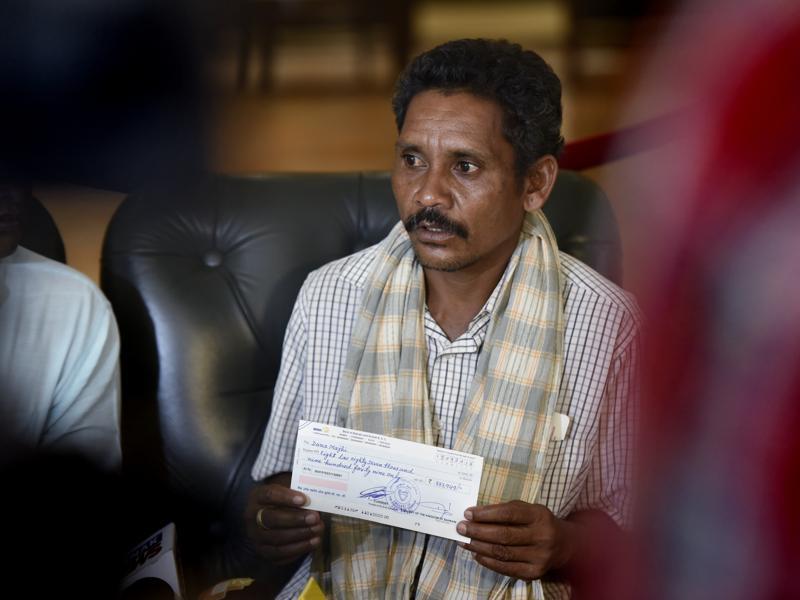
“My life has turned upside down,” the dazed farmer from Kalahandi confessed on Thursday as journalists and camera crews jostled to get a closer look at him.
Earlier in the day, he was at the embassy of Bahrain to collect a cheque of Rs 8.87 lakh sent by ruler of the tiny Gulf kingdom. The Sunni monarch, accused of brutally cracking down on pro-democracy protests by predominantly Shia subjects, was reportedly moved by Majhi’s heart-rending video.
Read: Odisha: Denied a mortuary van, man carries wife’s body on shoulders
In August, an impoverished Majhi was forced to walk for about 10 kms with the body of his wife, Amangdei, after his pleas for an ambulance or a hearse failed to melt the heart of officials at the district hospital in Bhawanipatna. One of his sobbing daughters accompanied him till startled bystanders alerted a local TV journalist. The journalist organised a vehicle for the body to be finally taken to his Melghar village, still some 55 kms away.
“I pleaded but none listened to me then,” Majhi recollected. But at the lounge of a plush downtown Delhi hotel, journalists waited patiently to hear from him.
Dressed in a wrinkled shirt and a folded lungi, he looked bewildered with his near-celebrity status. Incidentally, this was his first visit outside Odisha. For that matter, he had never stepped out of his Thuamul Rampur block until he had to take his wife for treatment to Bhawanipatna.
“Life was harsh,” Majhi said. As a marginal farmer, his earnings rarely exceeded Rs 2,000 a month. But all that has changed once he hit the headlines. Apart from the Bahraini king, he has received another Rs 9 lakhs in donations from other organizations.
The Bhubaneswar-based Kalinga Institute of Social Sciences (KISS) has also promised free education to his three daughters. “I hope to see them educated and well-settled in good jobs,” Majhi said. Promod Patra, the deputy CEO of Kiss, said his organisation will do everything to help Majhi.
But his video that went viral remains a blot that Odisha will find hard to erase. Known for being high on deprivation and low on hope, Kalahandi first shot into notoriety in the 1980s when Panas Punj, a tribal woman, sold her niece to a blind man for Rs 40. Majhi’s lonely walk showed little had changed.
Read: Dana Manjhi, who walked with wife’s body, in Delhi to receive aid from Bahrain











