
 E-Paper







Abhishek Behl is a Special Correspondent with Hindustan Times, Gurugram bureau. With over a decade of experience in journalism, he reports on Gurugram's rapid urban transformation, covering the city's changing infrastructure, governance, and planning landscape. His reporting spans major civic agencies, such as the Gurugram Metropolitan Development Authority (GMDA), Department of Town and Country Planning (DTCP), Haryana Shahari Vikas Pradhikaran (HSVP), and the National Highways Authority of India (NHAI). Behl has reported on key urban development issues such as RRTS projects, metro expansion, road and highway projects, water supply, drainage, mobility, environmental concerns, land use planning, affordable housing, and the city's real estate sector. He closely tracks policy decisions, infrastructure implementation, and their impact on the city and its residents. He also covers regulatory action against illegal constructions, urban flooding, traffic management, and initiatives aimed at improving civic services and sustainable development. Behl has also written on political developments in south Haryana, focusing on elections and governance. His journalism is driven by fact-based reporting, ground-level coverage, and an understanding of the social and economic dynamics of Gurugram. Apart from work he is a cyclist and a cricketer and a resident of Palam Vihar since 2010.
One-sided builder-buyer agreements won’t be allowed in Gurugram anymore: Hrera chairperson
Hrera chairperson KK Khandelwal also warned action against developers, who have obtained completion certificates on the basis of incomplete documents.


Unreasonable and one-sided builder-buyer agreements will not be allowed in Gurugram any more, said KK Khandelwal, chairperson, Haryana Real Estate Regulatory Authority (Hrera), on Monday.
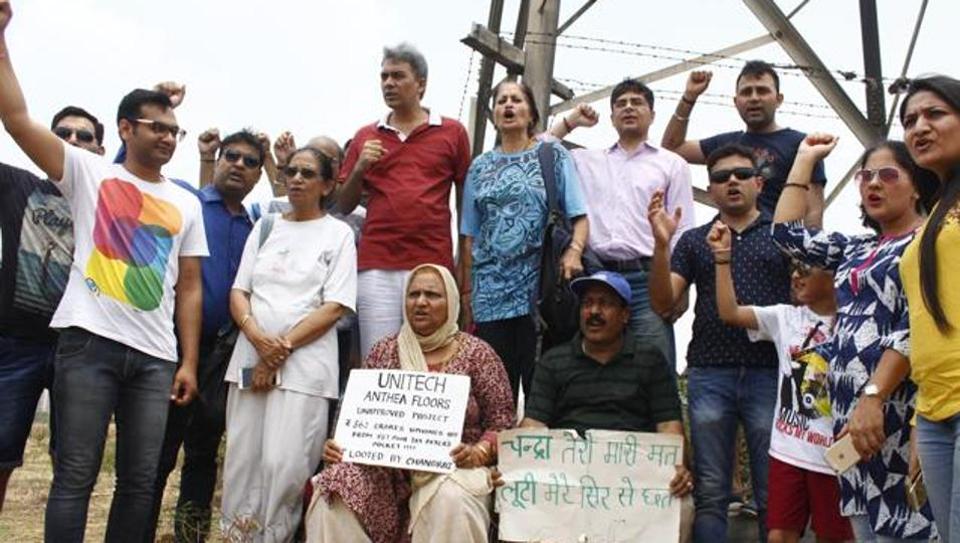
Khandelwal also warned action against developers, who have obtained completion certificates on the basis of incomplete documents. The Hrera chief made the comments at a seminar in the city. He said the authority has done a lot of work to safeguard the interests of homebuyers.
The builder-buyer agreement, on the basis of which realty sales are done, has been a bone of contention as the town and country planning department considers it a bilateral document and refuses to intervene if there is a dispute, thus, denying the buyer or the aggrieved party redressal of grievances.
“Apart from balancing the agreement document, the authority has also ensured that the penalty paid by the buyers to developers for delay in payment has been made equal to what the builder pays to buyers. Earlier, the buyer had to pay 18% interest as penalty on late payment, and got only 5% from the builder, if the latter defaulted,” said Khandelwal.
Responding to queries, Khandelwal assured that Hrera was working out a system in which complaints could be resolved in 60 days. “We are also trying to rope in developers, who are ready to take up projects that are in a limbo to ensure houses are delivered,” he said.
From the buyers side, Naveen Arora, general secretary, Universal Welfare Association, asked the authority what was being done about projects in which developers have declared insolvency. “We want to know if approaching Hrera would render cases in other courts infructuous? There is also need to assess the developers, who make countless promises in court,” he asked.
Parveen Jain, vice chairman, National real estate development organisation (Naredco) — an industry lobby group — admitted that some of the developers had reneged on promises but he maintained that majority of them wanted to work and deliver houses.
“The developers also face problems related to cash flow, delayed permission from authority and poor infrastructure. The government must work out a mechanism so that undelivered projects can be completed,” he said.
The seminar, ‘Rera - the road ahead. Promises and challenges’, was organised by an NGO Manav Awaz. It witnessed heated exchanges with some of the participants accusing the government and Hrera of diluting the RERA Act.
“We had expected the authority to ensure that community centres, common areas and other such facilities are transferred to residents but this has not happened,” said RS Rathee, MCG councillor, who has challenged the formation of the authority in the Punjab and Haryana High Court.
JN Mangla, president, Gurgaon Industrial Association, said that the authority must hold the developers accountable for poor construction quality.











