
 E-Paper






Vibha Maru is an Assistant Editor with Hindustan Times Entertainment, based in Delhi. With a decade of experience across digital and print media, she covers Bollywood, Hollywood and web shows. A self-confessed cinephile who breathes Hindi cinema, Vibha can often be found sacrificing sleep after binge-watching films and web series. Though she holds a Commerce degree, she discovered her true calling in journalism after enrolling at the Indian Institute of Mass Communication (IIMC). She began her career covering Delhi's cultural scene, food, nightlife, concerts, and city life at The Times of India, before moving into full-time entertainment journalism with India Today. At India Today, Vibha interviewed some of the biggest names in Bollywood and television while carving a niche for herself through film reviews, opinion pieces, nostalgic features, celebrity interviews, and trend-driven stories. She later brought her storytelling and editorial expertise to The Indian Express, where she continued to deepen her understanding of cinema through long-form entertainment explainers, retrospectives and feature writing. Now, as Assistant Editor at Hindustan Times Entertainment, Vibha continues to chronicle the world of movies and pop culture. Her work spans breaking entertainment news, exclusive interviews, celebrity features, and stories that capture the conversations shaping Indian cinema.
Pratik Gandhi says he doesn't want to portray Gandhi as a Mahatma, explains his approach to biopics | Interview
Pratik Gandhi recalled the lively sets of Madgaon Express, revealing that he made two genuine friends in co-stars Divyendu and Avinash Tiwary.


Pratik Gandhi has an interesting lineup of projects ahead. He will next be seen in Hum Hindustani alongside Saif Ali Khan and reunited with his Scam 1992 director Hansal Mehta for a biographical drama, Gandhi, in which he plays Mahatma Gandhi. He is also gearing up for the sequel to his much-loved comedy Madgaon Express.
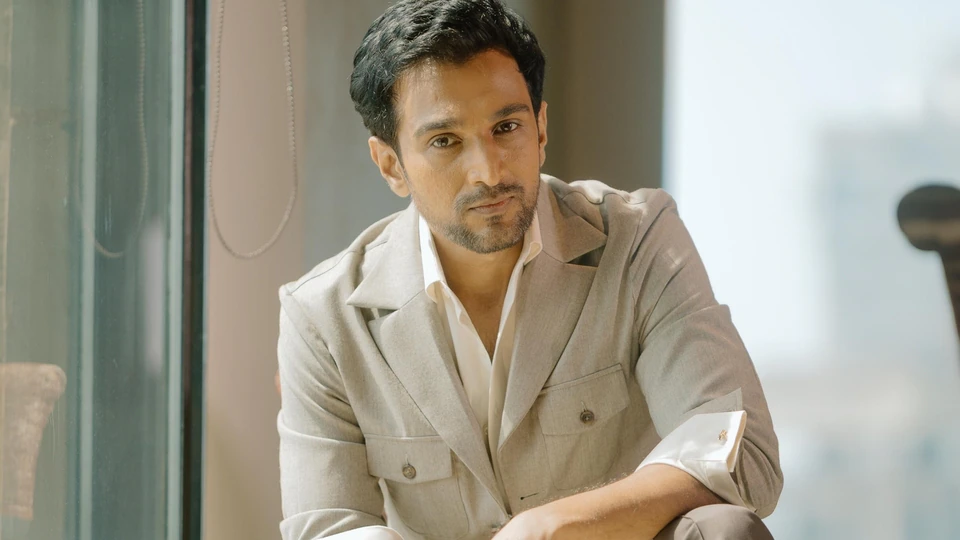
In an exclusive interaction with Hindustan Times, Pratik refrained from revealing much about his upcoming projects but opened up about his experience shooting Madgaon Express, recalling how the camaraderie and madness on sets were just as evident as they were on screen. The actor also spoke about the responsibility of portraying historical figures, his creative process while choosing roles and why he continues to enjoy collaborating with Hansal Mehta. Read on:
With Madgaon Express' sequel now in the works, how was your experience shooting the first film?
We had so much fun. In fact, everything you saw on screen was actually happening on set. The camaraderie and friendship between the three of us – me, Divyendu and Avinash – we genuinely had a lot of fun.
Kunal Kemmu was extremely clear about what he wanted. I guess he spent a lot of time working on the script itself. By the time he decided to direct it, he knew exactly how much to shoot, which angles to use and where to cut each scene. The end point was also extremely clear in his mind. Kunal also has a great knack for humour. His style of humour is evident in every line and sequence. His sense of humour connects with youngsters.
The best part about the film was that all the actors were extremely comfortable, confident and secure in their respective characters, which is very important in comedy. On the sets, I made two very good friends. And we explored all of Goa after the shoot.
You've explored several genres, from spy thrillers and historical dramas to comedy. How do you choose your roles, and what makes you say yes or no to a project?
I think my process is extremely organic. If I read a script or hear a narration and connect with the story and the character, I try to understand whether there is scope for me to add value to it and whether it will add value to me as an actor. That's the only thing that helps me decide whether to take up a project or not. I don't look at other things that are beyond my control.
As an actor, I have always wanted to experiment with different genres and different kinds of characters. So, it's not that I will avoid playing similar characters in different films. They may sound similar in some ways or share certain mannerisms, but the entire psyche of the character can be different. I would like to experiment with those finer nuances of characters.
You've collaborated with Hansal Mehta on several projects. What keeps you coming back to work with the same director?
I have never felt that I need to take a break from working with Hansal. In fact, actors dream to work with a director like him. He lets you do whatever you feel like, depending on your confidence in the script and each and every line. He also lets you explore things in detail. He never tells you to do only this or that, unless something isn't flowing. As an actor, you enjoy the whole process because he puts so much trust in you. His process is extremely organic. I love his storytelling, which has interesting and subtle layers in every film he makes and everything of his that I have seen.
You've portrayed historical figures such as Jyotirao Phule and will also be seen playing Mahatma Gandhi. Does taking on such well-documented personalities come with a sense of pressure or responsibility?
I get this question a lot, but I don't feel nervous or pressurised. I certainly feel that a lot of responsibility comes with playing these characters. My job is not to judge them. I have to create these characters for the audience to judge and explore.
The biggest challenge I face while creating such characters, especially biographical ones, is that you cannot look at them through just one lens. You cannot make them heroes in your mind even before you begin playing them. I am recreating everything they have done, but I have to approach them without a preconceived judgement.
But when you're portraying someone like Gandhi, isn't it difficult not to be intimidated by his stature?
Yes, it is difficult, but that needs a little practice and a different point of view. You have to explore the character and allow the audience to interpret him the way they want. If I already interpret him as the Mahatma and then start performing, it becomes a single-toned character. There is nothing new for the audience to see. Then it's just a document, a recreation of what happened in the past.
The interesting part, both for the audience and the actor, is to make him human and explore the psyche of the character when he was doing those things and taking those decisions.
ABOUT THE AUTHOR

Get more updates from Bollywood, Taylor Swift, Hollywood, Music and Web Series along with Latest Entertainment News at Hindustan Times.











