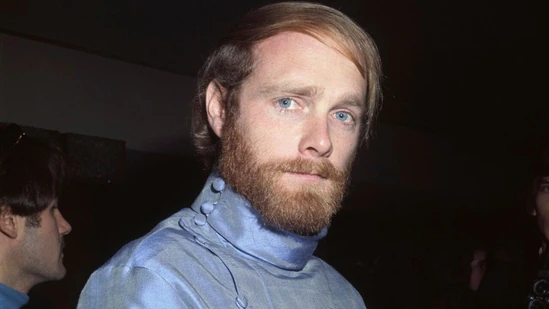
All Mike Love had was an acetate disc of an instrumental track for which his cousin, Brian Wilson, wanted lyrics. The song’s title: “Good Vibrations.”
Love’s ear went to the walking jazz bass line that day in summer 1966, and he suddenly had the chorus for one of the Beach Boys’ most iconic hits: “I’m pickin’ up good vibrations / She’s giving me the excitations.” He knew “excitations” wasn’t a real word when he jotted it down, he later told
{{^htLoading}} {{/htLoading}} Deep Dive
What role did Mike Love play in the Beach Boys?
Love co-founded the Beach Boys, sang lead on many of their hits and became the band’s onstage frontman when Brian Wilson stepped back from regular touring. His vocals helped define the group’s signature harmonies and California sound.
Which Beach Boys songs did Mike Love co-write?
Love co-wrote songs including “Good Vibrations,” “California Girls,” “I Get Around,” “Fun, Fun, Fun,” “Help Me, Rhonda” and “Kokomo.” He and Brian Wilson wrote 15 Top 40 songs together, according to the article.
Why did Mike Love sue Brian Wilson over Beach Boys songs?
Love said Wilson’s 1991 memoir gave him too little credit for songs they had written together, and sued for defamation. A later lawsuit over songwriting credits resulted in Love’s name being added to 35 songs and $2 million in back royalties.
The euphoric love song topped the charts and helped elevate pop music as an art form.
Love—who co-founded the Beach Boys alongside his cousins, brothers Brian, Dennis and Carl Wilson, and their friend Al Jardine, and was both the band’s only constant member and popular villain—died Saturday at 85, according to his spokeswoman Katie Altman.
When Brian Wilson stepped back from regular touring in the mid-1960s amid mental-health struggles, Love took over as onstage frontman for the Beach Boys’ live performances, his nasally baritone leading the band’s signature five-part harmony on upbeat surf hits like “I Get Around” and “California Girls”—both of which he also co-wrote.
He and Brian Wilson wrote 15 Top 40 songs together, including “Fun, Fun, Fun,” “Help Me, Rhonda” and “Do It Again.” Love also co-wrote the smash hit, “Kokomo,” the Beach Boys’ bestselling single.
{{^htLoading}} {{/htLoading}} Behind the lush harmonies selling the California dream was long-running acrimony. Love, who toured near constantly for more than a half-century with various versions of the Beach Boys lineup, was the bombastic counterpart to the introverted Wilson, and their complex relationship became the stuff of rock ’n’ roll legend. Much of history sided with Wilson, considered the pioneering if melancholic musical genius, setting Love as the cheerful black sheep.
The lore goes back to recording sessions in 1966. Love’s critics say he expressed disdain for Wilson’s work-in-progress that was “Pet Sounds”—widely regarded as one of the greatest albums of all time. (Love denied characterizations that he didn’t like it and, decades later, identified “Pet Sounds” as his favorite Beach Boys album.)
{{^htLoading}} {{/htLoading}} “The fable is that I’m such an a—hole, but a lot of that stuff is skewed by the crazies,” Love told Rolling Stone in 2016. “I never said half the s— that’s attributed to me.”
His first song at 10
Michael Edward Love was born March 15, 1941, the oldest of six children, and grew up in Los Angeles. His mother, Emily “Glee” Wilson, was the sister of Murry Wilson, father to Brian and the first manager of the Beach Boys.
At around 10 years old, Love wrote his first song, “The Old Soldier,” which Brian performed at a concert at his home.
After two semesters at Los Angeles City College, Love joined his father’s sheet-metal company, whose failure led the family to move to a smaller home nearer to the Wilsons. The families were close, and Love sang at get-togethers with his cousins.
{{^htLoading}} {{/htLoading}} Wilson and Love formed the Pendletones—a play on the plaid Pendleton shirts then sported by surfers—in 1961, with the group becoming the Beach Boys by the time their first single, “Surfin,” was released later that year. With that song, the band introduced the world to what became known as the California sound.
In his songwriting, Love drew inspiration from Chuck Berry and poetry.
Half a decade of hits about girls and cars gave way to more romantic and then psychedelic and spiritual themes. In addition to writing Beach Boys songs, Love recorded two solo albums in 1978, but didn’t release them, instead reworking the songs into later Beach Boys and solo work.
In the late 1970s, Love formed Celebration, with Beach Boys touring musicians, and released three albums. He released his first solo album, “Looking Back With Love,” in 1981. He began touring with his own group, Endless Summer Beach Band, as well as with Dean Torrance as Mike and Dean. He later toured as part of the California Beach Band.
{{^htLoading}} {{/htLoading}} Love was lifelong a devotee of Transcendental Meditation, attending Maharishi Mahesh Yogi’s training seminar in India alongside the Beatles in 1968. He liked that the Maharishi told him he didn’t need to forsake pursuits of material pleasures to develop inner-spiritual qualities, he said at the time.
Per Love’s own telling, he notably skipped meditating the day of the Beach Boys’ 1988 induction into the Rock & Roll Hall of Fame, where he delivered a bizarre acceptance speech lobbing insults at Bruce Springsteen, Billy Joel, Paul McCartney and Mick Jagger, boasting about how many shows his group performed and seemingly trying to challenge his musical contemporaries.
Love sued Wilson for defamation over his 1991 memoir, alleging Wilson disparaged him in giving him little credit for the songs they wrote together. The case was settled out of court, awarding Love $1.5 million. Love successfully sued Wilson again in 1994 for songwriting credits, getting his name attached to 35 songs and $2 million in back royalties. (He remained uncredited on another 44 songs he said he co-wrote.)
Rancor and reunion
{{^htLoading}} {{/htLoading}} After Carl Wilson’s death in 1998, Love secured the exclusive touring rights to use the Beach Boys name and continued to hit the road under the banner with longtime members Bruce Johnston, David Marks and actor John Stamos. He unsuccessfully sued Brian Wilson in 2005 after the Beach Boys’ name and Love’s image were used in promotional material for the release of the album “Brian Wilson Presents Smile.”
Love reunited with Brian Wilson and Jardine, as well as Johnston and Marks, in 2011 to record a new album, “That’s Why God Made the Radio.” It was the 29th and final studio album by the Beach Boys. They toured the following year to celebrate the group’s 50th anniversary.
Near the end of that tour, Love announced that he and Johnston would continue on as the Beach Boys, minus Brian Wilson, Jardine and Marks. The move was interpreted by fans as Love firing Wilson, though Love said it was to avoid confusion over dates the duo had booked. Wilson and Jardine later toured together.
{{^htLoading}} {{/htLoading}} Love continued to put out solo albums, and in 2016 released his autobiography, “Good Vibrations: My Life as a Beach Boy.” He reflected on life in a band—and family—marred by addiction and big personalities. He recounted his songwriting experience and battles to get credit for the work, and acknowledged the futility of trying to counter the impression that Wilson was the musical genius and he was just the frontman.
“For those who believe that Brian walks on water, I will always be the Antichrist,” he wrote.
Love was married six times. He is survived by his wife, Jacquelyne Piesen, whom he married in 1994, and eight children.
All Mike Love had was an acetate disc of an instrumental track for which his cousin, Brian Wilson, wanted lyrics. The song’s title: “Good Vibrations.”
Love’s ear went to the walking jazz bass line that day in summer 1966, and he suddenly had the chorus for one of the Beach Boys’ most iconic hits: “I’m pickin’ up good vibrations / She’s giving me the excitations.” He knew “excitations” wasn’t a real word when he jotted it down, he later told The Wall Street Journal. “It just sounded like ‘excitement’ and ‘vibrations’ squeezed together.”
{{^htLoading}} {{/htLoading}} He hadn’t written any verses yet when he headed to the studio to record the vocal tracks with the rest of the band. He listened to the instrumental once more and dictated lyrics to his wife during the half-hour drive to Hollywood.
Deep Dive
What role did Mike Love play in the Beach Boys?
Love co-founded the Beach Boys, sang lead on many of their hits and became the band’s onstage frontman when Brian Wilson stepped back from regular touring. His vocals helped define the group’s signature harmonies and California sound.
Which Beach Boys songs did Mike Love co-write?
Love co-wrote songs including “Good Vibrations,” “California Girls,” “I Get Around,” “Fun, Fun, Fun,” “Help Me, Rhonda” and “Kokomo.” He and Brian Wilson wrote 15 Top 40 songs together, according to the article.
Why did Mike Love sue Brian Wilson over Beach Boys songs?
Love said Wilson’s 1991 memoir gave him too little credit for songs they had written together, and sued for defamation. A later lawsuit over songwriting credits resulted in Love’s name being added to 35 songs and $2 million in back royalties.
The euphoric love song topped the charts and helped elevate pop music as an art form.
Love—who co-founded the Beach Boys alongside his cousins, brothers Brian, Dennis and Carl Wilson, and their friend Al Jardine, and was both the band’s only constant member and popular villain—died Saturday at 85, according to his spokeswoman Katie Altman.
When Brian Wilson stepped back from regular touring in the mid-1960s amid mental-health struggles, Love took over as onstage frontman for the Beach Boys’ live performances, his nasally baritone leading the band’s signature five-part harmony on upbeat surf hits like “I Get Around” and “California Girls”—both of which he also co-wrote.
{{^htLoading}} {{/htLoading}} He and Brian Wilson wrote 15 Top 40 songs together, including “Fun, Fun, Fun,” “Help Me, Rhonda” and “Do It Again.” Love also co-wrote the smash hit, “Kokomo,” the Beach Boys’ bestselling single.
Behind the lush harmonies selling the California dream was long-running acrimony. Love, who toured near constantly for more than a half-century with various versions of the Beach Boys lineup, was the bombastic counterpart to the introverted Wilson, and their complex relationship became the stuff of rock ’n’ roll legend. Much of history sided with Wilson, considered the pioneering if melancholic musical genius, setting Love as the cheerful black sheep.
The lore goes back to recording sessions in 1966. Love’s critics say he expressed disdain for Wilson’s work-in-progress that was “Pet Sounds”—widely regarded as one of the greatest albums of all time. (Love denied characterizations that he didn’t like it and, decades later, identified “Pet Sounds” as his favorite Beach Boys album.)
{{^htLoading}} {{/htLoading}} “The fable is that I’m such an a—hole, but a lot of that stuff is skewed by the crazies,” Love told Rolling Stone in 2016. “I never said half the s— that’s attributed to me.”
His first song at 10
Michael Edward Love was born March 15, 1941, the oldest of six children, and grew up in Los Angeles. His mother, Emily “Glee” Wilson, was the sister of Murry Wilson, father to Brian and the first manager of the Beach Boys.
At around 10 years old, Love wrote his first song, “The Old Soldier,” which Brian performed at a concert at his home.
After two semesters at Los Angeles City College, Love joined his father’s sheet-metal company, whose failure led the family to move to a smaller home nearer to the Wilsons. The families were close, and Love sang at get-togethers with his cousins.
{{^htLoading}} {{/htLoading}} Wilson and Love formed the Pendletones—a play on the plaid Pendleton shirts then sported by surfers—in 1961, with the group becoming the Beach Boys by the time their first single, “Surfin,” was released later that year. With that song, the band introduced the world to what became known as the California sound.
In his songwriting, Love drew inspiration from Chuck Berry and poetry.
Half a decade of hits about girls and cars gave way to more romantic and then psychedelic and spiritual themes. In addition to writing Beach Boys songs, Love recorded two solo albums in 1978, but didn’t release them, instead reworking the songs into later Beach Boys and solo work.
In the late 1970s, Love formed Celebration, with Beach Boys touring musicians, and released three albums. He released his first solo album, “Looking Back With Love,” in 1981. He began touring with his own group, Endless Summer Beach Band, as well as with Dean Torrance as Mike and Dean. He later toured as part of the California Beach Band.
{{^htLoading}} {{/htLoading}} Love was lifelong a devotee of Transcendental Meditation, attending Maharishi Mahesh Yogi’s training seminar in India alongside the Beatles in 1968. He liked that the Maharishi told him he didn’t need to forsake pursuits of material pleasures to develop inner-spiritual qualities, he said at the time.
Per Love’s own telling, he notably skipped meditating the day of the Beach Boys’ 1988 induction into the Rock & Roll Hall of Fame, where he delivered a bizarre acceptance speech lobbing insults at Bruce Springsteen, Billy Joel, Paul McCartney and Mick Jagger, boasting about how many shows his group performed and seemingly trying to challenge his musical contemporaries.
Love sued Wilson for defamation over his 1991 memoir, alleging Wilson disparaged him in giving him little credit for the songs they wrote together. The case was settled out of court, awarding Love $1.5 million. Love successfully sued Wilson again in 1994 for songwriting credits, getting his name attached to 35 songs and $2 million in back royalties. (He remained uncredited on another 44 songs he said he co-wrote.)
Rancor and reunion
{{^htLoading}} {{/htLoading}} After Carl Wilson’s death in 1998, Love secured the exclusive touring rights to use the Beach Boys name and continued to hit the road under the banner with longtime members Bruce Johnston, David Marks and actor John Stamos. He unsuccessfully sued Brian Wilson in 2005 after the Beach Boys’ name and Love’s image were used in promotional material for the release of the album “Brian Wilson Presents Smile.”
Love reunited with Brian Wilson and Jardine, as well as Johnston and Marks, in 2011 to record a new album, “That’s Why God Made the Radio.” It was the 29th and final studio album by the Beach Boys. They toured the following year to celebrate the group’s 50th anniversary.
Near the end of that tour, Love announced that he and Johnston would continue on as the Beach Boys, minus Brian Wilson, Jardine and Marks. The move was interpreted by fans as Love firing Wilson, though Love said it was to avoid confusion over dates the duo had booked. Wilson and Jardine later toured together.
{{^htLoading}} {{/htLoading}} Love continued to put out solo albums, and in 2016 released his autobiography, “Good Vibrations: My Life as a Beach Boy.” He reflected on life in a band—and family—marred by addiction and big personalities. He recounted his songwriting experience and battles to get credit for the work, and acknowledged the futility of trying to counter the impression that Wilson was the musical genius and he was just the frontman.
“For those who believe that Brian walks on water, I will always be the Antichrist,” he wrote.
Love was married six times. He is survived by his wife, Jacquelyne Piesen, whom he married in 1994, and eight children.