
Christchurch, the main metropolis in the South Island of New Zealand, is a most English city. Even the river flowing through it is called Avon, like the one with the same name in southwest England. It is aptly described as a garden city.
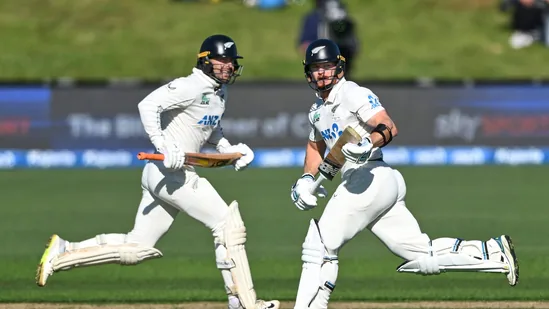
At the heart of this urban centre is a vast expanse of greenery, including a botanical garden. Neighbouring it is Hagley Oval, now the home of cricket in the region and presently hosting the 2nd Test of the two-match series between India and New Zealand in the qualifying stage of the World Test Championship.
The ground was established in 1866, though since the First World War Lancaster Park in a different part of town became the primary venue for international cricket; until a devastating earthquake in 2011 forced an abandonment of it, with the privilege shifting to the city's original place for the pastime.
Trees in full bloom encircle the idyllic ground. Almost a carbon copy of Tunbridge Wells, where India famously pulled the chestnuts out of the fire against Zimbabwe in the 1983 World Cup enroute to stunningly lift the trophy.
The cricket, too, on the first day of the match was quintessentially out of England. A green pitch greeted the two teams. The outfield was greener, but slow. With the square boundaries up to 80 yards away and the straight ones 77 yards, the batsmen needed to time the ball really well to reach the fence.
{{/usCountry}}The cricket, too, on the first day of the match was quintessentially out of England. A green pitch greeted the two teams. The outfield was greener, but slow. With the square boundaries up to 80 yards away and the straight ones 77 yards, the batsmen needed to time the ball really well to reach the fence.
{{/usCountry}}India captain Shubman Gill chose to field, believing there was moisture in the square, which would aid his quartet of quicks, which showed one change from the first Test in the tall, strapping Gurnoor Brar replacing Prasidh Krishna. There was no comeback for Mohammed Siraj, next only in experience and success to Jasprit Bumrah among the current crop of Indian fast bowlers, but inexplicably cooling his heels in the series.
Early wickets, though, which is proof of a gamble to insert the opposition having paid off, did not materialise. With only three days’ recovery time between the two tests, Bumrah, leader of the attack on whom India rely heavily, looked stiff. He beat the bat, troubled the batters; but did not pick up a wicket. In his last 10 appearances, he has taken more wickets in the first innings than second on six occasions. His figures on the opening day here were 19-4-37-0.
Debutant Brar was introduced after Bumrah, Kamboj and Akash Deep had failed to obtain a breakthrough. New Zealand's left-handed openers, particularly Devon Conway, negotiated the bowling with befitting caution. It looked as if India would finish the morning session wicketless. However, in the last over before lunch, Brar, who worked up brisk pace and also extracted bounce, trapped Conway leg before wicket.
There was of course a costly missed catch at third slip when KL Rahul dropped Latham off Akash Deep. The left-hander was then 29. He went on to compile another 30 runs.
Akash Deep was in fact India’s standout bowler. He eventually got one to straighten to have Latham caught behind. Almost in identical fashion, he then removed Rachin Ravindra, another southpaw, for a duck. In between, Henry Nicholls, also a leftie who entered at the fall of first wicket, pulled a short one from Kamboj straight down Akash Deep's throat at deep fine leg. The second period of play was therefore more productive for the tourists and in consonance with the chilly conditions, notwithstanding the sunshine.
Akash Deep described India’s overall bowling performance as ‘quite good, but it could have been better’. He added India ‘couldn’t attack too much so as to keep the match under control’. That was virtually an admission that Gill’s gamble had failed. He felt the ball wasn't carrying to the ‘keeper to the Indian bowlers liking. And believed ‘the wicket will get better (meaning there will be more bounce) if there is sunshine’. The local met office forecasts clear and warmer weather over the next three days.
After tea, the Indian pacers made little impression with the older ball. Off-spinner Washington Sundar was brought on to accelerate the overrate. With a solitary close catcher on the onside at leg slip, he extracted an inside edge from the experienced Daryl Mitchell with a ball that turned and bounced unusually for a slow bowler on the first day of a Test. But that was the last of the Kiwi scalps India secured. It could be said that the hosts, having at one stage lost four wickets for 110, were let off the hook.
Wicketkeeper-batter Tom Blundell joined Latham in posting a half-century and was still at the crease at stumps. He said the ‘ball was moving all day’. So, the Black Caps had done well not to suffer greater damage.
With New Zealand on 246 for five, it could be said they had their noses slightly ahead at close of proceedings.
