
On the first day of the four-day Koshala Literature Festival on Friday, author Omair Ahmad and writer Tarana Hussain Khan explored how personal memory, changing cityscapes and overlooked histories shape North India’s historic towns. They spoke with moderator Prakruti Maniar as part of a session - ‘The Cities We Lost: Lucknow, Rampur and the Making of Memory’.
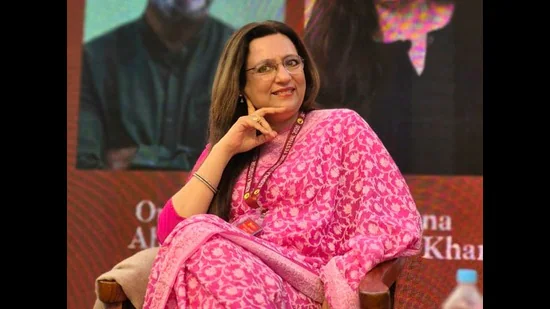
Recalling childhood trips from Dehradun to Lucknow, Ahmad spoke of arriving at the station, taking a rickshaw to Hazratganj where his Nani lived, and visiting bookstores like Universal, second-hand rental shops, Chaudhary Chaat House, and Ram Advani’s store.
“My Nani who lived to be 101, spoke of travelling from Hyderabad to Hindustan, where her Mamu was deputy chairman of the Legislative Council. By Hindustan, she meant Northern India,” said Ahmad, while sharing that reading about figures like Begum Akhtar helped him explore the complex realities of tawaif culture, both abusive and liberatory.
Khan described her connection to Rampur as a homecoming beginning around 2010. “After growing up with family stories and years in Aligarh, I was happy to see that my husband was from Rampur. The oral histories of women are rarely recorded in official records. One of my great-grand aunts was taken by a Nawab and disowned by her family. Such stories and an urge to know more made me research which covered the 19th-century Benazir ka mela and the 22-year love story of poet Daagh Dehlvi and a courtesan,” she added.
She also spoke about 10 gates of the once famed entry into Rampur, three inspired by Lucknow’s Rumi Darwaza, before being demolished by politicians some years back.
{{/usCountry}}She also spoke about 10 gates of the once famed entry into Rampur, three inspired by Lucknow’s Rumi Darwaza, before being demolished by politicians some years back.
{{/usCountry}}“When landmarks vanish, it feels like erasure of a lived culture. The Raza Library, once a darbar hall with pillars reflecting four religious architectural traditions, and the multi-style Khas Bagh Palace is an example of pluralistic patronage,” said Khan.
Ahmad also spoke on aesthetic neglect, monsoon flooding across South Asian cities, and the price paid by the poor when cities are built without care. He contrasted historical patronage that nurtured cultural hubs in smaller towns like Rampur and Gorakhpur with post-Independence concentration of growth in a few major cities.
