
Economic growth cannot be measured by GDP alone if it fails to improve people’s everyday lives, former Uttar Pradesh chief secretary Alok Ranjan said on Saturday during a discussion on inclusive development at the second day of the 5th Koshala Literature Festival in Lucknow.
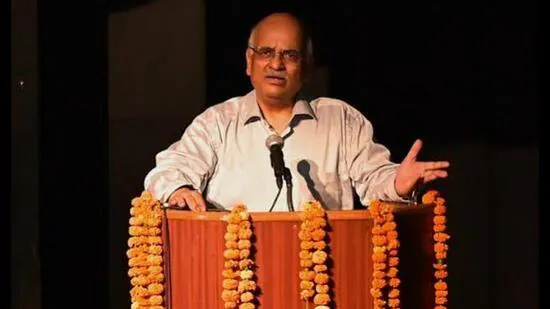
Speaking at a session titled ‘The Policy Lab: Beyond GDP and Other Statistics’ at the Lucknow Museum of Heritage and Arts (LMHA), Ranjan questioned whether rising economic growth could translate into well-being when employment opportunities remained limited. He was joined by former IAS officer Navneet Kumar Sehgal and Jayant Krishna.
“Even if GDP grows and India becomes a bigger economy, if a person does not feel comfortable or satisfied in daily experiences and aspirations, the sense of well-being does not arrive. In the 1970s, when GDP grew by 3%, a 1% rise in GDP raised employment by 0.4%. Today, in a period of 7.5% GDP growth, a 1% rise in GDP raises employment by only 0.01%. This jobless growth is linked directly to inequality, and when people are unemployed where will happiness and a sense of well-being come from,” Ranjan said.
He also cautioned against celebrating investment figures without addressing disparities in development. Referring to the Global Hunger Index, he said it measured not just hunger but also nutrition, adding that 37% of children were stunted and 18% wasted.
{{/usCountry}}He also cautioned against celebrating investment figures without addressing disparities in development. Referring to the Global Hunger Index, he said it measured not just hunger but also nutrition, adding that 37% of children were stunted and 18% wasted.
{{/usCountry}}Krishna, who moderated the discussion, drew attention to social inclusion, sustainability and resilience, describing the latter as the ability to recover after a shock. He questioned how India’s economic growth could be assessed without accounting for pollution, noting that 9 or 13 of the world’s 20 most polluted cities were in the country.
Sehgal said data could reveal as well as conceal realities, describing GDP as a barometer of economic growth. Citing a World Bank report, he said 50 crore people had moved out of extreme poverty in the past 12 years, with extreme poverty defined as living on less than $3 a day. He also referred to more than 50 crore Jan Dhan bank accounts and a decline in mortality rates.
Referring to the wealth disparity, Sehgal said 1% of India’s population owned 22% of the wealth, while the top 10% owned 52%. He also stressed the need to give GDP growth a clear purpose.
